The Science
Oxytocin is a natural peptide hormone — a chain of just nine amino acids made in your hypothalamus. It is best known as the molecule behind bonding, trust and the body's calming response to stress, which is why it is nicknamed the 'bonding hormone.' When people ask about oxytocin peptide benefits, they are really asking what that signaling role means for mood, connection and aging — questions researchers are actively studying, not settled promises. Its use beyond its FDA-approved indications is off-label and clinician-guided.
What the research on oxytocin looks at

How oxytocin actually works, in three ideas
It signals through receptors
Oxytocin works by binding oxytocin receptors, which appear across many tissues — a receptor spread researchers point to when studying its wide-ranging, still-being-mapped effects.

It’s a natural peptide
Oxytocin is a nine-amino-acid peptide your body already makes in the hypothalamus. It acts as a hormone in the bloodstream and as a signaling neuropeptide in the brain.
Lifestyle and prescriptions both reach it
Connection, touch and other bonding experiences release natural oxytocin. A clinician-guided prescription is a separate, off-label option — and whether any protocol fits you is a clinician’s call.
It’s a natural peptide
Oxytocin is a nine-amino-acid peptide your body already makes in the hypothalamus. It acts as a hormone in the bloodstream and as a signaling neuropeptide in the brain.
It signals through receptors
Oxytocin works by binding oxytocin receptors, which appear across many tissues — a receptor spread researchers point to when studying its wide-ranging, still-being-mapped effects.
Lifestyle and prescriptions both reach it
Connection, touch and other bonding experiences release natural oxytocin. A clinician-guided prescription is a separate, off-label option — and whether any protocol fits you is a clinician’s call.



Go deeper on the science
Explore how oxytocin, its receptors and its studied roles in stress, cognition and aging are examined in the research.
Oxytocin, brain aging and cognitive health
Oxytocin and age-related muscle and body-fat change
Oxytocin for longevity: the mechanisms under study
How to increase oxytocin naturally
Common questions about the oxytocin peptide
Yes. Oxytocin is a small peptide hormone — a chain of nine amino acids (a nonapeptide) — made in the hypothalamus and released by the pituitary gland. Because it also acts as a signaling molecule in the brain, it is often called a neuropeptide. When people search "oxytocin peptide," this natural hormone is what they mean.
Oxytocin is best known for its role in social bonding, trust and the body’s calming response to stress, and researchers are studying whether those roles extend to mood, cognition, muscle and other aspects of aging. It is important to read these as areas of active study rather than proven results: much of the longevity data comes from laboratory and animal research, and human evidence is still emerging. Healthspan makes no anti-aging or disease-treatment claims.
The "love hormone" or "bonding hormone" nickname comes from oxytocin’s role in bonding, trust and social connection, which is real and well described in research. But the nickname oversimplifies a molecule that also influences the stress response and is being studied across several systems. It is a signaling peptide, not a guaranteed mood or relationship outcome.
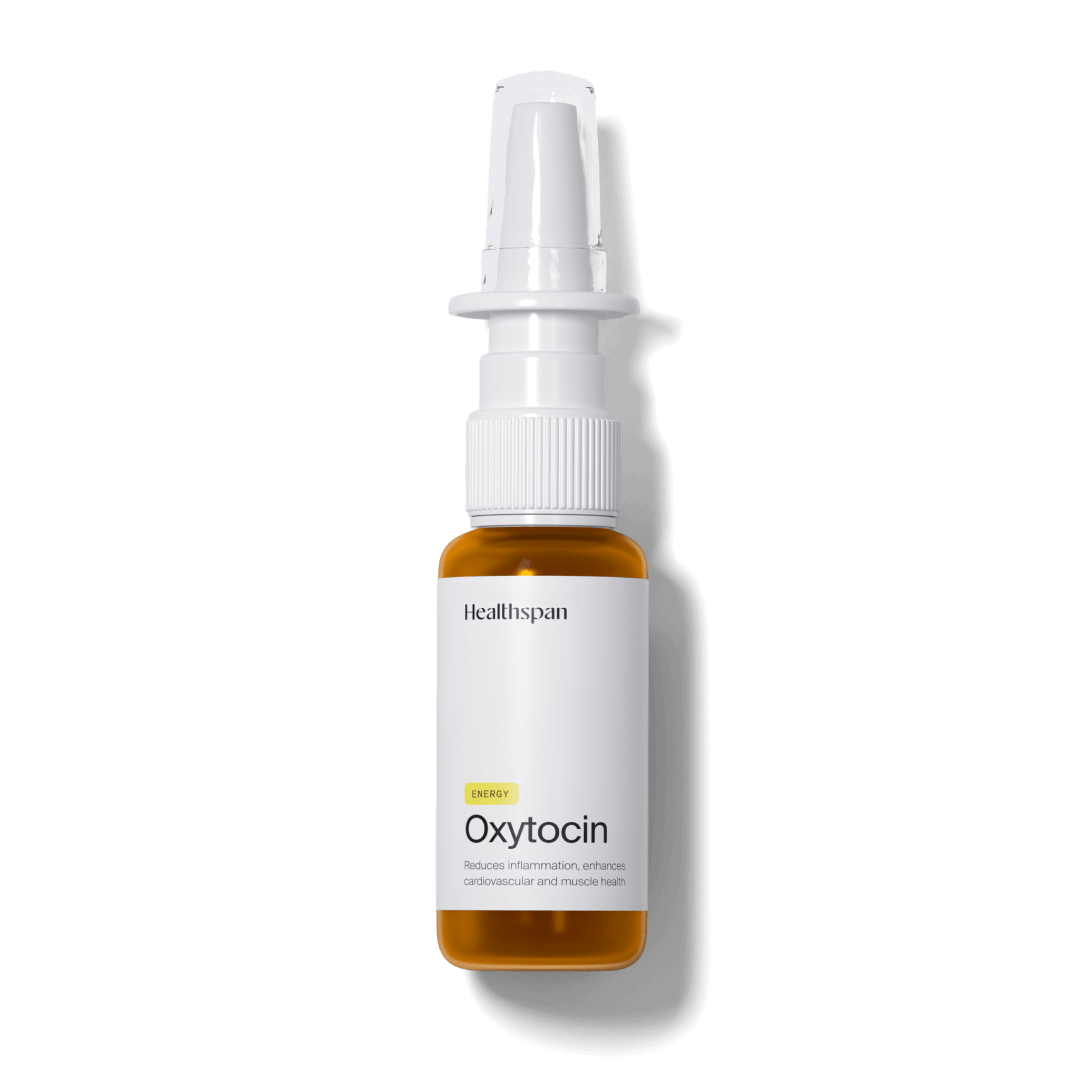
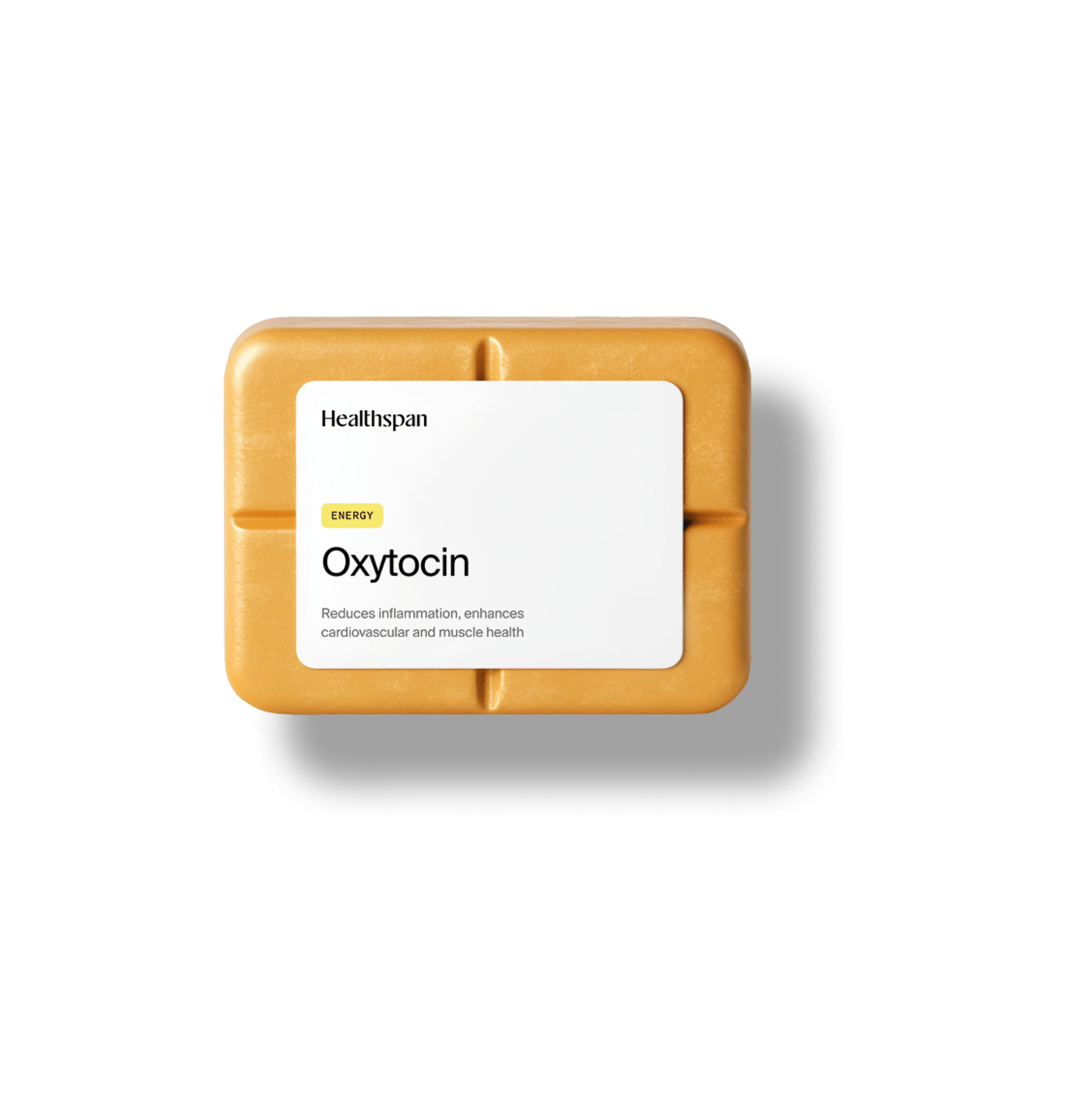
Oxytocin is a prescription medication, not a dietary supplement, so the "oxytocin supplements" and unregulated nasal sprays sold online are not made or verified as medicine for human use. The clinician-guided route is a prescription: Healthspan offers compounded oxytocin — as a nasal spray or a sublingual troche — prepared by a LegitScript-certified U.S. pharmacy, with the dose set by a licensed clinician after reviewing your history. Its use for stress and wellbeing is off-label.
No. Oxytocin is a pathway of active longevity research, not a proven anti-aging treatment. Findings linking it to muscle maintenance, cognition and healthy aging come largely from cell and animal studies; human longevity evidence is still emerging. A licensed clinician — not a product label — decides whether an off-label protocol is appropriate for you.
Everyday inputs raise natural oxytocin: warm social connection, physical touch, and other bonding experiences all release it. Prescription oxytocin is a separate, clinician-guided option used off-label under supervision. Whether any protocol fits you is a decision for a licensed clinician, and lifestyle is the foundation either way.
When prescribed and supervised by a licensed clinician, oxytocin is generally well tolerated at the low compounded doses used off-label. It is not for use during pregnancy or breastfeeding, and it is not appropriate for everyone. A clinician reviews your health history and medications before prescribing and stays involved over time.
Yes. Oxytocin is a small peptide hormone — a chain of nine amino acids (a nonapeptide) — made in the hypothalamus and released by the pituitary gland. Because it also acts as a signaling molecule in the brain, it is often called a neuropeptide. When people search "oxytocin peptide," this natural hormone is what they mean.
Oxytocin is best known for its role in social bonding, trust and the body’s calming response to stress, and researchers are studying whether those roles extend to mood, cognition, muscle and other aspects of aging. It is important to read these as areas of active study rather than proven results: much of the longevity data comes from laboratory and animal research, and human evidence is still emerging. Healthspan makes no anti-aging or disease-treatment claims.
The "love hormone" or "bonding hormone" nickname comes from oxytocin’s role in bonding, trust and social connection, which is real and well described in research. But the nickname oversimplifies a molecule that also influences the stress response and is being studied across several systems. It is a signaling peptide, not a guaranteed mood or relationship outcome.
Oxytocin is a prescription medication, not a dietary supplement, so the "oxytocin supplements" and unregulated nasal sprays sold online are not made or verified as medicine for human use. The clinician-guided route is a prescription: Healthspan offers compounded oxytocin — as a nasal spray or a sublingual troche — prepared by a LegitScript-certified U.S. pharmacy, with the dose set by a licensed clinician after reviewing your history. Its use for stress and wellbeing is off-label.
No. Oxytocin is a pathway of active longevity research, not a proven anti-aging treatment. Findings linking it to muscle maintenance, cognition and healthy aging come largely from cell and animal studies; human longevity evidence is still emerging. A licensed clinician — not a product label — decides whether an off-label protocol is appropriate for you.
Everyday inputs raise natural oxytocin: warm social connection, physical touch, and other bonding experiences all release it. Prescription oxytocin is a separate, clinician-guided option used off-label under supervision. Whether any protocol fits you is a decision for a licensed clinician, and lifestyle is the foundation either way.
When prescribed and supervised by a licensed clinician, oxytocin is generally well tolerated at the low compounded doses used off-label. It is not for use during pregnancy or breastfeeding, and it is not appropriate for everyone. A clinician reviews your health history and medications before prescribing and stays involved over time.
This page is educational and not medical advice. Oxytocin is a prescription medication that is FDA-approved for certain indications; its use for stress, wellbeing, bonding and longevity is off-label and is done under clinical supervision. Benefits described here reflect areas of ongoing research — findings linking oxytocin to healthy aging come largely from cell and animal models, and human evidence is still emerging. A licensed clinician determines whether prescription oxytocin is appropriate for you based on your history and medications; not everyone qualifies, and it is not for use during pregnancy or breastfeeding. Individual results vary. Medically reviewed by the Healthspan Clinical Team on 2026-08-04.