Rapamycin vs Metformin for Longevity
Rapamycin and metformin are two of the most-studied longevity medications — and they work in completely different ways. Compare how each works, what the research shows, cost and safety, then see which fits your biology.
Both protocols come with real clinical care — not a supplement in the mail.
60
+ yrs
Metformin safety data
One of the longest human safety records in medicine.
2
Distinct pathways
Rapamycin acts on mTOR, metformin on AMPK — different mechanisms of aging.
40
+
Biomarkers reviewed
Your labs are mapped to the protocol most likely to fit your biology.
100
%
Clinician-prescribed
Every protocol is reviewed and prescribed by a licensed clinician, dispensed by a certified pharmacy.


Included with either protocol
Real clinical care, not a pill in the mail
Licensed clinician evaluation and personalized dosing
Baseline labs and ongoing biomarker monitoring
Medication dispensed by certified pharmacies
HSA/FSA eligible — modify or cancel anytime
Side by side
The differences that actually drive the decision.
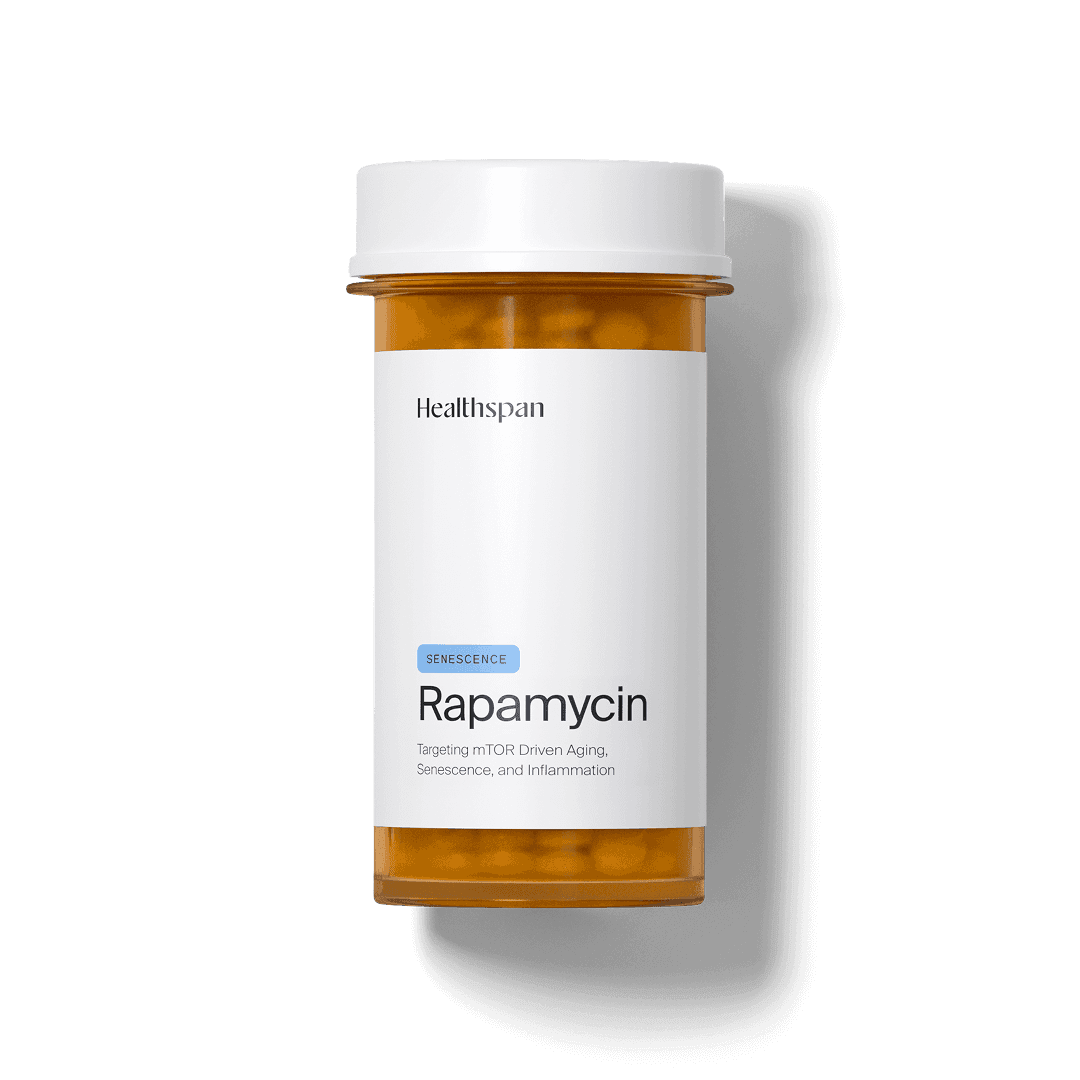
Rapamycin
Inhibits mTOR
Primary pathway: dials down the growth/nutrient sensor that drives cellular aging.
Cellular aging
Best studied for autophagy, senescent-cell clearance and lower inflammatory aging — the most lifespan-extension data in animal models.
Weekly, low-dose
Intermittent protocol — typically one low dose per week, personalized by your clinician.
Decades of clinical use
Long record in transplant medicine; longevity protocols use lower, intermittent doses.
From $64/mo
Includes clinician review, prescription and ongoing monitoring. HSA/FSA eligible.
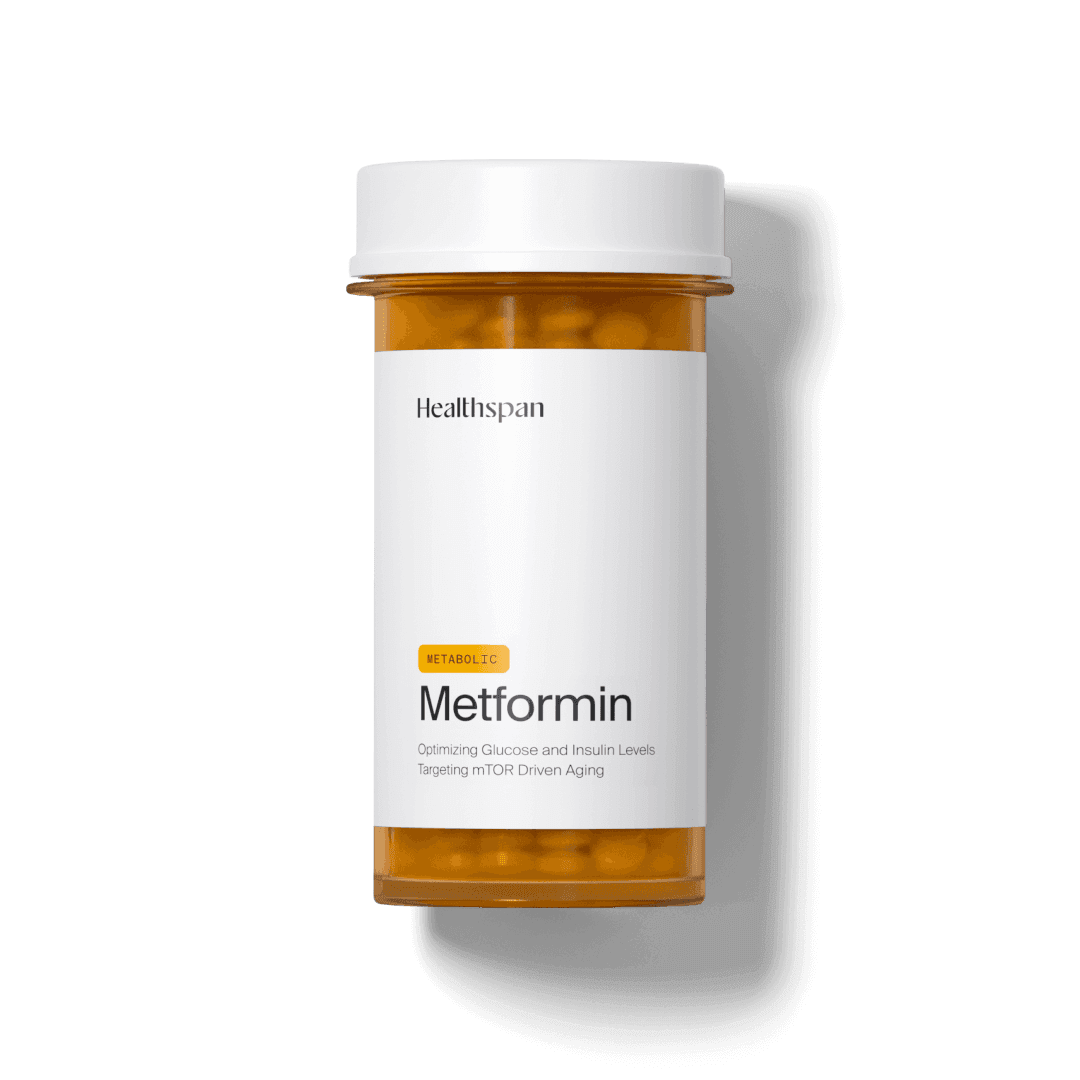
Metformin
Activates AMPK
Primary pathway: switches on the energy-stress sensor, mimicking some effects of caloric restriction.
Metabolic health
Best studied for insulin sensitivity and blood-sugar control, with associations in human data.
Daily dosing
Taken daily, with regular lab monitoring guided by your clinician.
60+ years of safety data
One of the longest human safety records in medicine; rarely causes hypoglycemia.
From $28/mo
Includes clinician review, prescription and ongoing monitoring. HSA/FSA eligible.
How it works
Rapamycin: dialing down mTOR

How it works
Metformin: switching on AMPK


Match the protocol to your biology
$28/ mo
Not sure which fits? Take the assessment and a licensed clinician will map your labs and goals to the right protocol. Prefer to read more first? Explore the Healthspan research library.
Common questions
Some people use both, because they act on different pathways — rapamycin on mTOR and metformin on AMPK. Whether a combination is appropriate for you depends on your goals, labs and medical history, which a Healthspan clinician evaluates before prescribing either.
Neither is universally “better,” and human longevity data for both is still emerging. Rapamycin has the most lifespan-extension research in animal models and targets cellular aging pathways; metformin has the deepest human safety record and is best studied for metabolic health. The right choice depends on your biomarkers and goals — a clinician makes that call.
At Healthspan, metformin protocols start at $28/month and rapamycin protocols start at $64/month. Both are HSA/FSA eligible, include physician oversight and lab monitoring, and can be modified or cancelled anytime.
Yes. Both are prescription medications, and for longevity they are prescribed off-label. At Healthspan, a licensed clinician reviews your intake and lab work, then decides whether either is appropriate and personalizes dosing with ongoing monitoring.
Metformin has over 60 years of clinical safety data and rarely causes low blood sugar. Rapamycin has decades of use in transplant medicine; longevity protocols use lower, intermittent doses. Both are prescribed and monitored by clinicians to manage individual risk.
It comes down to your labs, health history and goals. Healthspan’s assessment maps your biomarkers to the protocol most likely to fit, and a licensed clinician makes the final recommendation — which may be rapamycin, metformin, another intervention, or a combination.
Some people use both, because they act on different pathways — rapamycin on mTOR and metformin on AMPK. Whether a combination is appropriate for you depends on your goals, labs and medical history, which a Healthspan clinician evaluates before prescribing either.
Neither is universally “better,” and human longevity data for both is still emerging. Rapamycin has the most lifespan-extension research in animal models and targets cellular aging pathways; metformin has the deepest human safety record and is best studied for metabolic health. The right choice depends on your biomarkers and goals — a clinician makes that call.
At Healthspan, metformin protocols start at $28/month and rapamycin protocols start at $64/month. Both are HSA/FSA eligible, include physician oversight and lab monitoring, and can be modified or cancelled anytime.
Yes. Both are prescription medications, and for longevity they are prescribed off-label. At Healthspan, a licensed clinician reviews your intake and lab work, then decides whether either is appropriate and personalizes dosing with ongoing monitoring.
Metformin has over 60 years of clinical safety data and rarely causes low blood sugar. Rapamycin has decades of use in transplant medicine; longevity protocols use lower, intermittent doses. Both are prescribed and monitored by clinicians to manage individual risk.
It comes down to your labs, health history and goals. Healthspan’s assessment maps your biomarkers to the protocol most likely to fit, and a licensed clinician makes the final recommendation — which may be rapamycin, metformin, another intervention, or a combination.
Rapamycin and metformin are prescription medications. For longevity they are prescribed off-label, and human longevity evidence is still emerging. A licensed clinician determines whether either is appropriate for you. This page is educational and not medical advice; individual results vary.