The Science
mTOR (mechanistic target of rapamycin) is a protein inside your cells that senses nutrients, energy and growth signals. When food is plentiful, mTOR switches cells into grow-and-build mode; when it quiets down, cells shift into repair mode and turn on autophagy — the cellular cleanup process. Because overactive mTOR is one of the pathways researchers link to cellular aging, dialing it back is a central idea in longevity science.
What the mTOR switch means for aging

How researchers study dialing mTOR back
Release autophagy
Lowering mTOR signaling lifts the brake on autophagy, the cell’s cleanup of damaged proteins and structures — a mechanism studied for its role in cellular aging.



Ease the growth signal
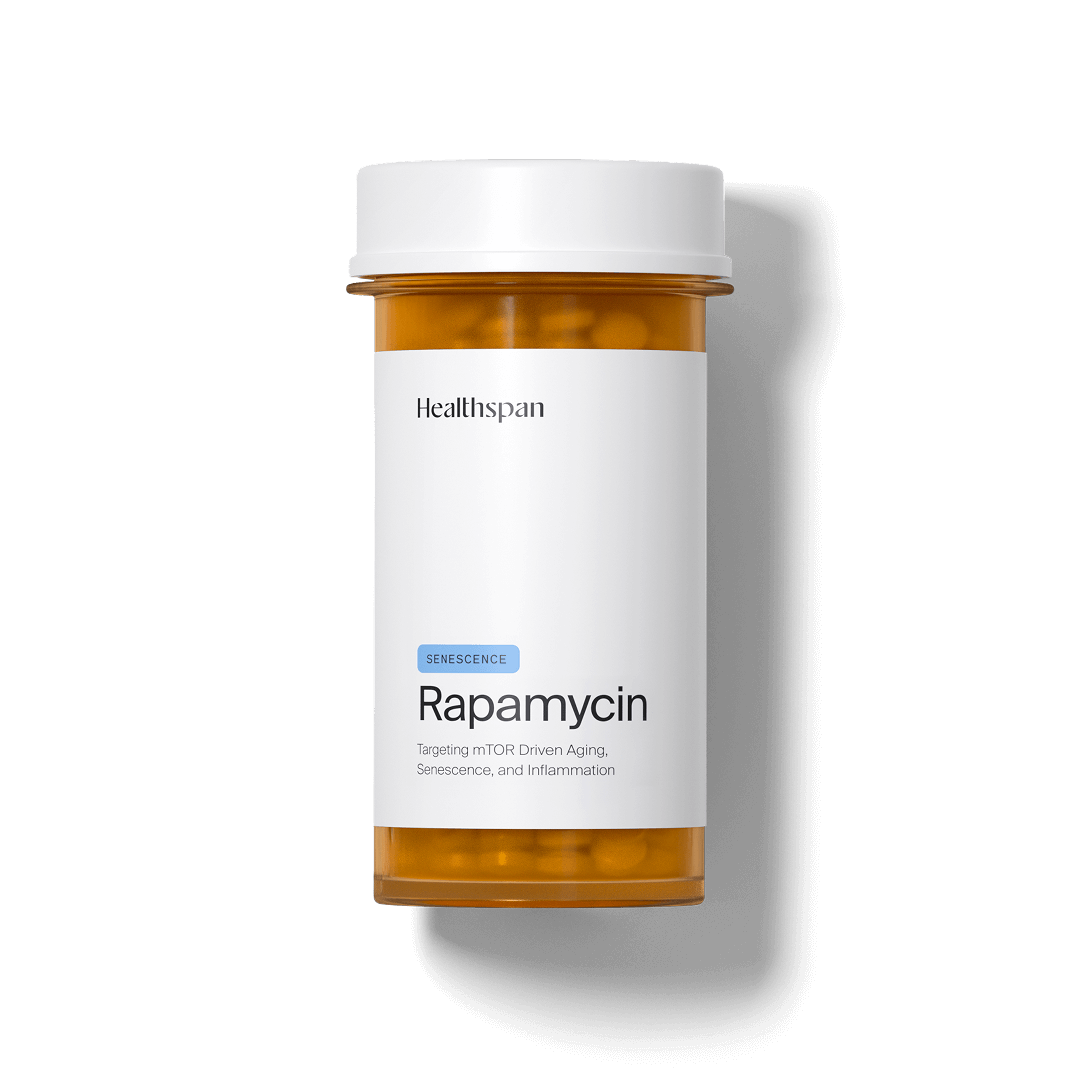
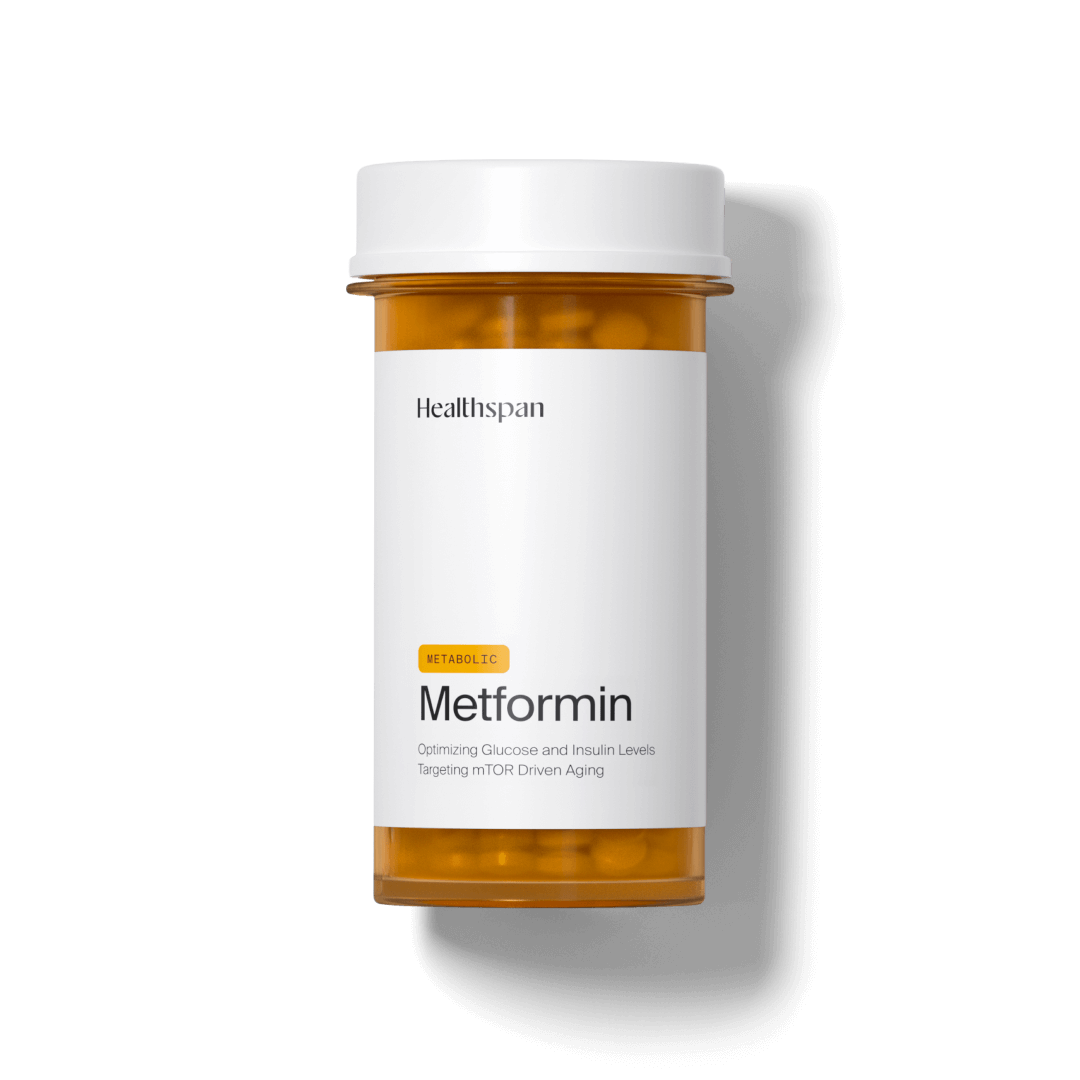
Compounds like rapamycin inhibit mTOR directly; metformin acts mainly on AMPK, the energy-stress sensor that pushes cells toward the same restorative state from another direction.
Use lifestyle levers
Fasting, resistance training and protein timing all move mTOR too. Medications are one studied lever among several, and whether any fits you is a clinician’s call.
Ease the growth signal
Compounds like rapamycin inhibit mTOR directly; metformin acts mainly on AMPK, the energy-stress sensor that pushes cells toward the same restorative state from another direction.
Release autophagy
Lowering mTOR signaling lifts the brake on autophagy, the cell’s cleanup of damaged proteins and structures — a mechanism studied for its role in cellular aging.
Use lifestyle levers
Fasting, resistance training and protein timing all move mTOR too. Medications are one studied lever among several, and whether any fits you is a clinician’s call.








Common questions about mTOR
mTOR stands for "mechanistic target of rapamycin" (originally "mammalian target of rapamycin"). It is a protein kinase — an enzyme inside your cells — that acts as a master sensor of nutrients, energy and growth signals. It got its name because it is the molecule the drug rapamycin was found to act on.
mTOR integrates signals about food, insulin and cellular energy, then decides whether the cell should be in "growth and build" mode or "maintenance and recycle" mode. When nutrients are plentiful, mTOR is active and drives growth. When nutrients are scarce, mTOR quiets down and the cell shifts toward repair and cleanup (autophagy).
Active mTOR suppresses autophagy — the cell’s process of breaking down and recycling damaged components. When mTOR signaling drops, that brake is released and autophagy ramps up. This is why fasting, exercise and mTOR-inhibiting compounds are all studied for their effect on cellular cleanup.
Rapamycin is a prescription medication that inhibits mTOR. In laboratory and animal research, easing mTOR signaling is associated with increased autophagy and, in several animal models, extended lifespan. Human longevity evidence is still emerging, and rapamycin is prescribed off-label for longevity only after clinical review.
In animal models, reducing mTOR activity has been associated with longer lifespan and healthier aging. Those findings come from research in organisms like mice and are not proof of the same effect in people. mTOR is a pathway of active longevity research, not a proven anti-aging treatment in humans.
Lifestyle inputs move mTOR too. Protein and calorie intake, insulin, resistance training and periods of fasting all shift the balance between mTOR-driven growth and autophagy. Medications like rapamycin are one studied lever among several — and whether any protocol is appropriate for you is a decision for a licensed clinician.
mTOR stands for "mechanistic target of rapamycin" (originally "mammalian target of rapamycin"). It is a protein kinase — an enzyme inside your cells — that acts as a master sensor of nutrients, energy and growth signals. It got its name because it is the molecule the drug rapamycin was found to act on.
mTOR integrates signals about food, insulin and cellular energy, then decides whether the cell should be in "growth and build" mode or "maintenance and recycle" mode. When nutrients are plentiful, mTOR is active and drives growth. When nutrients are scarce, mTOR quiets down and the cell shifts toward repair and cleanup (autophagy).
Active mTOR suppresses autophagy — the cell’s process of breaking down and recycling damaged components. When mTOR signaling drops, that brake is released and autophagy ramps up. This is why fasting, exercise and mTOR-inhibiting compounds are all studied for their effect on cellular cleanup.
Rapamycin is a prescription medication that inhibits mTOR. In laboratory and animal research, easing mTOR signaling is associated with increased autophagy and, in several animal models, extended lifespan. Human longevity evidence is still emerging, and rapamycin is prescribed off-label for longevity only after clinical review.
In animal models, reducing mTOR activity has been associated with longer lifespan and healthier aging. Those findings come from research in organisms like mice and are not proof of the same effect in people. mTOR is a pathway of active longevity research, not a proven anti-aging treatment in humans.
Lifestyle inputs move mTOR too. Protein and calorie intake, insulin, resistance training and periods of fasting all shift the balance between mTOR-driven growth and autophagy. Medications like rapamycin are one studied lever among several — and whether any protocol is appropriate for you is a decision for a licensed clinician.
This page is educational and not medical advice. mTOR is a subject of ongoing longevity research; findings linking mTOR inhibition to extended lifespan come largely from animal models, and human longevity evidence is still emerging. Rapamycin and metformin are prescription medications prescribed off-label for longevity, and a licensed clinician determines whether either is appropriate for you. Individual results vary.