







Licensed clinicians
Physicians, NPs and PAs licensed in your state. Every medical decision is theirs.

HSA/FSA eligible
Stay ahead of the menopause transition with in-depth hormone testing.
Blood draws at 2,000+ partner labs across the US. Hormone analysis typically takes two to three weeks.
Hormone replacement therapy is prescription medication, prescribed only after a licensed clinician reviews your labs, symptoms and history. Estrogen is prescribed with progesterone for anyone who still has a uterus. Testosterone for women and compounded bi-est are used off-label.
 01
01A symptom intake, then a baseline hormone panel at one of 2,000+ labs.
 02
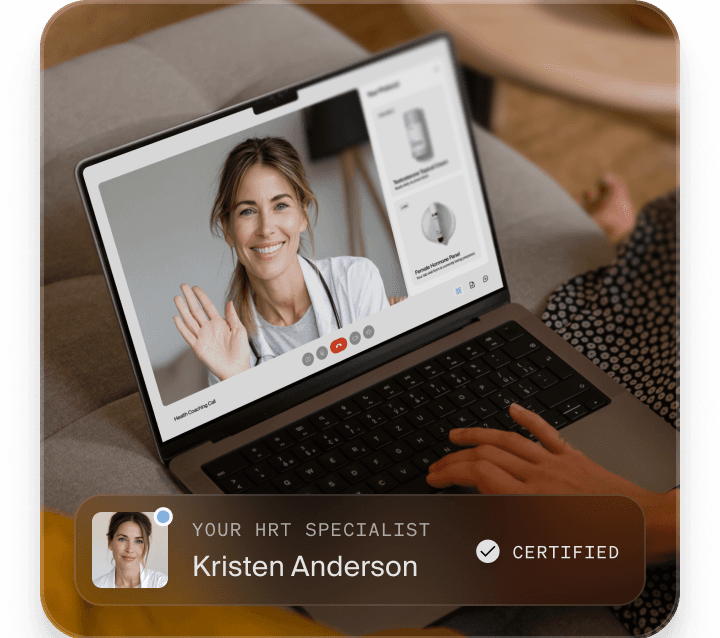
02A licensed clinician reads your results against your symptoms and history.
 03
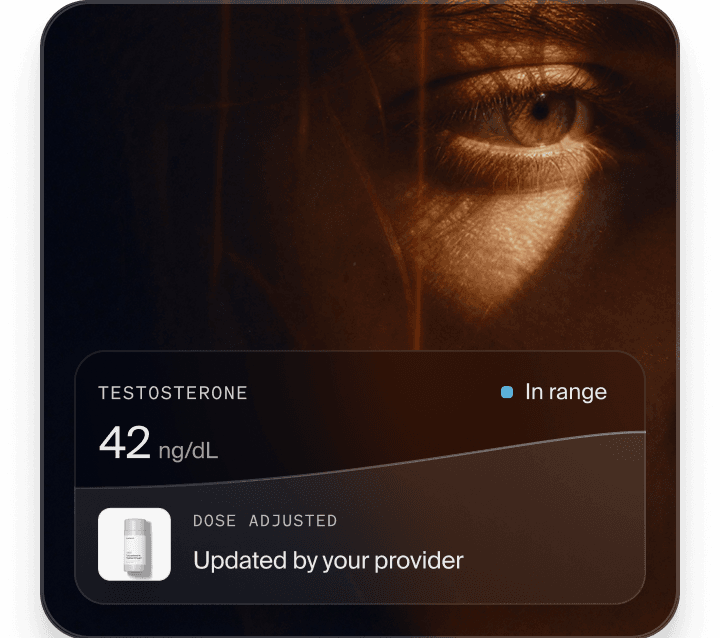
03A plan built on your results, retested every three to six months.
A deeper baseline across the systems that shape how you feel day to day.
The hormones behind your cycle, sleep, mood and metabolic rate.
Cholesterol and particle markers cardiologists read for long-term risk.
How your body processes and stores energy.
Background inflammation and the stress hormones that drive it.
How well your two filtration systems are clearing.
The white-cell lines that make up your immune response.
Vitamins and minerals that commonly run low through midlife.
Beyond a routine annual
How lab-led hormone care compares with the way midlife symptoms are usually handled.
Biomarkers per panel
70+, including the full sex-hormone picture
Retesting
Every 3 to 6 months, tracked over time
Personalized protocol
Written for your results by a licensed clinician
Insurance required
No — a one-time $99 consult, no claims to file
Clinician follow-ups
Included, unlimited messaging, 100% online
Hormone & thyroid depth
Estradiol, progesterone, FSH, LH, AMH, SHBG, thyroid
Biomarkers per panel
Typically around 25 on a standard annual
Retesting
Usually only at the next annual visit
Personalized protocol
A prescription, or "your results look normal"
Insurance required
Coverage and out-of-pocket cost vary by plan
Clinician follow-ups
A separate appointment to book and pay for
Hormone & thyroid depth
Often TSH alone, if included at all
Prescribed only after clinician review. Testosterone for women and compounded bi-est are used off-label.
From the panels we run to the protocol you end up on.
Physicians, NPs and PAs licensed in your state. Every medical decision is theirs.

Advanced-degree coaches, 1:1 on nutrition, movement and sleep.

150+ published works in aging research. Protocols change as evidence does.
Unlimited messaging, follow-up labs and symptom tracking.
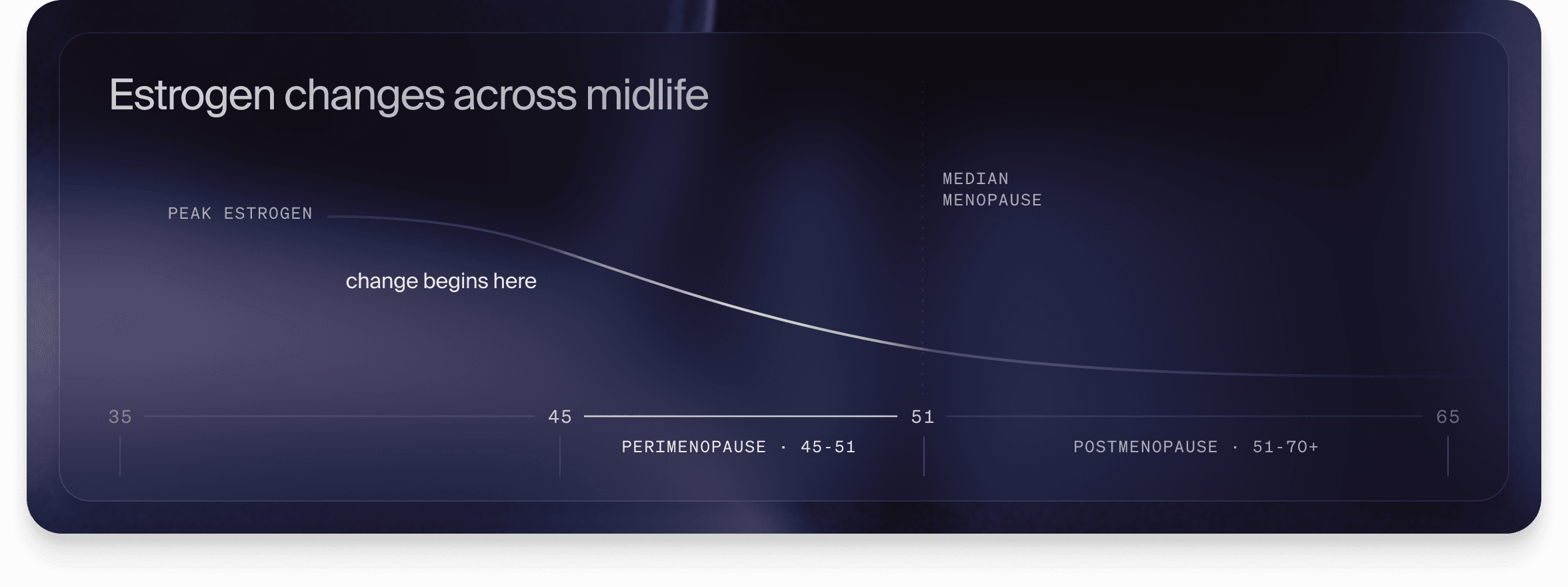
Hormone replacement therapy replaces hormones — most often estrogen, usually with progesterone — that decline through perimenopause and menopause. Clinicians consider it for women with symptoms such as hot flashes, night sweats, disrupted sleep, mood changes, brain fog or vaginal dryness. Whether it is right for you depends on your age, symptoms, lab results and medical history, which is why a licensed clinician makes that call after reviewing all four.
It is the difference between treating a checklist and treating you. A hormone panel shows what is actually shifting — and can surface causes such as thyroid or pituitary issues that hormone therapy would not address. It also gives you a baseline: without one, there is nothing to compare later results against, so nobody can tell whether your dose is working. Lab results on their own do not diagnose any condition; they inform a clinician who reads them alongside your symptoms and history.
The Female Hormone Panel covers eight core hormonal biomarkers: estradiol, FSH, AMH, LH, free testosterone, DHEA-S, SHBG and prolactin. Those sit within a broader panel of 70+ biomarkers across nine biological systems, so your clinician sees hormones alongside metabolic, thyroid and inflammatory markers rather than in isolation.
Current options, all prescribed only after clinician review, are the Estradiol Patch and Bi-Est 50/50 Cream for vasomotor symptoms such as hot flashes and night sweats, Micronized Progesterone for sleep and hormonal balance and to protect the uterine lining, and low-dose Testosterone Topical Cream for libido, mood and energy. Testosterone for women and compounded bi-est are used off-label. A clinician decides which, if any, fits you.
For many women in perimenopause and early menopause, clinicians consider hormone therapy a reasonable, evidence-based option — but the benefit-risk balance is individual and shifts with your age, time since menopause and medical history. Estrogen is prescribed together with progesterone for anyone who still has a uterus, because estrogen alone can increase the risk of endometrial cancer. Every protocol here is prescribed and monitored by a licensed clinician who weighs those risks for you specifically.
No. Hormone therapy is optional. Some people come for the testing and the clinical read on their results, and their protocol turns out to be non-hormonal — supplements, nutrition, movement and sleep interventions. If hormone therapy is not safe or not appropriate for you, your clinician will say so and build the plan without it.
No insurance is required. It is a one-time $99 fee for a consult with a licensed clinician, who reviews your symptoms, history and results and builds your plan. Labs and any medications your clinician prescribes are billed separately. The consult is HSA/FSA eligible.
Blood draws are done at more than 2,000 partner lab locations across the US. Standalone hormone panels are not available in New York, New Jersey or Rhode Island because of state lab regulations. Hormone analysis is more involved than routine bloodwork, so results typically take two to three weeks. Most people retest every six to twelve months.

Hormone replacement therapy is prescription medication, prescribed only after a licensed clinician reviews your labs, symptoms and history. Estrogen is prescribed with progesterone for anyone who still has a uterus. Testosterone for women and compounded bi-est are used off-label. Lab results alone are not intended to diagnose, treat or cure any condition. Educational only, not medical advice; individual results vary.
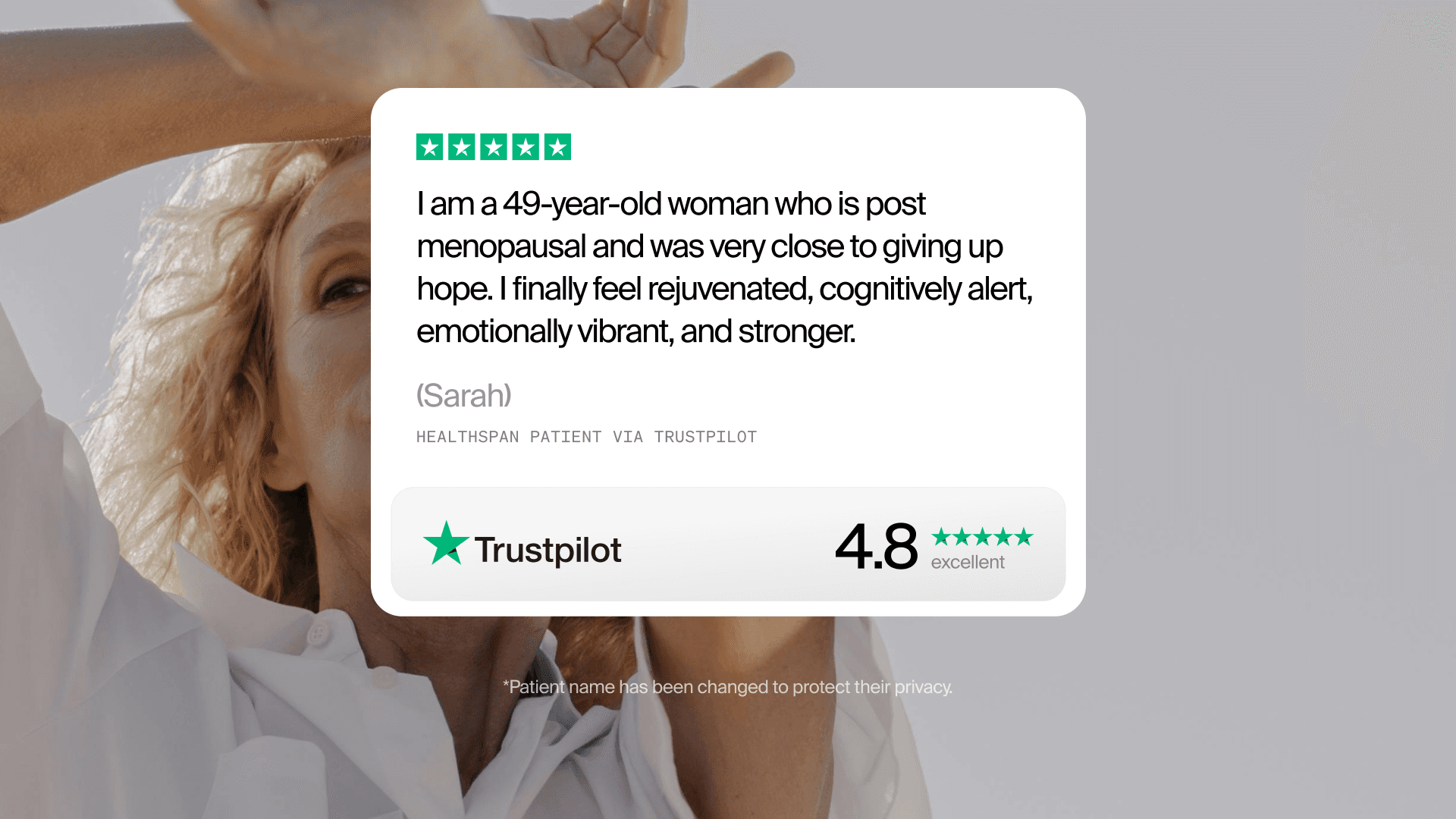
Biomarker counts and marker names refer to the panels published at gethealthspan.com/labs; a biomarker does not diagnose anything on its own. “A routine annual” means the tests commonly run at a standard yearly physical; your own physician’s may differ. Draws at 2,000+ US lab locations; standalone panels are not available in NY, NJ or RI. The review shown is from a Healthspan patient via Trustpilot, name changed at their request; one patient’s experience does not predict yours.