Your Mitochondria Were Once Bacteria. As They Fail With Age, Your Immune System Attacks Them Like an Infection.
Prefer to listen? Hit play for a conversational, audio‑style summary of this article’s key points.
Inflammaging, the chronic low-grade inflammation that rises with age, has a specific source, not just a vague one. This persistent internal inflammation underlies much of age-related disease, from heart failure to neurodegeneration to metabolic dysfunction. What has been harder to explain is where it comes from, since there is no infection or wound driving it. A large body of immunology points to a surprising culprit: your own aging mitochondria.
Mitochondria were once bacteria, and your immune system never fully forgot. Roughly two billion years ago, a bacterium was engulfed by another cell and stayed, eventually becoming the mitochondrion. It still carries traces of that past: its own circular, bacterial-style DNA, bacterial-like proteins, and distinctive membrane molecules. Your innate immune system evolved to detect exactly these bacterial and viral signatures, which means mitochondrial contents look like an infection when they escape.
Damaged mitochondria leak molecules that the immune system reads as danger signals. These are called DAMPs, damage-associated molecular patterns. The most important is mitochondrial DNA, which resembles bacterial DNA. When a mitochondrion is damaged and spills its contents into the cell, these normally hidden molecules become alarms. They are harmless in their proper place and inflammatory the moment they escape, so what matters is not whether they exist but whether they stay contained.
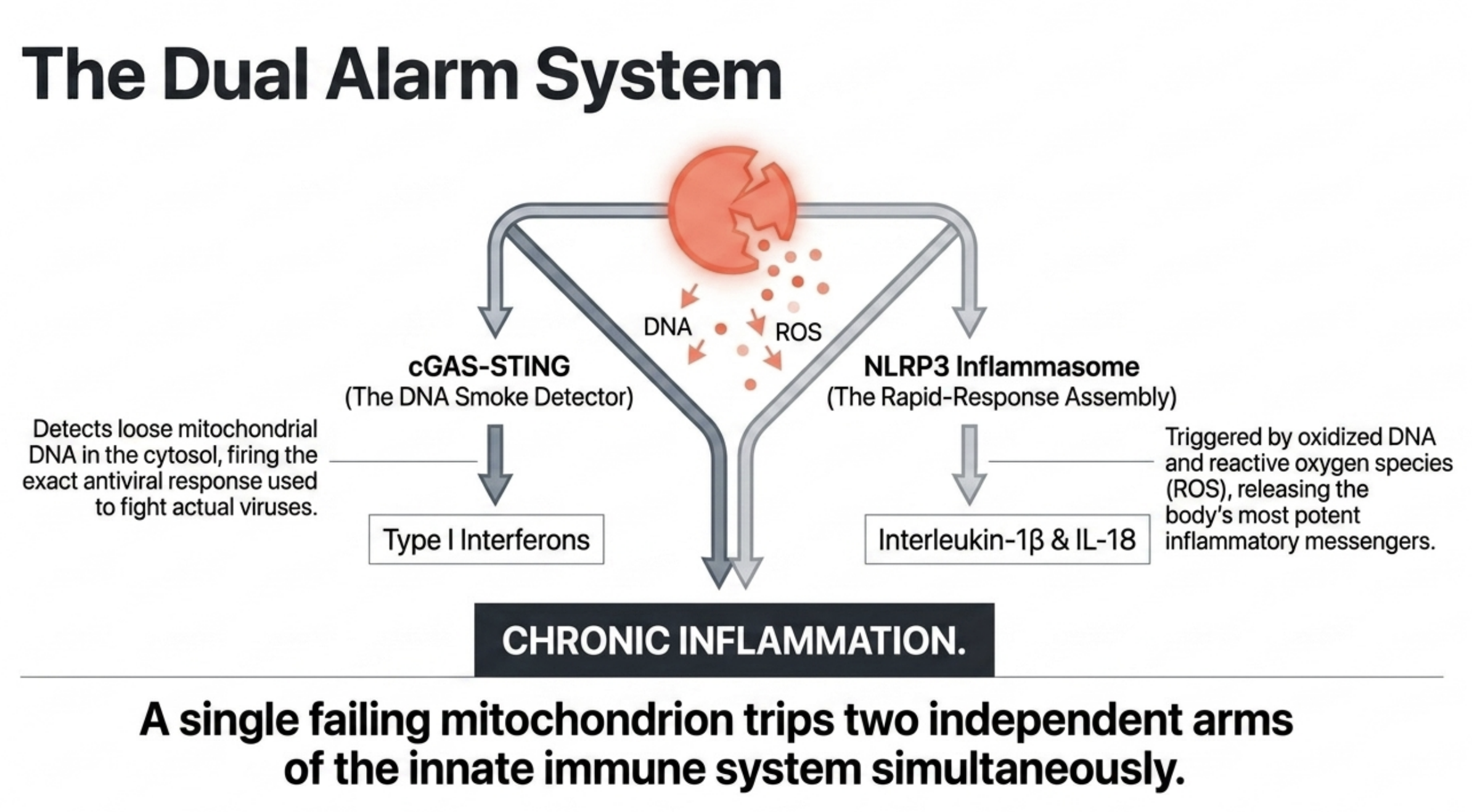
Two immune sensors sound the alarm, and mitochondrial damage trips both at once. The cGAS-STING pathway acts like a smoke detector for DNA in the wrong place, firing the antiviral interferon response when it finds mitochondrial DNA loose in the cell, even though no virus is present. The NLRP3 inflammasome, activated by mitochondrial stress and oxidized mitochondrial DNA, releases powerful inflammatory messengers. This is the same NLRP3 inflammasome that ketones and SGLT2 inhibitors are known to quiet.
The reason this isn't happening constantly is a set of safeguards, chief among them mitophagy. Mitophagy is the selective clearance of damaged mitochondria: the cell tags failing mitochondria using the PINK1 and Parkin proteins and delivers them to be recycled before they can leak. This makes mitophagy not just a way to maintain cellular energy, but the primary brake on mitochondria-driven inflammation, physically removing the danger before the sensors can find it.
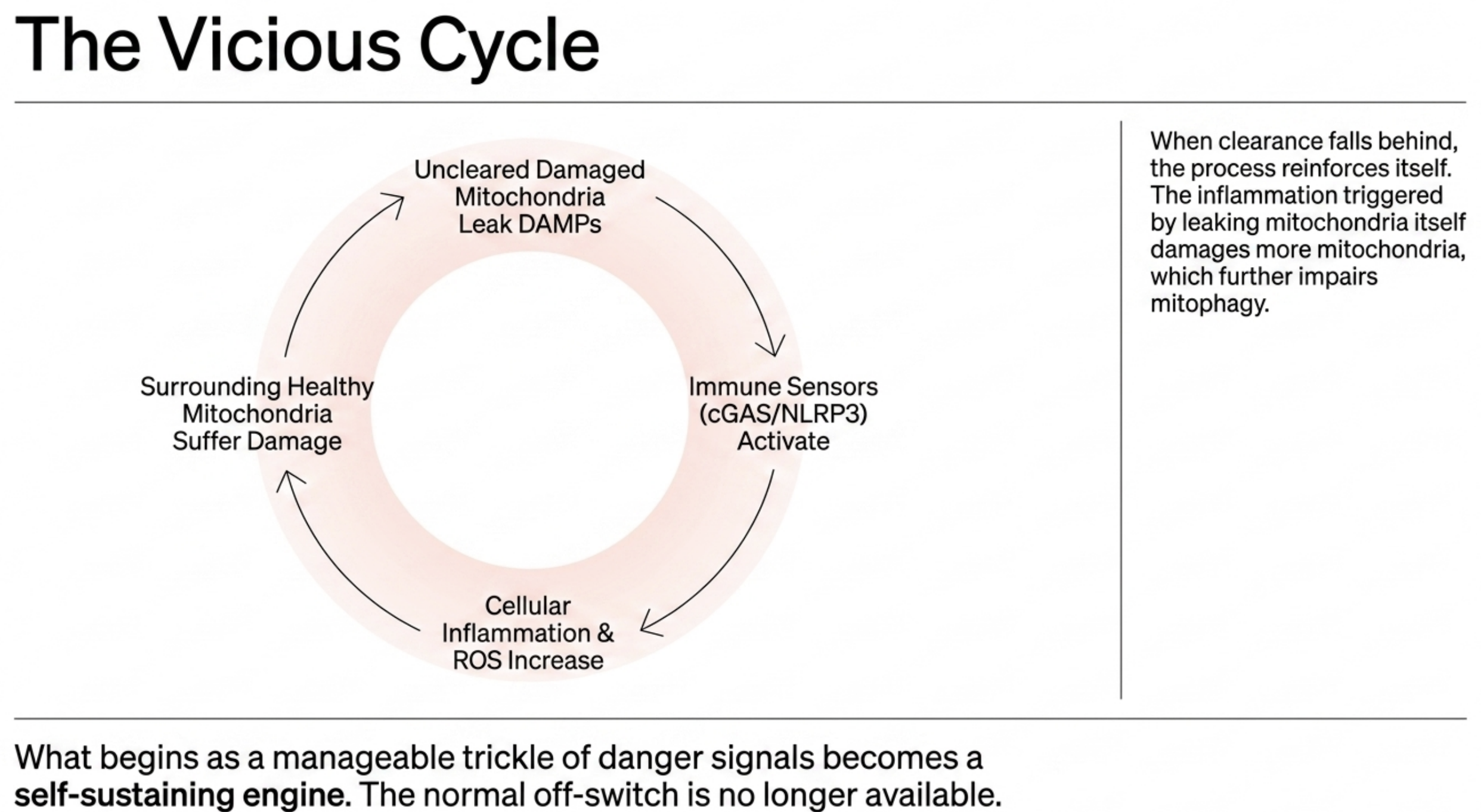
Inflammation is governed by a balance, a rheostat, between mitochondrial damage and mitochondrial clearance. As long as clearance keeps pace with damage, the sensors stay quiet. When damage outpaces clearance, damaged mitochondria linger, leak, and activate the sensors chronically. Worse, the process is self-reinforcing: the resulting inflammation damages more mitochondria and further impairs their clearance, locking the cycle in place.
Aging tips this balance in both directions at once, which is why it drives inflammation. Mitochondrial damage rises with age, while mitophagy, including the PINK1-Parkin machinery, declines with age. More damage plus less clearance is exactly the combination that tips the rheostat toward chronic inflammation. This gives a precise molecular account of inflammaging: not a vague background condition, but the predictable result of a balance that aging steadily undoes.
The same mechanism appears beneath many age-related diseases. Mitochondrial-DNA-driven inflammation has been implicated in heart failure, neurodegenerative disease including ALS, autoimmune conditions like lupus, and metabolic disease such as fatty liver. The specific pathology differs, but the underlying engine, leaking mitochondria activating innate immune sensors, recurs again and again.
This reframes mitochondrial quality control as an anti-inflammatory strategy, which is the deep rationale beneath mitophagy-focused interventions. If declining clearance of damaged mitochondria is a genuine engine of inflammaging, then supporting mitophagy addresses one of its root drivers, not just cellular energetics. This connects mechanistically to the interest in mitophagy activators like urolithin A and to interventions that reduce the inflammatory burden of senescent cells.
This is mechanism, not a cure, and the distinction matters. The science explains in molecular detail how failing mitochondria drive inflammation and why clearing them should reduce it. It does not prove that any single intervention reverses inflammaging in humans, and none has yet been shown to. The value of understanding this machinery is that it turns a vague goal, reduce the inflammation of aging, into a specific and testable target: preserve the cell's ability to clear its own damaged mitochondria.
The Inflammation No One Ordered
Ask what drives aging and you will hear a familiar list: cellular senescence, mitochondrial decline, genomic instability, the accumulation of molecular damage. But underneath much of that list runs a single quieter process, one that has become one of the most important ideas in the biology of aging. It has a name that captures it well: inflammaging.
Inflammaging is the chronic, low-grade inflammation that rises steadily with age. Not the acute, useful inflammation that fights an infection and resolves, but a persistent, smoldering activation of the immune system that never quite shuts off. It climbs slowly across the decades, and it is now understood to sit beneath a remarkable range of age-related disease: atherosclerosis and heart failure, neurodegeneration, type 2 diabetes, arthritis, and frailty itself. If you are looking for a common thread connecting the diseases of aging, chronic inflammation is one of the strongest candidates we have.
The strange thing about inflammaging is that nothing obvious is causing it. There is no chronic infection, no wound that fails to heal, no external enemy for the immune system to fight. The inflammation appears to come from inside, from the body's own aging cells. And for a long time, where exactly it came from was unclear. Something was setting off the immune system, persistently, from within, but the source was hard to name.
This article is about one of the most compelling answers, and it turns out to be a story that begins roughly two billion years ago. The source of much of this internal inflammation appears to be the mitochondria, the organelles that power every cell in your body. And the reason they can trigger inflammation at all comes down to a fact of deep evolutionary history that most people never learn: your mitochondria were once bacteria. Your immune system has never entirely forgotten this. As mitochondria age and fail, they spill their contents, and those contents look, to the ancient machinery of your innate immune system, unmistakably like an infection.
What follows is drawn from a detailed review in Nature Reviews Immunology, synthesizing how mitochondria control inflammation. It is a technical literature, but the core idea is elegant and worth understanding, because it reframes inflammaging from a vague background hum into something specific and mechanical: a failure of containment, in which the powerhouse of the cell becomes, in its decline, a false alarm the immune system cannot stop answering.
The Bacterial Ghost Inside Every Cell
To understand why a failing mitochondrion triggers inflammation, you have to go back to where mitochondria came from, because the whole phenomenon is a consequence of their origin.
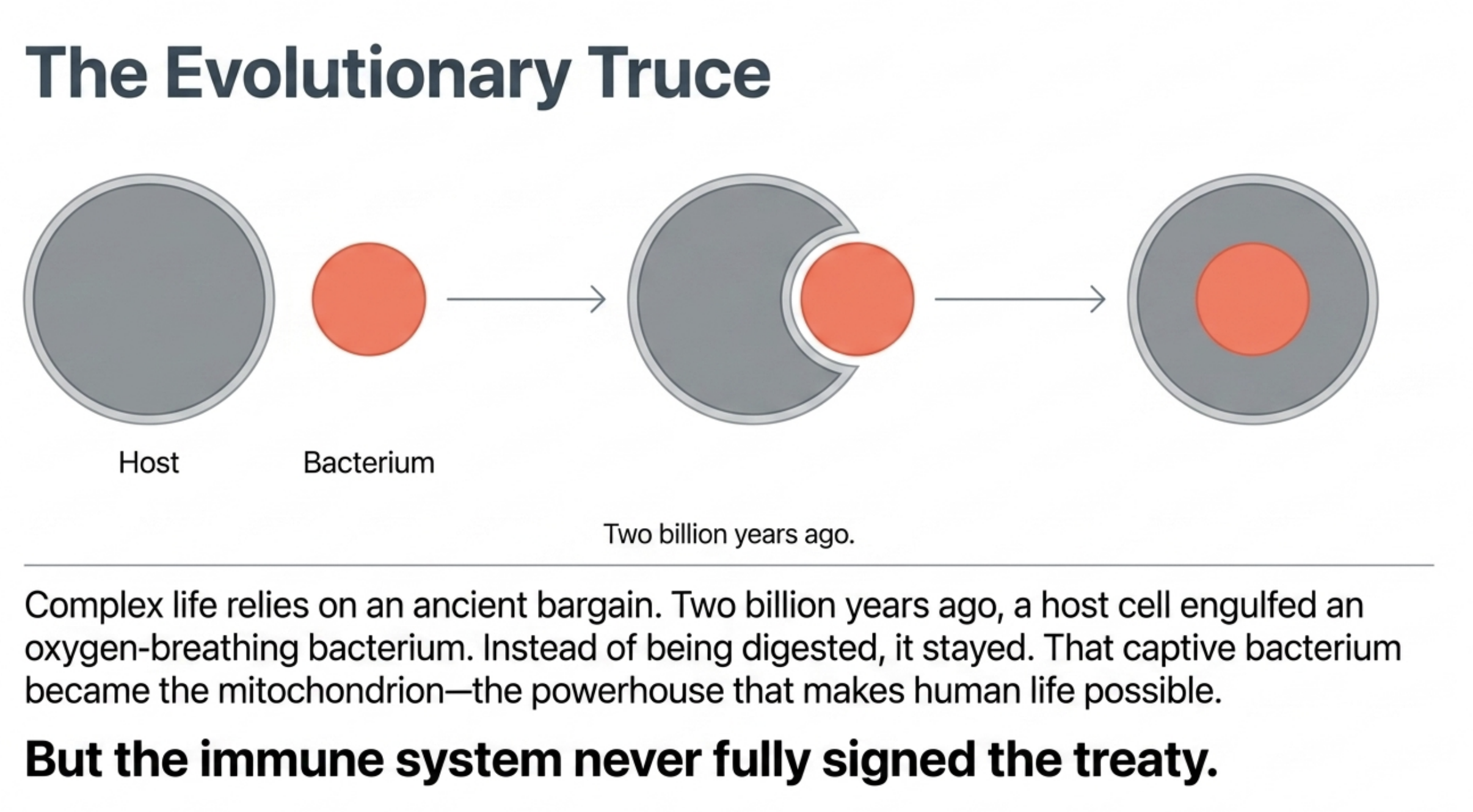
Roughly two billion years ago, one single-celled organism engulfed another. Ordinarily that would end with the smaller cell being digested. Instead, something extraordinary happened: the engulfed bacterium survived inside its host, and the two struck a bargain that would reshape the history of life. The bacterium was good at producing energy using oxygen. The host provided shelter and raw materials. The bacterium stayed, generation after generation, gradually surrendering most of its independence, until it became a permanent internal organ of the cell. That former bacterium is the mitochondrion, and the energy it produces is what made complex life, including us, possible.
But the mitochondrion never fully erased its bacterial past. Even now, after two billion years of domestication, it carries unmistakable traces of what it used to be. It still has its own DNA, a small circular genome separate from the one in the cell's nucleus, arranged in a loop the way bacterial DNA is arranged rather than in the linear chromosomes of our own cells. It still builds its proteins in a way that echoes bacterial protein synthesis. Its inner membrane contains a distinctive fatty molecule, cardiolipin, that is characteristic of bacteria. In molecular terms, the mitochondrion is a bacterium that never left.
This matters because of how the immune system recognizes threats. Your innate immune system, the ancient, fast-acting first line of defense, does not identify pathogens one by one. Instead, it watches for general molecular signatures shared by whole classes of invaders, structural features common to bacteria and viruses but not normally found loose inside your own cells. Circular DNA with unmethylated patterns, characteristic of bacteria. Double-stranded RNA, characteristic of viruses. These molecular patterns act as red flags. When the immune system detects one in the wrong place, it concludes, reasonably, that something foreign has gotten in, and it launches an inflammatory response.
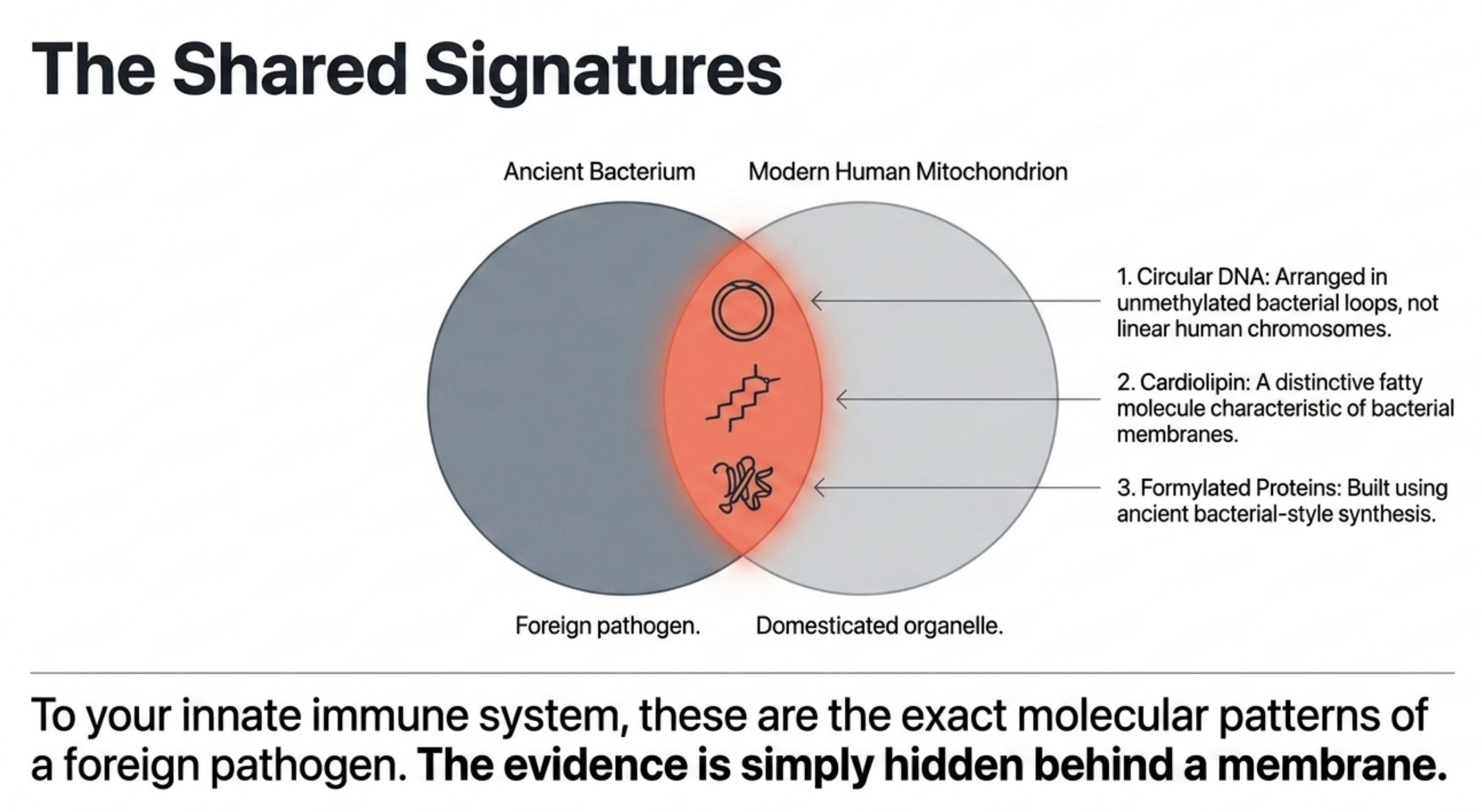
The problem should now be obvious. The mitochondrion, that ancient domesticated bacterium, contains several of the very molecular patterns the immune system evolved to treat as signs of infection. Its circular DNA looks bacterial because it is bacterial in origin. Some of the RNA it produces resembles viral RNA. As long as these molecules stay sealed inside the mitochondrion, all is well; the immune system never sees them, and the mitochondrion goes about its work as a trusted member of the cell. The entire peace depends on containment. The bacterial ghost is tolerated only so long as it stays locked in its compartment.
And that is precisely the arrangement that breaks down when mitochondria are damaged, or when they age.
The Alarm Signals: Mitochondrial DAMPs
When immunologists talk about the molecules that trigger this kind of internal alarm, they use a specific term: DAMPs, or damage-associated molecular patterns. The name is worth unpacking, because it draws a precise distinction.
The immune system responds to two broad categories of danger signal. The first, more familiar category is PAMPs, pathogen-associated molecular patterns, the molecular signatures of genuine invaders: components of bacterial cell walls, viral genetic material, the telltale features of something foreign. DAMPs are the internal counterpart. They are the body's own molecules, normally kept tucked away where the immune system never encounters them, that signal danger when they turn up somewhere they should not be. A DAMP is not foreign. It is a domestic molecule out of place, and its displacement is itself the alarm. A protein that belongs inside a cell means nothing while it stays there; spilled into the bloodstream, it announces that a cell has been destroyed, and the immune system responds accordingly.
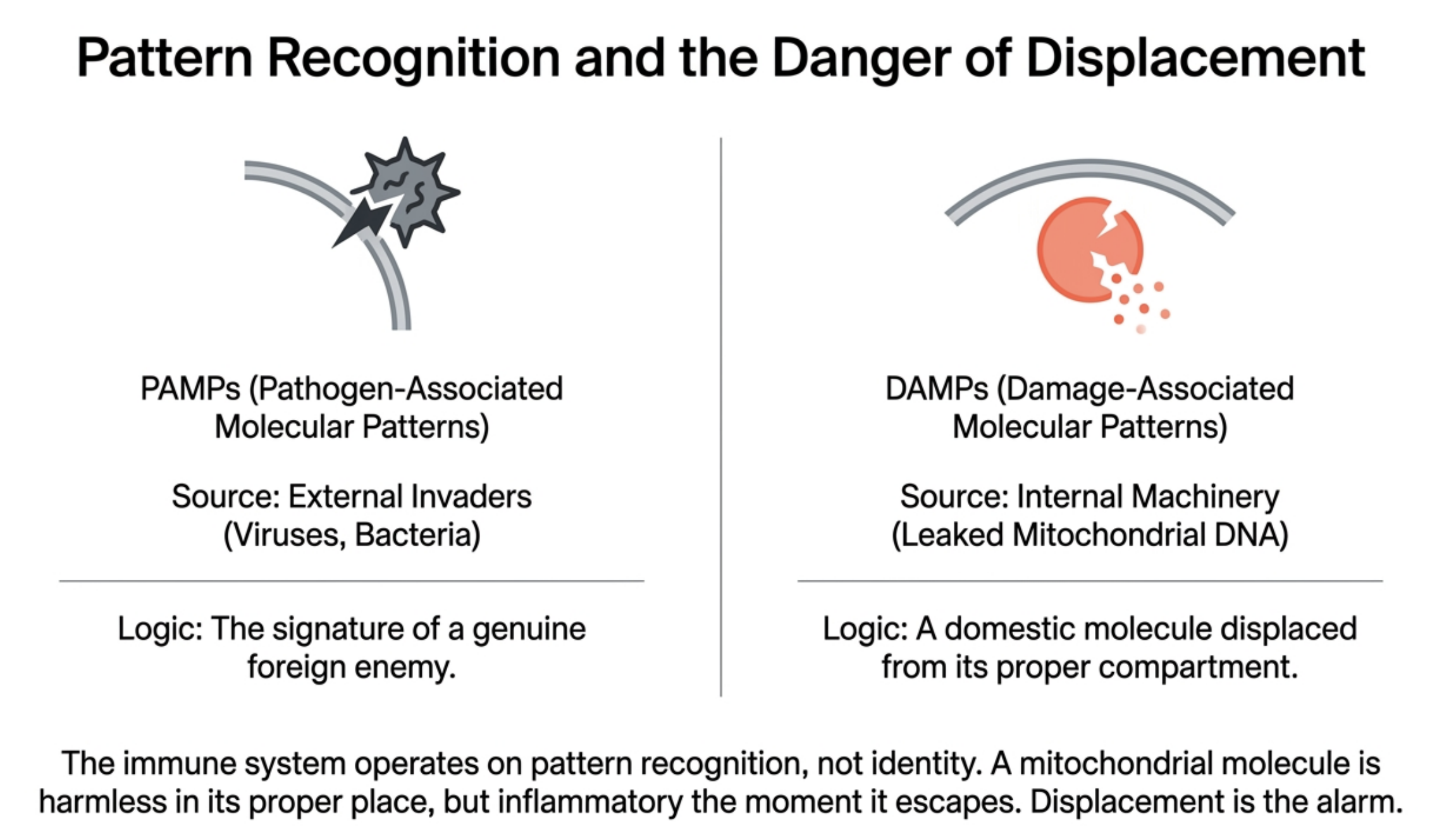
Mitochondria, given their bacterial ancestry, are an unusually rich source of DAMPs. When a mitochondrion is damaged and its contents escape, several distinct molecules can each independently raise the alarm.
The most important is mitochondrial DNA. Because it is circular and bacterial in character, mitochondrial DNA released into the cell's interior is read by the immune system as though bacterial DNA had appeared inside the cell. It is perhaps the single most potent mitochondrial danger signal, and much of the rest of this story revolves around it.
Mitochondrial double-stranded RNA is a second signal. Mitochondria produce RNA in a way that generates double-stranded forms resembling the genetic material of many viruses. When this RNA escapes into the cell body, it can trip the same sensors that detect viral infection.
Cardiolipin, the distinctive fatty molecule of the mitochondrial inner membrane, is a third. Normally buried deep in the mitochondrion, its appearance where it does not belong helps activate the inflammatory machinery.
ATP, the energy currency the mitochondrion manufactures, becomes a danger signal too when released outside the cell, where its presence signals that something has gone wrong within. And formylated proteins, proteins built in the bacterial-style manner that mitochondria still use, carry a chemical signature that the immune system specifically associates with bacteria, marking them as foreign when they spill out.
The unifying logic is displacement. Every one of these molecules is harmless, even essential, in its proper place. Each becomes an inflammatory trigger the moment it escapes the mitochondrion. So the question that determines whether inflammation fires is not whether these molecules exist, they always do, but whether they stay contained. And that, in turn, depends on the integrity of the mitochondria and on how effectively the cell clears the damaged ones. The alarm is always loaded. Containment is what keeps it from going off.
The unifying logic is displacement. Every one of these molecules is harmless, even essential, in its proper place. Each becomes an inflammatory trigger the moment it escapes the mitochondrion.
The Sensors That Sound the Alarm
A danger signal accomplishes nothing on its own. It has to be detected. For that, cells are equipped with molecular sensors, proteins whose job is to recognize specific danger signals and convert them into an inflammatory response. Two of these sensor systems do most of the work in mitochondria-driven inflammation, and understanding them is the key to the whole story.
The DNA Smoke Detector: cGAS-STING
The first is a pathway called cGAS-STING, and the cleanest way to understand it is as a smoke detector for DNA in the wrong place.
DNA belongs in two locations in your cells: the nucleus, where your main genome is stored, and inside mitochondria. It has no business floating loose in the cytosol, the general interior of the cell. So the cell posts a sentry there. That sentry is cGAS, a protein that does essentially one thing: it detects DNA in the cytosol. When cGAS finds loose DNA, it treats that discovery as near-proof of an invader, because under normal circumstances the only way DNA ends up in the cytosol is if a virus or bacterium has delivered it there.
When cGAS binds stray DNA, it manufactures a small signaling molecule that activates its partner, STING. STING, once switched on, triggers a powerful response dominated by type I interferons, the class of molecules the body uses to fight viral infection. Interferons put surrounding cells into an antiviral state and summon immune cells to the area. It is a formidable and appropriate response, when there is actually a virus.
Now bring mitochondria back in. When a mitochondrion is damaged and leaks its DNA into the cytosol, cGAS cannot tell the difference between mitochondrial DNA and the DNA of an invading pathogen. To cGAS, DNA in the cytosol is DNA in the cytosol. It sounds the alarm. STING fires. The antiviral interferon response mobilizes, in full, against a threat that does not exist. The smoke detector is working exactly as designed; there simply is no fire, only the cell's own leaking mitochondria.
The Second Alarm: The NLRP3 Inflammasome
The second sensor system is the inflammasome, and one version in particular, called NLRP3, is central here. If cGAS-STING is a smoke detector, the inflammasome is closer to a rapid-response assembly that, once triggered, releases some of the most potent inflammatory signals the body produces.
The NLRP3 inflammasome is a large protein complex that assembles when the cell detects signs of stress and damage. A range of triggers can set it off, and strikingly, several of the most important come straight from mitochondria. Reactive oxygen species, the corrosive byproducts that damaged mitochondria produce in excess, help activate it. So does mitochondrial DNA, particularly in its oxidized form, chemically marked by the same stress. When the NLRP3 inflammasome assembles, it activates an enzyme that cleaves two of the body's most powerful inflammatory messengers, interleukin-1β and interleukin-18, into their active forms and releases them. These molecules drive fever, recruit immune cells, and amplify inflammation broadly.
This inflammasome is not an obscure detail. It is one of the central hubs of inflammatory disease, and it recurs throughout Healthspan's coverage. It is the same NLRP3 inflammasome that the ketone body beta-hydroxybutyrate quiets, one of the mechanisms behind the anti-inflammatory effects discussed in the work on SGLT2 inhibitors and on ketones versus glucose. When you read that a compound "inhibits the NLRP3 inflammasome," this is the machine being referred to, and mitochondrial damage is one of its principal activators.
Two Alarms, One Source
The important point is that damaged mitochondria set off both systems at once. Leaking mitochondrial DNA triggers cGAS-STING and its interferon response, and simultaneously feeds the NLRP3 inflammasome and its interleukin cascade. A single failing mitochondrion, spilling its bacterial-looking contents, can light up two independent and powerful arms of the innate immune system, both of them behaving exactly as they would in the presence of a real infection. This is why mitochondrial damage is such an efficient driver of inflammation: it does not trip one alarm, it trips several, and they reinforce one another.
The Safeguards: Why This Isn't Happening Constantly
If damaged mitochondria are such efficient triggers of inflammation, a reasonable question follows: why isn't every cell in a constant state of alarm? Mitochondria are damaged all the time in the ordinary course of life. Something must be keeping the response in check. In fact, several somethings, and they are the reason the system works at all.
The cell maintains a set of safeguards whose collective job is to ensure that mitochondrial danger signals rarely reach the sensors. Understanding them matters, because inflammaging is in large part the story of these safeguards weakening.
Containment During Cell Death
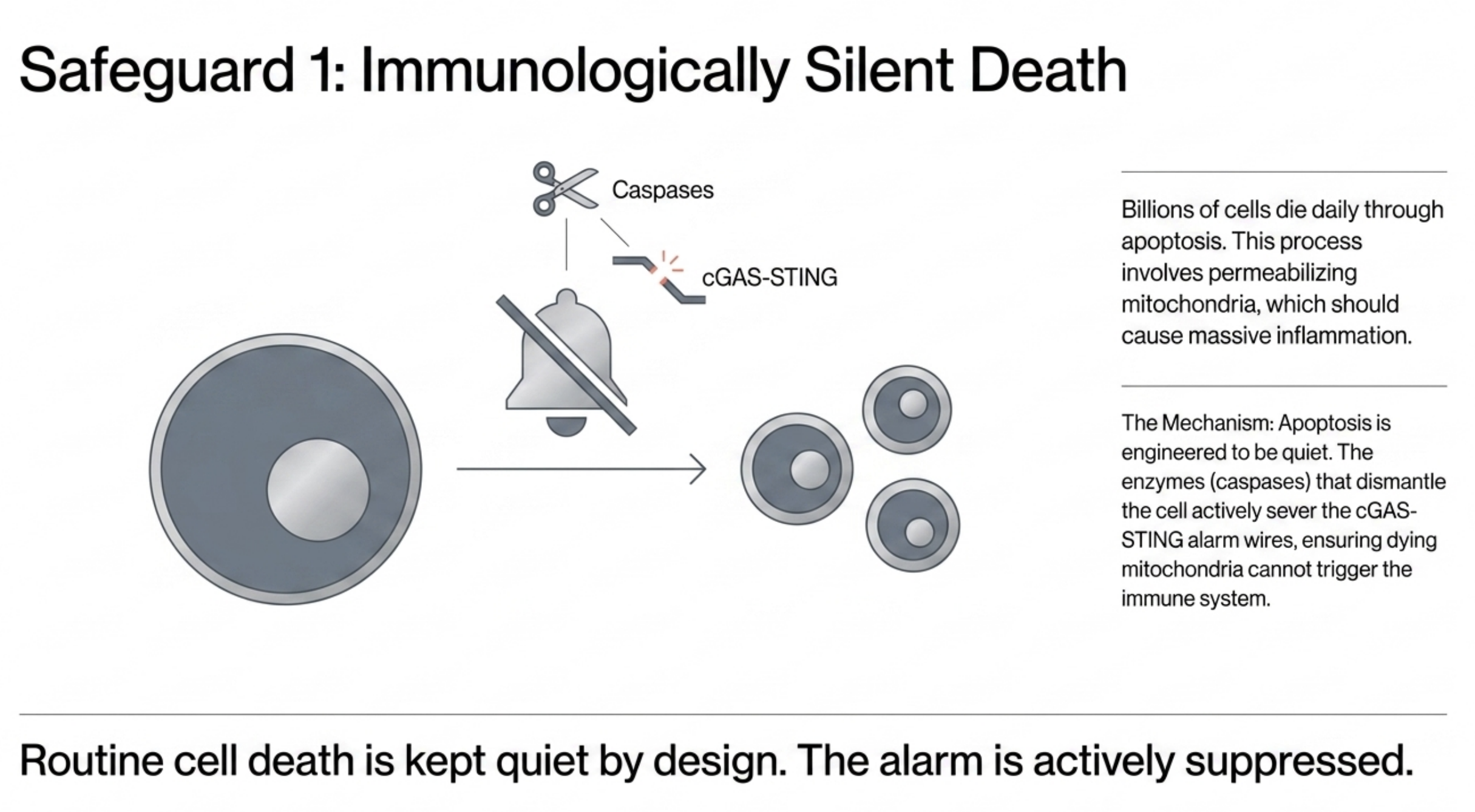
The first safeguard operates at one of the moments when mitochondria are most likely to spill their contents: programmed cell death. Cells die constantly and deliberately, through an orderly process called apoptosis, and apoptosis necessarily involves permeabilizing the mitochondria. This would seem like a recipe for massive inflammatory signaling, billions of cells dying and releasing mitochondrial DNA every day.
It is not, because apoptosis is engineered to be immunologically silent. The same machinery that executes the death also actively suppresses the inflammatory response that the dying mitochondria would otherwise provoke. The enzymes that carry out apoptosis, the caspases, do double duty: they dismantle the cell, and they simultaneously shut down the cGAS-STING pathway, cleaving its components so the interferon alarm cannot sound. Ordinary cell death is thus kept quiet by design. The cell dies without raising a fuss, and the immune system is never alerted. Only when apoptosis is incomplete or dysregulated does the mitochondrial DNA released during death start to drive inflammation.
Clearing the Damaged Mitochondria: Mitophagy
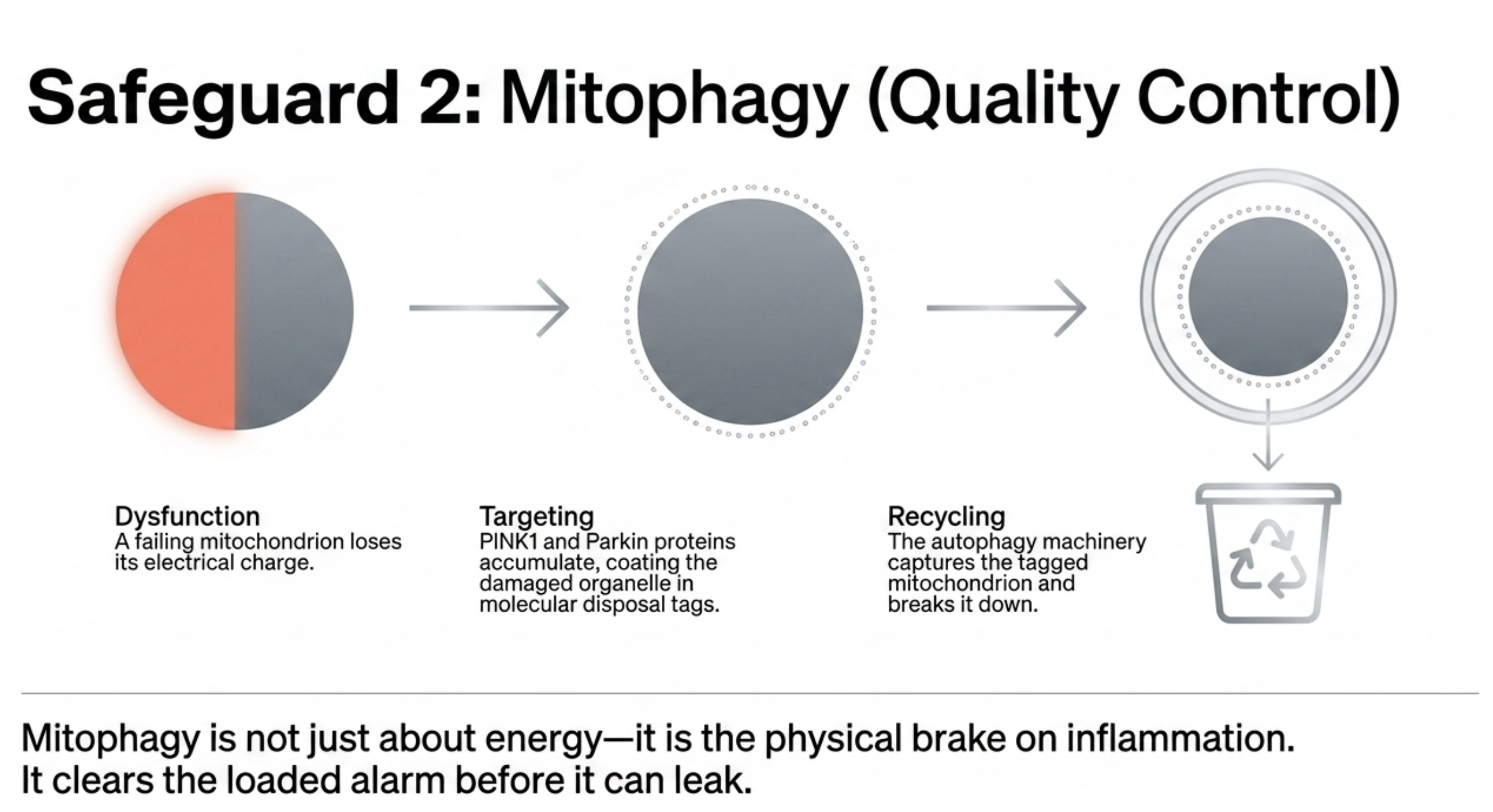
The second safeguard is the most important for our purposes, and it is one that recurs throughout Healthspan's coverage: mitophagy, the selective clearance of damaged mitochondria.
Mitophagy is the cell's quality-control system for its mitochondria. When a mitochondrion becomes damaged, dysfunctional, and prone to leaking, the cell tags it, encloses it in a membrane, and delivers it to be broken down and recycled before it can cause trouble. This is the same process central to the urolithin A research covered previously, but here its role is different and, in a sense, more fundamental. Mitophagy is not only about maintaining energy production by keeping the mitochondrial population healthy. It is also the primary way the cell removes the very mitochondria that would otherwise spill DAMPs and ignite inflammation.
In other words, mitophagy is the brake on mitochondria-driven inflammation. A damaged mitochondrion is a loaded alarm. Mitophagy defuses it, physically removing it before its contents can reach cGAS or the inflammasome. When mitophagy is working well, damaged mitochondria are cleared faster than they can leak, and the sensors stay quiet. The review frames this balance vividly, describing mitophagy as a rheostat, a dial that sets how much mitochondria-driven inflammation the cell permits, tuned by how effectively damaged mitochondria are cleared.
Taken together, these safeguards describe a system held in careful equilibrium. Mitochondria are always accumulating some damage. Some of them are always at risk of leaking. But apoptotic containment keeps routine cell death quiet, and mitophagy continuously removes the damaged organelles before they can trigger the sensors. Inflammation stays suppressed not because the danger signals are absent, but because the cell is constantly, actively clearing them. The alarm is loaded at all times. The safeguards are what keep a finger off the trigger.
Which raises the question that turns this from cell biology into the biology of aging: what happens when the safeguards start to fail?
When the Safeguards Fail: The Rheostat Tips
The equilibrium described so far is not guaranteed. It has to be actively maintained, and maintenance can fail in two directions: the damage can rise, or the clearance can fall. When either happens, and especially when both happen together, the balance tips, and the same machinery that normally protects the cell becomes a source of chronic inflammation.
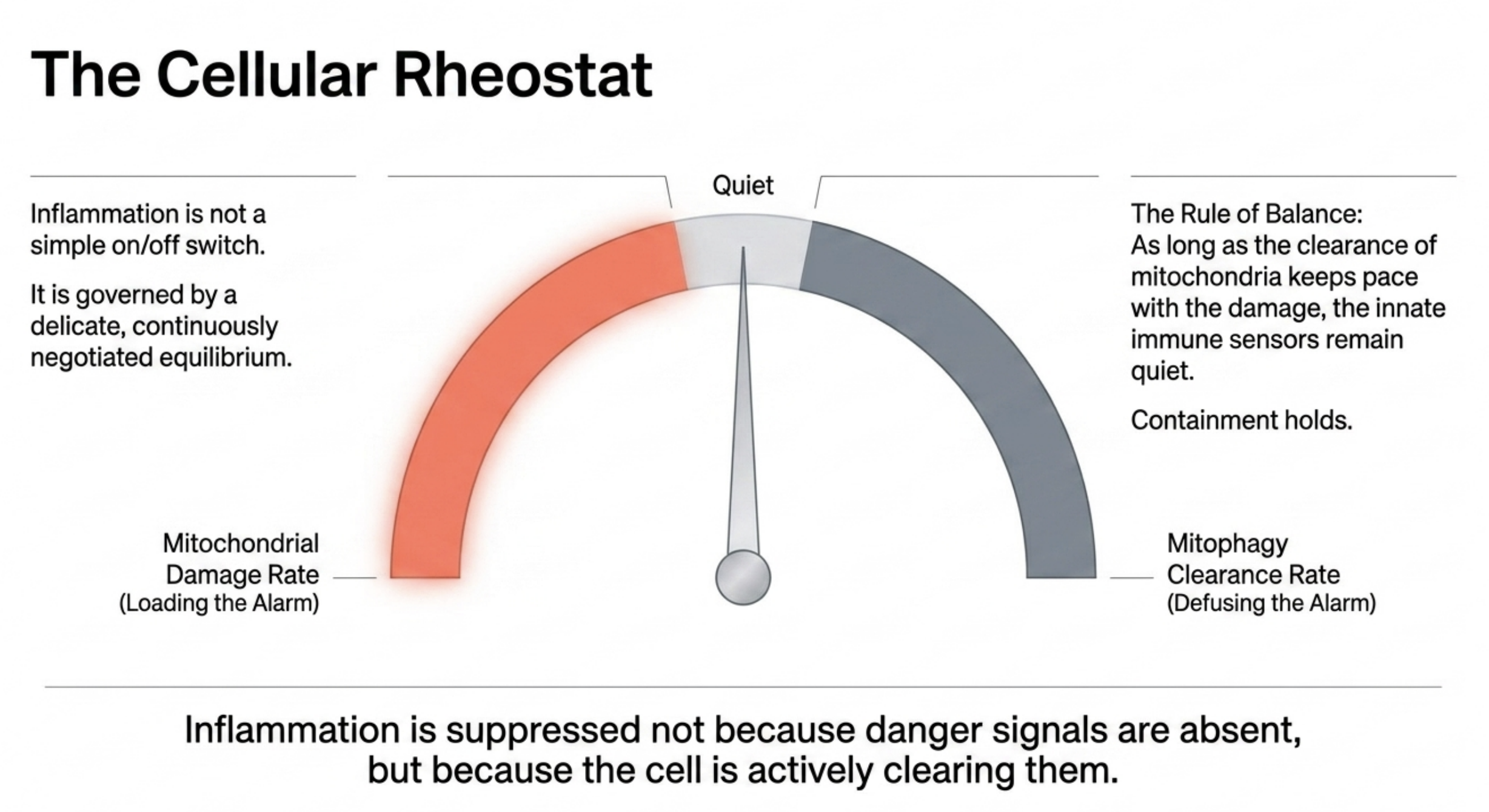
Consider the rheostat again, the dial between contained and inflammatory. Its position is set by a simple competition: the rate at which mitochondria become damaged and leak, versus the rate at which the cell clears them before they can. As long as clearance keeps pace with damage, the dial stays toward the quiet end. Damaged mitochondria are removed by mitophagy faster than they can spill their contents, apoptotic cell death stays immunologically silent, and the sensors rarely fire. The system holds.
Now imagine damage accelerating. More mitochondria are becoming dysfunctional, leaking DNA and reactive oxygen species into the cytosol. If clearance held steady, it might still cope. But suppose clearance is not holding steady, suppose mitophagy itself is slowing down. Now damaged mitochondria are accumulating faster than they are being removed. They linger. They leak. Their DNA reaches cGAS; their oxidized DNA and reactive oxygen species reach the NLRP3 inflammasome. The sensors, which fire appropriately in response to a real threat, begin firing in response to the cell's own uncleaned wreckage, and they do not stop, because the source is not a passing infection but a standing population of damaged organelles that is no longer being cleared.
This is the tipped rheostat. And it is worse than a simple threshold crossing, because the process reinforces itself. The inflammation triggered by leaking mitochondria itself damages more mitochondria. Reactive oxygen species beget more reactive oxygen species. Inflammatory signaling can further impair mitophagy. Each turn of the loop produces more damage, more leaked DAMPs, more sensor activation, and less capacity to clean up, which produces still more damage. What began as a manageable trickle of danger signals becomes a self-sustaining cycle. The cell is now generating its own chronic inflammation, and the normal off-switch, clearance outpacing damage, is no longer available because clearance has fallen behind and cannot catch up.
The review's framing of a rheostat is apt precisely because it captures this graded, tunable quality. Mitochondria-driven inflammation is not simply on or off. It is set by a balance, and that balance can drift. A small shift toward more damage and less clearance nudges the dial toward inflammation. A larger shift, sustained over time, locks it there. The question that matters for aging is what, systematically and predictably, would push that dial in the wrong direction over a lifetime. And the answer turns out to describe aging itself.
The Aging Connection: Inflammaging's Engine
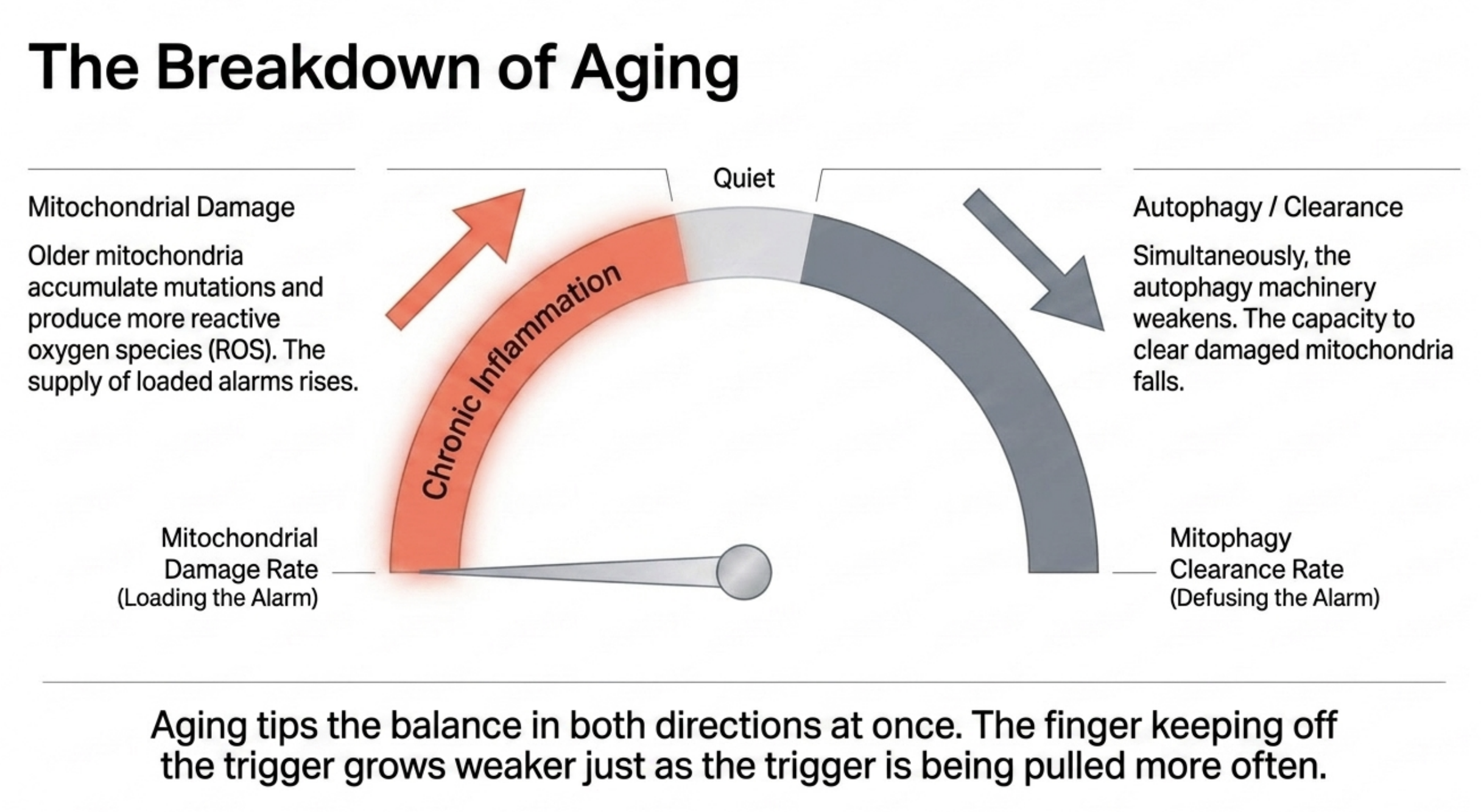
Everything described so far is cell biology that operates at any age. What makes it the story of aging specifically is that the two factors setting the rheostat, mitochondrial damage and mitochondrial clearance, both move in the wrong direction as we grow older, and they move in a coordinated way that pushes the dial steadily toward inflammation across a lifetime.
Start with damage. Mitochondrial function declines with age; this is one of the most consistent observations in all of aging biology. Older mitochondria are less efficient, more prone to dysfunction, and they produce more reactive oxygen species as their machinery degrades. Mitochondrial DNA, sitting close to the site of energy production and less protected than nuclear DNA, accumulates mutations and damage over time. So the supply of damaged, leak-prone mitochondria rises with age. The alarm is being loaded more often.
Now clearance. Mitophagy declines with age. The cellular quality-control systems that remove damaged mitochondria become less efficient over time, for reasons that include the same declining mitochondrial function and the gradual weakening of the autophagy machinery generally. So exactly as the supply of damaged mitochondria is rising, the capacity to clear them is falling. The finger that was keeping off the trigger grows weaker just as the trigger is being pulled more often.
This is the crux. The two trends are not independent misfortunes; they compound. More damage plus less clearance is precisely the combination that tips the rheostat, and aging delivers both at once, gradually, relentlessly, over decades. The result is that damaged mitochondria increasingly linger, increasingly leak, and increasingly activate cGAS-STING and the NLRP3 inflammasome. Chronic, low-grade inflammation is the direct output. This is a molecular account of inflammaging, not as a vague background condition, but as the specific and predictable consequence of a balance that aging tips.
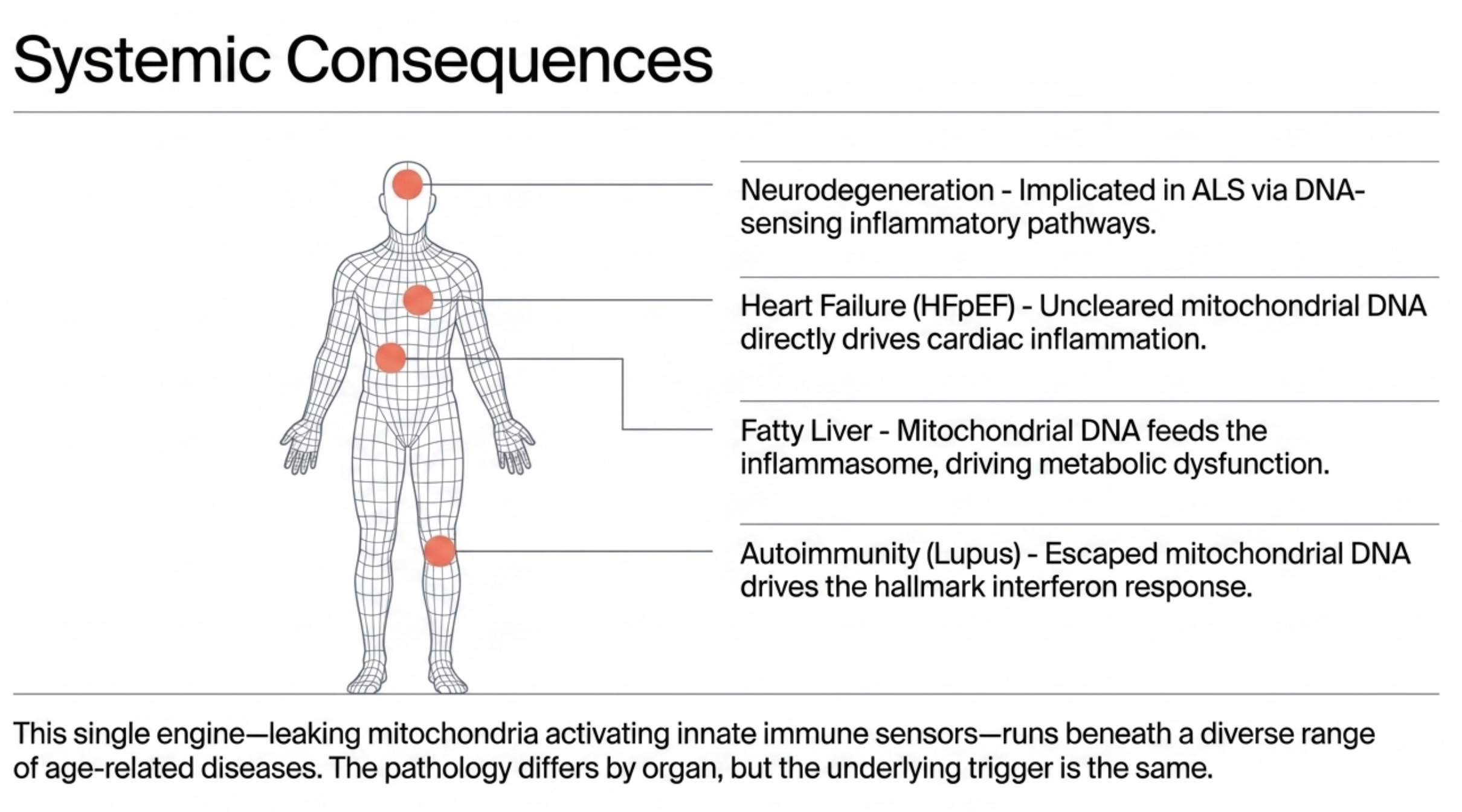
And it connects to the diseases that inflammaging tracks with. Mitochondrial-DNA-driven inflammation has been implicated across a striking range of age-related pathology.
- In the heart, mitochondrial DNA that escapes clearance has been shown to drive inflammation and contribute to heart failure, which links this machinery directly to the same organ discussed in the work on HFpEF.
- In neurodegeneration, this pathway appears in conditions including ALS, where mitochondrial DNA release activates the same DNA-sensing inflammation.
- It appears in autoimmune disease, in lupus, where mitochondrial DNA drives the interferon response that characterizes the illness.
- It appears in metabolic disease, in fatty liver, where mitochondrial DNA feeds the inflammasome. The same core mechanism, leaking mitochondria activating innate immune sensors, surfaces again and again beneath the specific diseases of aging.
Seen this way, inflammaging is not a separate phenomenon layered on top of mitochondrial decline. It is, in large part, a consequence of it. The mitochondrial dysfunction that features on every list of aging hallmarks is not only an energy problem. It is an inflammation problem, because failing mitochondria that cannot be cleared become a chronic internal source of the danger signals the immune system was built to attack. The powerhouse of the cell, in its decline, becomes the cell's own false alarm.
Inflammaging is not a separate phenomenon layered on top of mitochondrial decline. It is, in large part, a consequence of it. The mitochondrial dysfunction that features on every list of aging hallmarks is not only an energy problem. It is an inflammation problem, because failing mitochondria that cannot be cleared become a chronic internal source of the danger signals the immune system was built to attack.
What This Means for Intervention
If chronic inflammation in aging is driven substantially by damaged mitochondria that are no longer being cleared, then a logical target follows almost immediately: the clearance itself. The rheostat is set by the balance of damage and removal, and of the two, removal is the more tractable thing to influence. This reframes a familiar longevity idea in a new and more precise light.
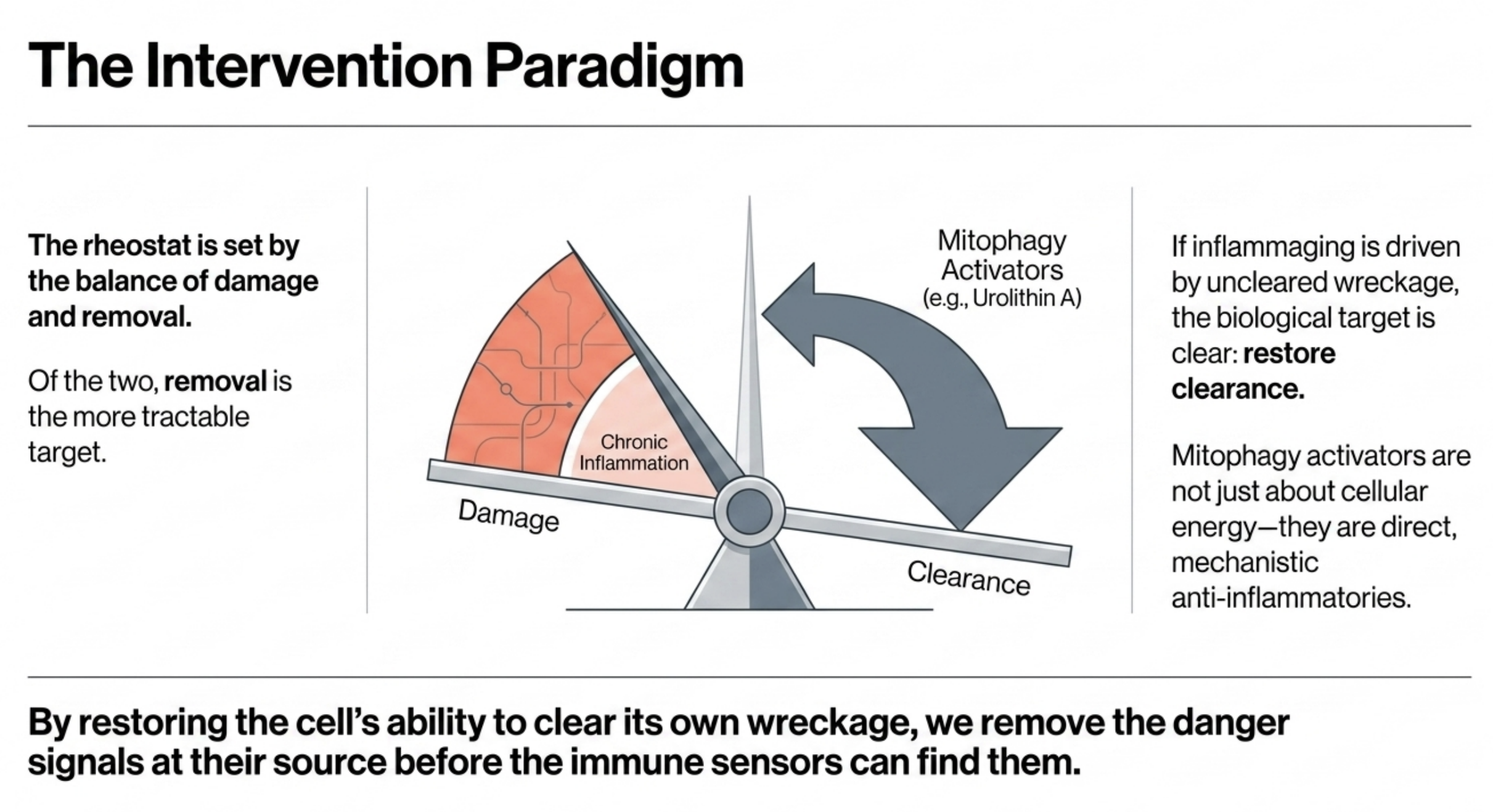
Mitophagy has been discussed throughout Healthspan's coverage mainly as a matter of energy, the process that keeps the mitochondrial population functional so cells can produce ATP efficiently. That framing is correct but incomplete. What this mechanism adds is that mitophagy is also the primary brake on mitochondria-driven inflammation. Every damaged mitochondrion that mitophagy clears is one that never gets the chance to leak its DNA into the cytosol, never activates cGAS-STING, never feeds the NLRP3 inflammasome. Supporting mitophagy is therefore not only a way to preserve cellular energy. It is, mechanistically, a way to keep the inflammatory rheostat set toward the quiet end, by removing the danger signals at their source before the sensors can find them.
It is worth seeing how this clearance actually works, because the machinery explains both why it is effective and why it falters with age. When a mitochondrion becomes damaged, its membrane loses the electrical charge that healthy mitochondria maintain. That loss of charge is a signal. A protein called PINK1 accumulates on the surface of the failing mitochondrion rather than being imported and degraded as it would be in a healthy one, and its buildup flags the organelle as defective. PINK1 then recruits a second protein, Parkin, which coats the damaged mitochondrion in molecular tags. Those tags are a disposal label: they mark the mitochondrion for capture by the cell's autophagy machinery, which wraps it in a membrane and delivers it to be broken down and recycled. The elegance of the system is that it is self-targeting. Only mitochondria that have actually lost function accumulate the signal, so the cell removes its damaged organelles with precision, leaving the healthy ones untouched. This is the process that stands between a damaged mitochondrion and the moment its DNA reaches a sensor, and it is the same PINK1-Parkin machinery whose activity tends to decline with age, which is precisely why the rheostat drifts toward inflammation over a lifetime.
This is the deep rationale beneath interventions the series has covered from other angles. The interest in urolithin A as a mitophagy activator, for instance, connects directly here: a compound that enhances the clearance of damaged mitochondria is, by this logic, acting on one of the root drivers of inflammaging, not merely on cellular energetics. The recent finding that urolithin A improved a model of heart failure while restoring mitophagy fits the same picture, given that mitochondrial-DNA-driven inflammation is itself implicated in heart failure. The mechanisms rhyme because they are, at bottom, the same mechanism viewed from different sides.
The senescence connection belongs here too. Senescent cells, which accumulate with age, are among the most prolific sources of chronic inflammatory signaling, and mitochondrial dysfunction is part of what drives their inflammatory output. Interventions that reduce the senescent burden or quiet its inflammatory secretions, discussed previously in the context of rapamycin, are addressing a related arm of the same problem: the age-related rise in cells that will not stop broadcasting danger signals. Damaged mitochondria and senescent cells are two overlapping sources of the same chronic inflammation, and the mitochondrial mechanism helps explain why quieting inflammation has become such a central goal in longevity medicine.
A necessary caution runs underneath all of this. What this review establishes is mechanism, not clinical proof. It explains, in molecular detail, how failing mitochondria drive inflammation and why clearing them should reduce it. It does not demonstrate that any particular intervention reverses inflammaging in humans, and the honest position is that no single therapy has yet been shown to do so. Mechanism tells you where to look and what is plausible; it does not substitute for the trials that would establish benefit. The value of understanding this machinery is not that it hands us a cure, but that it converts a vague aspiration, reduce the inflammation of aging, into a specific and testable strategy: preserve the cell's ability to clear its own damaged mitochondria, and you address one of the genuine engines of the problem.
Conclusion
There is a deep irony at the center of this story. The mitochondrion is the reason complex life exists. Two billion years ago, the bargain struck between a host cell and the bacterium it failed to digest unlocked a scale of energy production that made everything after it possible, including the cells that became us. Every heartbeat, every thought, every moment of effort is powered by the descendants of that ancient captive. The mitochondrion is the most essential ally the cell has.
And yet the alliance was never total, because the immune system never fully signed the treaty. To the ancient, pattern-matching machinery of innate immunity, the mitochondrion remains what it once was: a bacterium, carrying bacterial DNA, building proteins in the bacterial way, holding bacterial molecules in its membranes. For as long as the mitochondrion stays intact and contained, this ancestry is invisible and irrelevant. The peace holds because the evidence stays hidden. But the peace is conditional, and the condition is containment.
Aging is, in part, the slow failure of that containment. As mitochondria accumulate damage and the systems that clear them weaken, the bacterial ghost inside every cell begins to show. Mitochondrial DNA leaks into the cytosol, where sensors built to detect infection find it and cannot tell the difference. The interferon response meant for viruses fires. The inflammasome meant for pathogens assembles. And because the source is not a passing infection but a growing population of damaged organelles that the cell can no longer clear, the alarm does not resolve. It becomes the chronic, low-grade inflammation that rises with age and feeds the diseases of aging. The powerhouse, in its decline, becomes the false alarm.
Understanding inflammaging this way changes what it is. It stops being a vague background condition, an unfortunate feature of getting older that no one can quite locate, and becomes something specific: a failure of mitochondrial quality control, sensed by an immune system that has never stopped treating mitochondria as the bacteria they descend from. That specificity is what makes it approachable. A vague condition offers nothing to aim at. A mechanism offers a target. And the target this mechanism points to is one longevity medicine already cares about for other reasons: the cell's capacity to find and clear its own damaged mitochondria before they can raise an alarm that, left unanswered long enough, becomes the inflammation of age itself.
Related studies