The Most Dangerous Fat in the Body Is Not the Fat You Can See. A New Meta-Analysis Shows SGLT2 Inhibitors Are Targeting It Directly.
Prefer to listen? Hit play for a conversational, audio‑style summary of this article’s key points.
The most dangerous fat in the body is not the fat you can see. Epicardial adipose tissue sits directly between the heart muscle and the pericardium with no fascial barrier separating it from the cardiac tissue it surrounds. It shares the myocardium's microcirculation, can comprise up to 20 percent of total heart mass, and secretes pro-inflammatory cytokines directly into the coronary arteries and heart muscle. It is an active contributor to cardiovascular disease from a position of anatomical intimacy that no circulating inflammatory signal can replicate.
EAT is the most extreme example of ectopic fat, one of the most underappreciated drivers of biological aging. When caloric surplus overwhelms subcutaneous storage capacity, fat overflows into organ compartments where it drives dysfunction through localized inflammation and lipotoxicity. Hepatic steatosis impairs insulin sensitivity. Intramyocellular lipid impairs muscle metabolism. Pancreatic fat impairs beta cell function. Epicardial fat drives coronary artery disease, atrial fibrillation, and heart failure through direct paracrine mechanisms. Ectopic fat accumulation is not simply a marker of obesity. It occurs in metabolically unhealthy individuals at normal body weight and is a more specific indicator of cardiometabolic aging than BMI.
Elevated EAT is independently associated with the full spectrum of cardiovascular pathology that aging drives. It predicts coronary artery disease and plaque vulnerability independent of traditional risk factors, drives atrial fibrillation through direct atrial myocardial infiltration, contributes to both forms of heart failure through myocardial fibrosis, and correlates with left ventricular hypertrophy independently of blood pressure. Reducing it is not improving a surrogate. It is interrupting a local inflammatory process driving cardiovascular aging from direct anatomical contact with the heart.
A meta-analysis of 11 studies involving 284 patients found that SGLT2 inhibitors significantly reduce EAT across multiple imaging modalities. Compared to conventional antidiabetic therapy, SGLT2 inhibitors produced a very large reduction in EAT with a Hedges g of negative 1.64, substantially exceeding the conventional threshold for large effects. Within-group analyses confirmed the finding with a Hedges g of negative 0.62, corresponding to reductions of approximately one to two millimeters in thickness and five to fifteen milliliters in volume. Echocardiography and CT and CMR produced consistent results with no significant difference between modalities.
SGLT2 inhibitors reduce EAT through several converging mechanisms. They create a sustained caloric deficit of approximately 60 to 80 grams of glucose excreted daily that preferentially mobilizes ectopic fat over subcutaneous fat. They raise beta-hydroxybutyrate from approximately 0.07 to 0.10 mmol/L, suppressing NLRP3 inflammasome activation and directly reducing inflammatory activation of epicardial macrophages. They promote natriuresis reducing hemodynamic conditions that promote EAT expansion. And they substantially reduce serum uric acid, removing an additional driver of vascular inflammation in the coronary arteries EAT surrounds.
SGLT2 inhibitors may also be clearing senescent cells within the EAT depot itself. EAT harbors senescent cells whose SASP-driven secretions compound the paracrine cardiac pathology the depot produces. SGLT2 inhibitors enhance cytotoxic T lymphocyte granzyme B activity consistent with improved senescent cell clearance, supported by a 2024 Nature Aging study demonstrating direct senescent cell clearance across multiple tissues. Reducing EAT volume while simultaneously clearing its senescent cell population may produce anti-inflammatory effects on the cardiac environment that exceed what either mechanism could achieve independently.
Secondary findings suggest SGLT2 inhibitors may be reducing ectopic fat across multiple organ compartments simultaneously. Visceral adipose tissue decreased from 109 to 97 cm² and subcutaneous adipose tissue from 193 to 177 cm² in one study. TNF-alpha, CRP, and PAI-1 were reduced across multiple studies. Empagliflozin reduced myocardial extracellular volume by 1.25 percent and cardiomyocyte volume by 11.08 milliliters in the EMPA-TROPISM study, consistent with reverse myocardial remodeling. These findings suggest a coordinated reduction in ectopic fat and inflammatory burden across the cardiovascular system rather than a targeted effect on EAT alone.
Introduction: The Drug Class That Keeps Surprising Us
SGLT2 inhibitors were developed to treat type 2 diabetes. The mechanism is straightforward: they block a protein in the kidney called the sodium-glucose cotransporter 2, which normally reabsorbs glucose from urine back into the bloodstream. By inhibiting this transporter, the drugs allow glucose to pass out of the body in urine rather than being retained. Blood glucose falls. The diabetes is better controlled.
That should have been the end of the story. A glucose-lowering drug for a glucose-related disease. But when researchers ran cardiovascular outcome trials to establish that the drugs were safe for the heart, something unexpected happened. Patients taking SGLT2 inhibitors were not just controlling their blood sugar better. They were dying less. Their hearts were failing less often. Their kidneys were deteriorating more slowly. The magnitude of these benefits exceeded what glucose lowering alone could produce, and they appeared in patients without diabetes as well as those with it. The field has spent the better part of a decade working backward from these outcomes trying to understand why.
The list of proposed mechanisms has grown steadily. SGLT2 inhibitors cause the body to produce more ketone bodies, an alternative fuel source that the heart metabolizes more efficiently than glucose and that reduces cardiac inflammation. They promote the excretion of sodium alongside glucose, reducing fluid retention and lowering the pressure the heart works against with every beat. They improve insulin sensitivity, reduce uric acid, and lower blood pressure through effects that extend well beyond the kidney. Each of these mechanisms is real. None of them fully explains the magnitude and breadth of what these drugs do to cardiovascular outcomes.
A new meta-analysis published in the International Journal of Obesity from researchers at the Victorian Heart Hospital and Monash University in Australia adds a finding that may be the most anatomically direct explanation yet. SGLT2 inhibitors significantly reduce epicardial adipose tissue, the fat depot that sits directly on the surface of the heart, between the myocardium and the pericardium, in direct contact with the cardiac muscle it surrounds. The finding is consistent across multiple imaging modalities and multiple studies.
But the implications extend beyond the heart. Epicardial fat is the most dramatic example of a broader biological phenomenon called ectopic fat, the accumulation of fat in and around organs where it does not belong, where it creates localized inflammatory environments that drive organ dysfunction over decades. If SGLT2 inhibitors are preferentially targeting this class of fat rather than simply reducing body weight broadly, that would represent something genuinely important for longevity medicine: a pharmacological tool that addresses one of the most consequential and underappreciated drivers of biological aging across multiple organ systems simultaneously. Understanding what epicardial fat is, why it matters, and what this study found requires starting with where fat deposits and why location changes everything.
What Epicardial Adipose Tissue Actually Is
Most conversations about body fat focus on how much of it there is. The number on the scale, the BMI, the waist circumference. These measures capture something real about metabolic health, but they obscure a distinction that matters enormously for understanding cardiovascular disease and biological aging: where fat is located in the body is as important as how much of it is present.
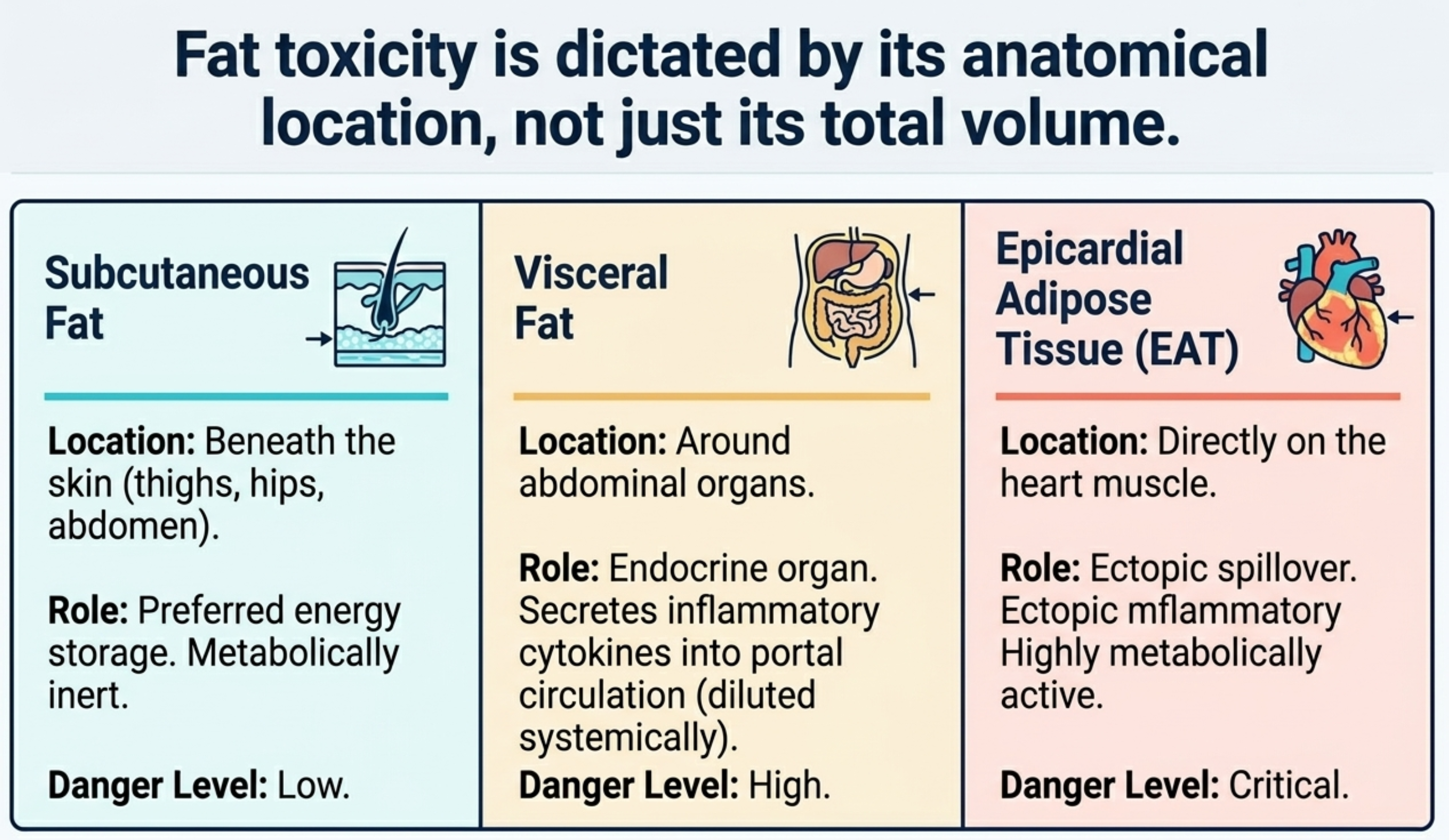
The human body stores excess energy in fat tissue distributed across multiple anatomical compartments, and those compartments are not equivalent. Subcutaneous fat, the layer beneath the skin that is visible and palpable, is the body's preferred storage site for excess energy. It is relatively metabolically inert, releases fatty acids slowly into the circulation, and its accumulation, while associated with metabolic risk at extreme levels, is considerably less dangerous than fat deposited elsewhere. Visceral fat, which accumulates around the abdominal organs, is more metabolically active, more inflammatory, and more directly connected to cardiovascular and metabolic disease risk. And then there is epicardial adipose tissue, which represents the extreme end of this spectrum, fat deposited not merely near an organ but directly on it, in anatomical contact with the most metabolically demanding and mechanically critical organ in the body.
Epicardial adipose tissue sits between the myocardium, the muscular wall of the heart, and the visceral pericardium, the membrane that surrounds it. It shares the same microcirculation as the myocardium itself. There is no fascial barrier, no connective tissue layer, no anatomical separation between the fat and the cardiac muscle it surrounds. The inflammatory molecules that EAT secretes, including TNF-alpha, IL-6, and a range of other pro-inflammatory cytokines and chemokines, diffuse directly into the myocardium, the coronary arteries running through it, and the conduction system that coordinates its electrical activity. EAT can comprise up to 20 percent of total heart mass in some individuals. It is not a passive bystander to cardiac disease. It is an active participant in it, positioned by anatomy to exert its effects with a directness and proximity that no circulating inflammatory signal can replicate.
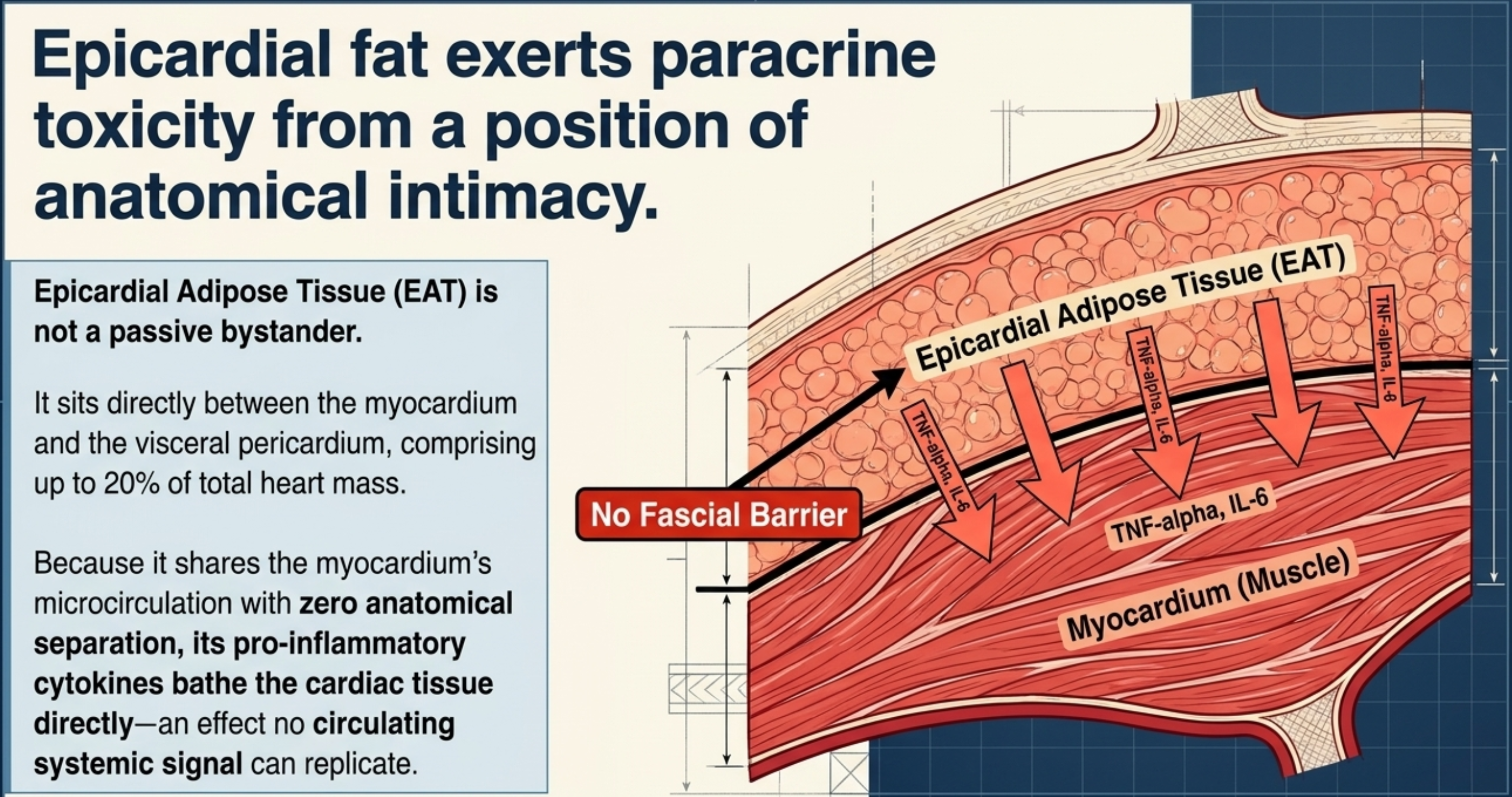
This anatomical intimacy is what makes EAT qualitatively different from other fat depots, including visceral fat. A visceral fat depot in the abdomen releases inflammatory cytokines into the portal circulation, where they travel to the liver and eventually reach the systemic circulation in diluted form. An epicardial fat depot releases the same cytokines directly into the tissue of the heart. The therapeutic implications of reducing it are therefore correspondingly more direct than the implications of reducing visceral fat elsewhere in the body, and the cardiovascular benefits of any intervention that meaningfully reduces EAT are potentially more specific and more mechanistically coherent than the benefits of general weight loss.
Why EAT Matters for Longevity: The Ectopic Fat Framework
Epicardial adipose tissue is the most dramatic example of a biological phenomenon that sits at the intersection of metabolic health and biological aging in a way that mainstream medicine has been slow to fully appreciate. The concept is called ectopic fat, and understanding it reframes how the relationship between body composition and longevity should be understood.
The human body evolved to store excess energy primarily in subcutaneous depots, the fat under the skin in the thighs, hips, and abdomen, where it can be mobilized gradually for energy without causing direct harm to organs. When caloric surplus persists and subcutaneous storage capacity is saturated, excess fat begins to overflow into locations it does not belong: the liver, the skeletal muscle, the pancreas, the pericardium, and directly onto the heart. This lipid spillover into ectopic compartments is one of the most important mechanisms through which metabolic dysfunction translates into organ disease and accelerated biological aging.
Each ectopic fat depot creates a localized inflammatory and lipotoxic environment in the organ it infiltrates. Hepatic steatosis drives insulin resistance and impairs liver metabolic function. Intramyocellular lipid accumulation impairs skeletal muscle glucose uptake and reduces the regenerative capacity that muscle depends on across aging. Pancreatic fat impairs beta cell function, accelerating the progression from insulin resistance to frank diabetes. And epicardial fat drives the full range of cardiac pathology through the direct paracrine mechanisms described in the previous section.
What connects these diverse organ-specific consequences is a common upstream driver: the failure of the body's normal fat storage architecture under conditions of chronic caloric surplus and metabolic stress. Ectopic fat accumulation is not simply a marker of obesity. It occurs in metabolically unhealthy individuals at normal body weight, in people with insulin resistance before overt metabolic disease has developed, and in individuals whose subcutaneous fat distribution does not signal elevated risk by conventional measures. It is a more specific and more mechanistically direct indicator of cardiometabolic aging than total body fat or BMI, and it is increasingly recognized as one of the most important modifiable contributors to cardiovascular disease and metabolic dysfunction across the lifespan.
The reason the SGLT2 inhibitor finding on epicardial fat matters for longevity medicine extends beyond its cardiovascular implications. If these drugs are preferentially mobilizing ectopic fat rather than simply reducing overall body weight, they may be addressing one of the most consequential biological processes in aging at a level of specificity that general weight loss interventions do not achieve. The question of whether SGLT2 inhibitors reduce ectopic fat across multiple organ compartments simultaneously, not just in the epicardial space, is one of the most important questions the current evidence raises and does not yet fully answer.
The Clinical Consequences of Excess EAT
The association between elevated epicardial adipose tissue and cardiovascular disease is not a statistical artifact of shared risk factors. It is an independent relationship that persists after adjustment for traditional cardiovascular risk markers, body mass index, and other confounders, and it spans the full range of cardiovascular pathology that aging drives.
Coronary artery disease is the most extensively studied consequence. EAT surrounds the coronary arteries as they course through the epicardial surface of the heart, and the inflammatory cytokines it secretes directly into the adventitia of those vessels accelerate atherosclerotic plaque formation and promote plaque vulnerability. Multiple studies have shown independent associations between EAT volume and both the presence and severity of coronary artery disease, the degree of plaque calcification, and the likelihood of plaque rupture leading to acute coronary events. The anatomical proximity of EAT to the coronary arteries means it functions as a local inflammatory amplifier for atherosclerosis in the vessels most critical for cardiac survival.
Atrial fibrillation is the second major consequence. EAT infiltrates the atrial myocardium directly, depositing lipid-laden cells within the atrial wall and releasing inflammatory and fibrotic signals that drive the electrical and structural remodeling that predisposes to atrial fibrillation. The relationship between EAT volume and atrial fibrillation incidence, recurrence after ablation, and thromboembolic stroke risk has been documented across multiple large clinical datasets, and EAT reduction following weight loss and bariatric surgery has been associated with improved atrial fibrillation outcomes.
Heart failure represents a third pathway. The myocardial fibrosis and adverse ventricular remodeling that EAT drives through its paracrine inflammatory signaling contribute to both reduced ejection fraction and preserved ejection fraction heart failure, the two forms of the condition that together represent one of the leading causes of cardiovascular mortality and morbidity in aging populations. Left ventricular hypertrophy, an early marker of adverse cardiac remodeling and an independent predictor of cardiovascular events, shows a positive correlation with EAT volume that is independent of blood pressure and body mass index.
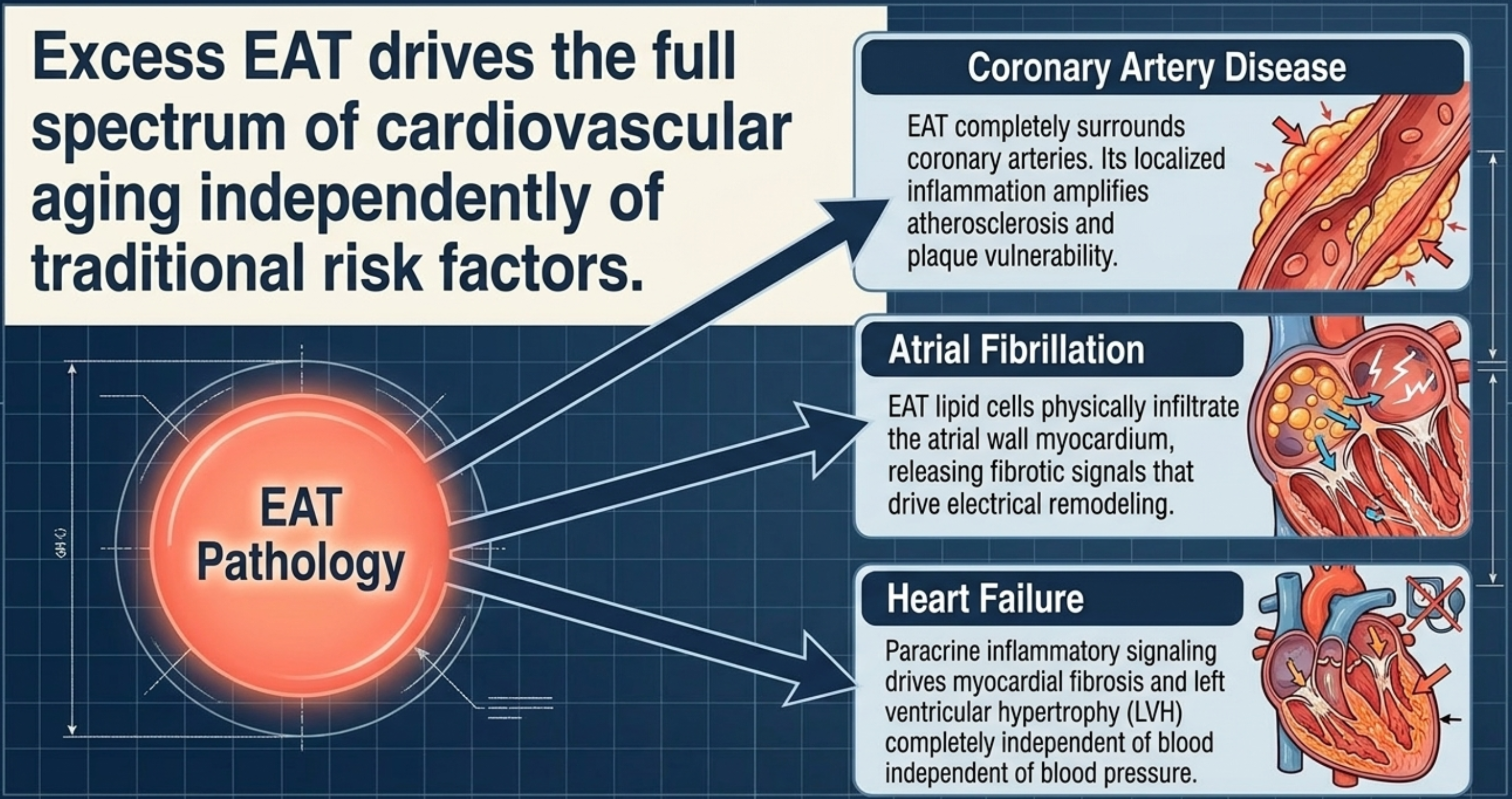
Taken together, these associations establish EAT not simply as a biomarker of cardiovascular risk but as an active contributor to the full spectrum of cardiovascular disease that aging drives. An intervention that meaningfully reduces EAT is therefore not simply improving a surrogate marker. It is potentially interrupting a local inflammatory process that drives coronary disease, atrial fibrillation, and heart failure simultaneously through a single anatomical mechanism. That is what makes the SGLT2 inhibitor finding clinically significant, and what the meta-analysis set out to characterize with greater rigor than prior work had achieved.
The Study: What the Meta-Analysis Found
The Monash University team conducted a systematic review covering PubMed, Medline, EMBASE, the Cochrane Library, and grey literature sources from 2000 through 2025, identifying 11 studies involving 284 patients that measured EAT before and after SGLT2 inhibitor therapy using cardiac CT, CMR, or echocardiography. Five of the 11 studies were randomized controlled trials and six were observational cohort studies. Dapagliflozin was the most commonly studied agent across six studies, with empagliflozin studied in two and single studies evaluating canagliflozin, luseogliflozin, and ipragliflozin. All but one study included patients with type 2 diabetes. Follow-up duration ranged from one to six months, with six months being the most common.
The primary analysis compared SGLT2 inhibitors directly against conventional antidiabetic therapy in the randomized and controlled studies, providing the most reliable estimate of the drug class effect on EAT by controlling for the secular trends and regression to the mean that can inflate within-group comparisons. This analysis found a large and statistically significant reduction in EAT in favor of SGLT2 inhibitor therapy, with a Hedges g of negative 1.64. To put that number in context: effect sizes below 0.2 are considered small, around 0.5 medium, and above 0.8 large by conventional standards. An effect size of 1.64 is very large, indicating that the EAT reduction in patients receiving SGLT2 inhibitors was substantially and consistently greater than in patients receiving conventional antidiabetic therapy across the pooled studies.
Within-group analyses, comparing EAT before and after SGLT2 inhibitor treatment in the same patients without a control comparison, produced a more conservative but still clinically meaningful effect size of negative 0.62, corresponding to reductions of approximately one to two millimeters in EAT thickness and five to fifteen milliliters in EAT volume across studies. This within-group estimate is considered the more cautious of the two figures because it is more susceptible to confounding, but its consistency with the between-group finding strengthens confidence that the effect is real rather than an artifact of study design.
Both measurement modalities used across the studies produced consistent results. Echocardiographic thickness measurement showed a Hedges g of negative 0.74 and CT and CMR volumetric measurement showed a Hedges g of negative 0.54, with no statistically significant difference between modalities. The consistency across imaging approaches is methodologically important because echocardiography and CT or CMR measure different physical properties of EAT using fundamentally different technologies. Agreement between them suggests the effect being measured is a genuine biological change in EAT rather than a modality-specific artifact.
Beyond the primary EAT finding, SGLT2 inhibitor therapy was associated with modest but statistically significant reductions in BMI and systolic blood pressure across the pooled studies. Individual studies that could not be meta-analyzed due to limited reporting documented additional cardiometabolic effects including reductions in visceral adipose tissue, subcutaneous adipose tissue, and the inflammatory markers TNF-alpha, CRP, and PAI-1, each of which plays a role in the local and systemic inflammatory cascade that excess EAT drives. These secondary findings, while not powered for formal meta-analysis, are directionally consistent with the ectopic fat reduction narrative and suggest that SGLT2 inhibitors may be producing a coordinated reduction in metabolically active fat depots across multiple compartments rather than targeting EAT in isolation.
How SGLT2 Inhibitors Are Reducing EAT: The Mechanistic Picture
The finding that SGLT2 inhibitors reduce epicardial fat is consistent with what these drugs do metabolically, but the specific pathway through which systemic glucose excretion translates into preferential reduction of a fat depot directly on the heart requires explanation. Several converging mechanisms likely contribute simultaneously, and their convergence on EAT specifically may help explain why the effect size observed in this meta-analysis is as large as it is.
The Caloric Deficit and Preferential Ectopic Fat Mobilization
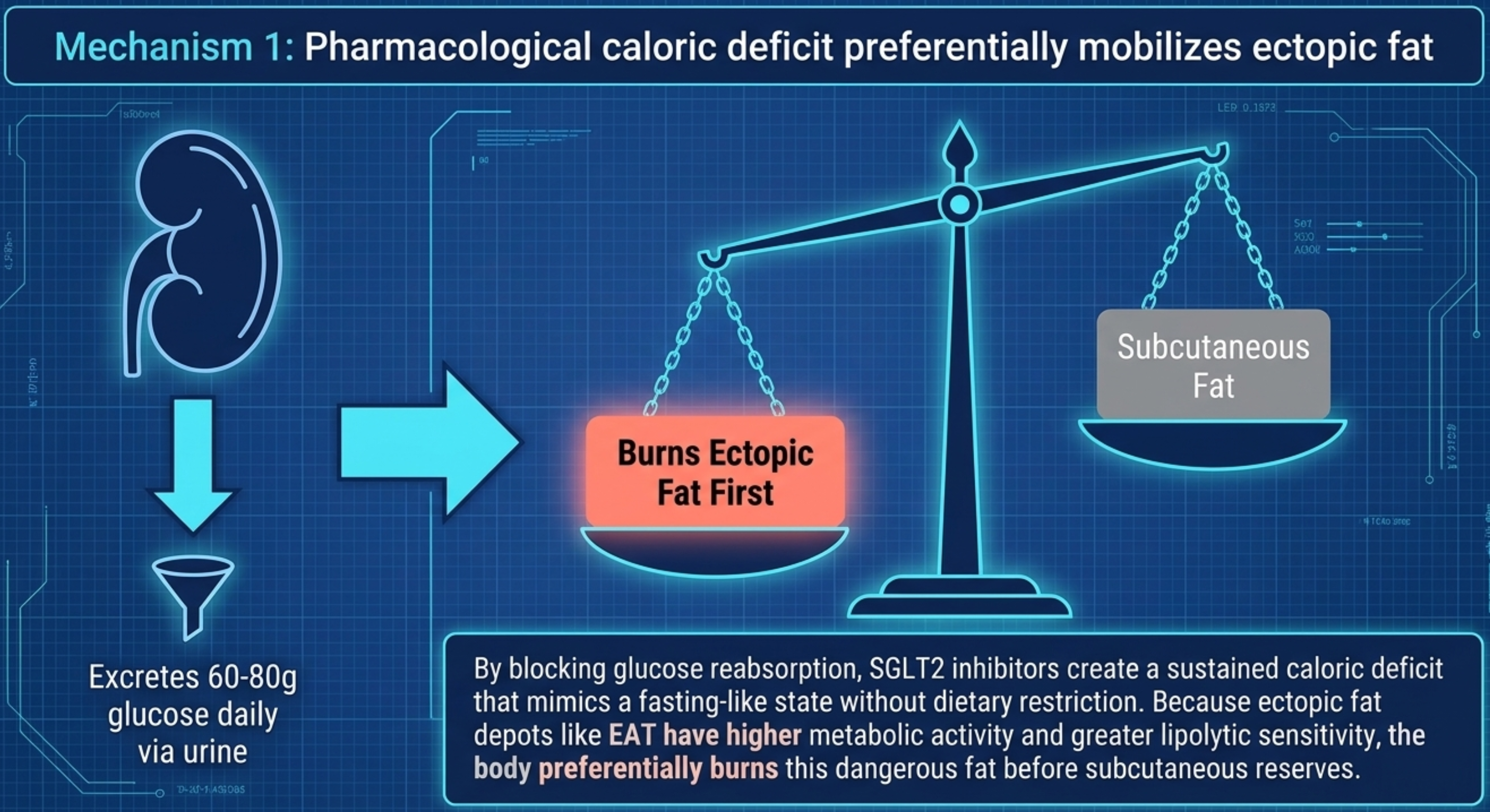
The most straightforward mechanism begins with the drug's primary action. By blocking glucose reabsorption in the kidney, SGLT2 inhibitors cause approximately 60 to 80 grams of glucose to be excreted in urine daily, creating a sustained caloric deficit without dietary restriction. This caloric deficit produces a metabolic profile strikingly similar to caloric restriction, with rising ketone bodies, reduced IGF-1 signaling, improved mitochondrial efficiency, and lower inflammatory lipids, a fasting-like state achieved pharmacologically rather than through dietary change. When the body is in this state, it mobilizes stored fat for energy preferentially from the depots that are metabolically most active. Ectopic fat depots, including visceral fat and epicardial fat, respond more readily to caloric deficit signals than subcutaneous fat because of their higher metabolic activity and greater lipolytic sensitivity. This preferential mobilization of ectopic fat may explain why SGLT2 inhibitors produce disproportionately large reductions in EAT relative to their modest effects on overall body weight. The drugs are not simply shrinking the body uniformly. They appear to be selectively drawing down the fat depots that are most metabolically active and most directly connected to cardiovascular pathology.
The Ketone Body Connection
SGLT2 inhibitors raise circulating ketone body levels, with beta-hydroxybutyrate rising from approximately 0.07 to 0.10 mmol/L in randomized trial data and from 0.14 to 0.27 mmol/L in non-diabetic individuals depending on the agent and population studied. Ketones are not simply an alternative fuel source. They carry direct anti-inflammatory signaling properties that operate through several converging mechanisms. Recent research has identified a specific pathway through which ketones reduce EAT inflammation directly: modulation of the ketone body-GAPDH malonylation pathway in epicardial macrophages, the immune cells resident within the EAT depot itself, suppressing their inflammatory activation and reducing the paracrine cytokine secretion that makes EAT pathological.
These BHB effects extend beyond the epicardial macrophage mechanism. The modest BHB elevation produced by SGLT2 inhibitors suppresses NLRP3 inflammasome activation, a key molecular driver of the chronic low-grade inflammation that excess EAT sustains in the cardiac environment. The same BHB elevation inhibits class I and II histone deacetylases, supporting antioxidant gene expression in the precise anatomical compartment where EAT exerts its paracrine inflammatory effects. The anti-inflammatory consequences of even modest ketone elevation are therefore not systemic abstractions operating at a distance from the cardiac tissue. They are engaging the specific inflammatory machinery that makes epicardial fat dangerous in the organ it directly surrounds.
Natriuresis, Hemodynamics, and Cardiac Unloading
SGLT2 inhibitors promote the excretion of sodium alongside glucose, producing natriuresis that reduces intravascular fluid volume, lowers blood pressure, and decreases the preload and afterload the heart works against with every contraction. Reduced cardiac preload may contribute to EAT reduction by decreasing the mechanical pressure on the pericardial space that promotes EAT expansion in conditions of fluid overload and congestion, particularly relevant in heart failure populations where EAT accumulation and fluid retention compound each other. The modest but significant systolic blood pressure reduction observed in this meta-analysis, with a Hedges g of negative 0.32, is consistent with this hemodynamic mechanism operating alongside the metabolic ones. SGLT2 inhibitors also substantially reduce serum uric acid, an independent driver of vascular inflammation and endothelial dysfunction that contributes to the inflammatory environment EAT creates in the coronary arteries it surrounds.
The Anti-Inflammatory Convergence
What makes the EAT reduction finding particularly compelling within the longevity framework is the convergence of these mechanisms on the same biological target from multiple directions simultaneously. The caloric deficit mobilizes ectopic fat preferentially. The ketone elevation suppresses NLRP3 inflammasome activation and epicardial macrophage inflammatory signaling directly. The natriuresis reduces the hemodynamic conditions that promote EAT expansion. The uric acid reduction removes an additional source of vascular inflammatory activation. And the insulin sensitivity improvement reduces the hyperinsulinemia that drives lipogenesis in ectopic fat depots in the first place.
Each mechanism addresses a different aspect of why EAT accumulates and why it becomes pathological, and their simultaneous engagement by a single drug class may explain why the effect sizes observed here exceed those reported following other established EAT-reducing interventions including caloric restriction and moderate exercise alone. The reductions in visceral adipose tissue, subcutaneous adipose tissue, TNF-alpha, CRP, and PAI-1 documented in individual studies within this meta-analysis are consistent with this picture. SGLT2 inhibitors appear to be engaging ectopic fat reduction as a coordinated biological program rather than as a side effect of glucose lowering, with epicardial fat representing the most measurable and most clinically significant expression of a process that may be operating across multiple organ compartments simultaneously.
Evidence of Simultaneous, Multi-System Ectopic Fat Reversal
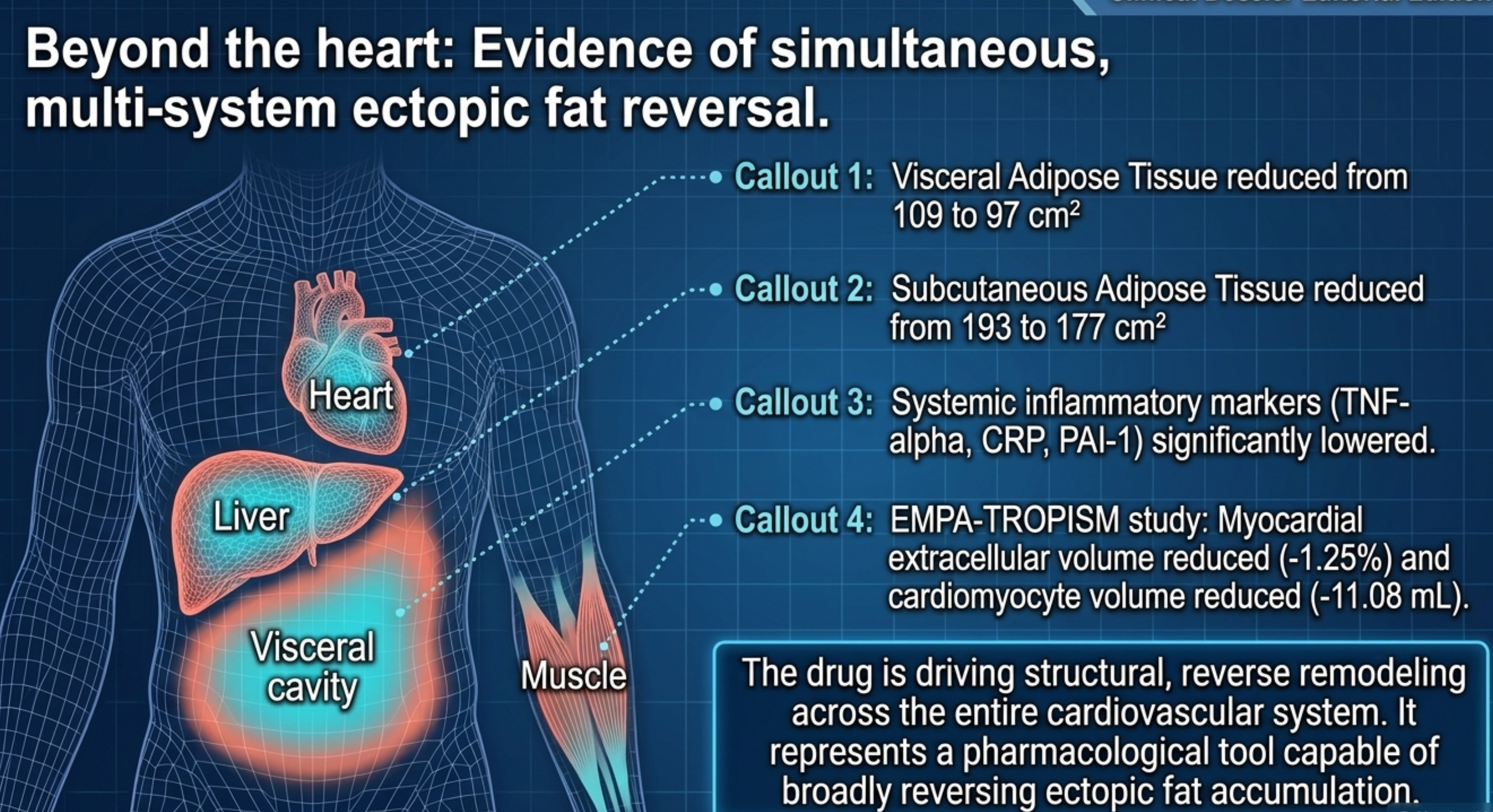
The epicardial fat finding is the headline of this meta-analysis, but its deeper significance emerges only when it is placed alongside the other structural changes that individual studies documented. What those studies reveal, taken together, is that SGLT2 inhibitors are not reducing epicardial fat as an isolated effect. They are driving the simultaneous reversal of ectopic fat accumulation across multiple compartments of the cardiovascular system at once, accompanied by a coordinated reduction in the inflammatory signaling those fat depots produce and a measurable structural improvement in the heart muscle itself. The reduction of epicardial fat is one expression of a systemic process rather than a localized event.
Multiple Fat Depots Falling Together
The most direct evidence of the multi-system pattern comes from the ectopic fat measurements themselves. In the studies that measured depots beyond the epicardial space, visceral adipose tissue decreased from 109 to 97 cm² and subcutaneous adipose tissue decreased from 193 to 177 cm². These reductions occurred in the same treatment context that produced the epicardial fat reduction, which means SGLT2 inhibitors were drawing down three anatomically distinct fat compartments simultaneously: the epicardial fat sitting directly on the heart, the visceral fat surrounding the abdominal organs, and the subcutaneous fat beneath the skin. The visceral fat reduction is especially significant within this framework, because visceral fat shares the metabolic and inflammatory properties that make epicardial fat dangerous. Its simultaneous reduction alongside epicardial fat is the signature of a drug engaging ectopic fat as a coordinated program across the body rather than targeting the heart's fat depot in isolation.
The Inflammatory Signature Falling in Parallel
The multi-system reversal extends beyond the fat depots themselves to the inflammatory environment they create. Across the studies that measured them, the systemic inflammatory markers TNF-alpha, CRP, and PAI-1 were all significantly lowered. These three markers together capture much of the inflammatory signaling through which ectopic fat drives cardiovascular pathology, TNF-alpha as a central inflammatory cytokine, CRP as the validated clinical marker of systemic inflammation and cardiovascular risk, and PAI-1 as the link between inflammation, endothelial dysfunction, and thrombotic risk. Their coordinated reduction indicates that as SGLT2 inhibitors reversed ectopic fat accumulation across multiple compartments, they simultaneously suppressed the inflammatory output that those compartments generate. The fat is falling and the inflammation the fat drives is falling with it, in parallel, across the system.
Structural Reversal Reaching the Heart Muscle Itself
The multi-system pattern reaches its most consequential expression in the structure of the heart muscle. In the EMPA-TROPISM study, empagliflozin reduced myocardial extracellular volume by 1.25 percent, a measure of the diffuse fibrosis that stiffens the aging and failing heart, and reduced cardiomyocyte volume by 11.08 mL, reflecting a reversal of the pathological hypertrophy that characterizes adverse cardiac remodeling. These are not measurements of fat. They are measurements of the myocardium's own architecture, and their improvement demonstrates that the multi-system reversal SGLT2 inhibitors produce does not stop at the fat depots. It extends into the cardiac tissue those depots damage, reversing the fibrotic and hypertrophic changes that ectopic fat and metabolic dysfunction drive in the heart muscle over time.
A Coordinated Biological Program
The significance of these findings lies in their simultaneity. SGLT2 inhibitors are not reducing epicardial fat, and separately reducing visceral fat, and separately lowering inflammatory markers, and separately reversing myocardial remodeling. They are doing all of these things at once, in the same patients, over the same treatment period, as expressions of a single coordinated biological program of ectopic fat reversal across the cardiovascular system. This is what distinguishes SGLT2 inhibitors from interventions that reduce body weight broadly without preferentially engaging the ectopic fat depots that drive cardiometabolic aging. The drug class represents a pharmacological tool capable of simultaneously reversing ectopic fat accumulation across multiple organ systems, suppressing the inflammatory burden that accumulation generates, and reversing the structural cardiac damage it produces. That simultaneous, multi-system reversal is the most complete mechanistic explanation yet for why these drugs deliver cardiovascular benefits that glucose lowering alone could never account for.
Limitations and What We Still Do Not Know
The findings are meaningful and consistent, but they are bounded by limitations that matter for how confidently the clinical implications should be held.
Scale is the most fundamental constraint. Eleven studies involving 284 patients is a small evidence base, and the effect sizes derived from it carry wider confidence intervals and greater susceptibility to publication bias than a larger dataset would produce. The GRADE assessment appropriately assigned moderate certainty to the randomized data and low certainty to the observational studies.
The study populations were almost entirely composed of patients with type 2 diabetes, which limits generalizability to the non-diabetic older adults that longevity medicine increasingly serves. Follow-up durations of one to six months are short for understanding the long-term trajectory of EAT reduction in a fat depot that accumulates over decades. And the heterogeneity in imaging modalities, patient populations, and SGLT2 inhibitor agents across the included studies limits the precision of the pooled estimates.
The most important unanswered question is whether the magnitudes of EAT reduction observed here, one to two millimeters in thickness and five to fifteen milliliters in volume, translate into measurable reductions in cardiovascular events, atrial fibrillation, and heart failure hospitalizations. The cardiovascular outcome trials that established SGLT2 inhibitor benefits did not systematically measure EAT, so the causal link between EAT reduction and clinical outcomes, while mechanistically coherent, remains to be prospectively established. Larger and longer studies that measure EAT alongside hard cardiovascular endpoints are the necessary next step.
What This Means for How We Think About SGLT2 Inhibitors
SGLT2 inhibitors have accumulated one of the strongest evidence bases of any drug class in modern medicine for outcomes that extend well beyond their original indication. The cardiovascular outcome trials established that these drugs reduce heart failure hospitalizations and cardiovascular mortality with a consistency that few drug classes have matched. What has been less clear is why the benefits are so broad and so durable, and why they appear in populations without diabetes as compellingly as in those with it.
The EAT finding provides a mechanistic answer that is more anatomically direct and more biologically coherent than any previously proposed. These drugs are not simply improving glucose control and incidentally benefiting the heart. They appear to be actively remodeling the ectopic fat landscape of the cardiovascular system, preferentially reducing the most metabolically active and most proximally dangerous fat depot in the body, the one sitting in direct contact with the cardiac muscle it is inflaming. The reduction in EAT connects the known mechanisms of SGLT2 inhibitor action, glucose excretion, ketone elevation, natriuresis, and improved insulin sensitivity, to a measurable structural change in the cardiac environment that is independently associated with the full range of cardiovascular pathology these drugs are known to prevent.
The senescent cell dimension adds a further layer to this picture. Healthspan's prior research review on SGLT2 inhibitors and longevity markers documented that these drugs enhance cytotoxic T lymphocyte granzyme B activity, consistent with improved immune-mediated clearance of senescent cells, a finding supported by a 2024 Nature Aging study showing direct senescent cell clearance with SGLT2 inhibition across multiple tissues. EAT is itself a depot for senescent cells whose SASP-driven inflammatory secretions contribute to the paracrine cardiac pathology the fat depot produces. If SGLT2 inhibitors are simultaneously reducing EAT volume and enhancing the immune machinery that clears senescent cells within it, the anti-inflammatory effect on the cardiac environment may be more complete than either mechanism could produce independently. The drug may be removing the fat and clearing the damaged cells within it at the same time.
The broader implication for longevity medicine extends beyond the cardiovascular story. If SGLT2 inhibitors are preferentially mobilizing ectopic fat across multiple organ compartments simultaneously, and the secondary findings on visceral and subcutaneous fat reduction in individual studies within this meta-analysis are consistent with that hypothesis, then these drugs may be addressing one of the most consequential and underappreciated drivers of biological aging at a level of specificity that general weight loss interventions do not reliably achieve. Ectopic fat accumulation in the liver, the muscle, the pancreas, and the heart is not simply a consequence of obesity. It is a driver of organ dysfunction, chronic inflammation, and accelerated biological aging that operates across metabolic phenotypes and that conventional cardiovascular risk metrics systematically underestimate.
At Healthspan, SGLT2 inhibitors are already part of our clinical framework for members with metabolic risk, cardiovascular vulnerability, and longevity optimization goals. The EAT finding reinforces that positioning and adds a dimension of mechanistic specificity to the clinical rationale. When we prescribe these drugs we are not simply managing glucose or blood pressure. We are engaging a pharmacological tool that may be systematically reducing the ectopic fat burden that sits at the intersection of metabolic dysfunction and cardiovascular aging, while simultaneously suppressing its inflammatory activity, clearing its senescent cell population, and engaging the full range of converging mechanisms that these drugs are increasingly recognized to deploy. The honest framing remains that the EAT story is not yet complete and the causal link to hard cardiovascular outcomes needs prospective confirmation. But the direction is consistent, the mechanism is coherent, and the clinical significance of a drug that preferentially targets the fat depot most directly connected to cardiovascular aging is difficult to overstate.
Conclusion: Where Fat Lives Matters as Much as How Much of It There Is
The story of SGLT2 inhibitors is still being written, and each chapter has been more surprising than the last. A glucose-lowering drug turned out to protect the heart. A heart drug turned out to protect the kidney. And now a meta-analysis of imaging studies reveals that these drugs are doing something to the fat surrounding the heart that may be the most anatomically direct explanation yet for why they produce the cardiovascular benefits they do.
Epicardial adipose tissue is not simply a biomarker. It is an active contributor to coronary artery disease, atrial fibrillation, and heart failure through mechanisms that operate at closer range and with greater directness than any circulating inflammatory signal can achieve. Reducing it is not improving a surrogate. It is interrupting a local inflammatory process that drives the full spectrum of cardiovascular aging from a position of anatomical intimacy with the organ it damages. The finding that SGLT2 inhibitors produce large and consistent reductions in EAT across multiple imaging modalities and multiple studies is the kind of mechanistic finding that makes the clinical record of these drugs make more sense rather than less.
The broader implication is the one that matters most for longevity medicine. Ectopic fat, fat deposited in and around organs where it creates localized inflammatory environments that accelerate biological aging, is one of the most important and least appreciated drivers of the chronic disease burden that aging produces. It accumulates silently, registers poorly on conventional metabolic risk assessments, and drives pathology in the liver, the muscle, the pancreas, and the heart through mechanisms that total body weight and BMI cannot capture. A drug class that preferentially mobilizes this fat, suppresses its inflammatory activity through ketone-mediated mechanisms, and reduces its burden across multiple organ compartments simultaneously is not simply a cardiovascular drug or a diabetes drug. It is a tool that engages one of the most consequential biological processes in aging with a specificity and a mechanism that few other available interventions can match.
The evidence is not yet complete. The causal link between EAT reduction and hard cardiovascular outcomes needs prospective confirmation. The populations studied have been predominantly diabetic and the follow-up durations short. These are genuine limitations that should temper the conclusions drawn from any single meta-analysis of eleven studies. But the direction is consistent, the mechanism is coherent, and the anatomical logic is compelling. Where fat lives in the body matters as much as how much of it there is. SGLT2 inhibitors appear to be finding it in the places that matter most and reducing it there. That is a meaningful result, and understanding it changes how these drugs should be thought about in the context of cardiovascular longevity.
- Khanna, S., Kalman, E., Thungathurthi, K. et al. SGLT2 inhibitors are associated with reductions in epicardial adipose tissue volume and thickness: a meta-analysis. Int J Obes (2026). https://doi.org/10.1038/s41366-026-02110-6
- Tawfik, D. A Multi-System Shift: How SGLT2 Inhibitors Target the Hallmarks of Aging, Telomeres, Immune Function, and Metabolic Reprogramming. Healthspan (2025). https://www.gethealthspan.com/research/article/sglt2-inhibitors-longevity-markers
Related studies