Why SGLT2 Inhibitors Protect the Heart Has Been a Mystery. Solving It Revealed Something About Cellular Energy Itself.
Prefer to listen? Hit play for a conversational, audio‑style summary of this article’s key points.
SGLT2 inhibitors protect failing hearts, and until now no one knew how. These drugs were designed to treat diabetes by making the kidneys excrete glucose, but trials found they dramatically reduce heart-failure deaths and hospitalizations, even in people without diabetes. The mystery was deep: the heart doesn't even produce SGLT2, the protein the drugs supposedly target, and the drugs still protect the hearts of mice bred to lack it entirely. The real mechanism had to lie elsewhere.
A study in Science traced the benefit to an enzyme called PANK1. Researchers from the University of Pennsylvania, working with living human heart tissue, found that empagliflozin directly binds and activates PANK1, the rate-limiting enzyme in the production of coenzyme A. This is an off-target effect, unrelated to the drug's kidney action, and it explains benefits the glucose-lowering story never could.
Coenzyme A is the cofactor every fuel needs in order to be burned. Nearly every pathway that generates energy, from breaking down fats to oxidizing sugars, requires coenzyme A to carry fuel into the cell's energy machinery. If ATP is the cell's cash, coenzyme A is the wallet. Without enough of it, available fuel cannot be turned into energy.
The failing heart is depleted of coenzyme A, and the drug rebuilds it. Failing human hearts were found to be short of coenzyme A, and to have a suppressed PANK1 enzyme with its raw material, vitamin B5, piling up behind the bottleneck. Empagliflozin activated PANK1, more than doubled the heart's uptake of vitamin B5, and drove it into fresh coenzyme A, broadly increasing the tissue's ability to burn every fuel and raising its ATP.
The drug works at concentrations patients actually reach. On purified enzyme, empagliflozin activated PANK1 with half-maximal activation at just 13 nanomolar, far below the levels found in the blood of people taking the drug. The activation is not a laboratory artifact requiring unrealistic doses; it happens squarely within the range of normal treatment.
Activating PANK1 is both necessary and sufficient to improve the heartbeat. In isolated human heart cells, empagliflozin improved both contraction and relaxation. A compound that activates PANK directly reproduced the effect, and blocking coenzyme A synthesis abolished it. This necessary-and-sufficient logic is the strongest kind of evidence that PANK1 activation is the mechanism, not a bystander.
This does not mean taking vitamin B5 will help your heart. Because the pathway begins with pantothenate (vitamin B5), it is tempting to conclude that supplementing B5 would help. The study points the other way: the bottleneck is the suppressed enzyme, not a shortage of raw material, and failing hearts actually had B5 accumulating behind that bottleneck. Only speeding up the enzyme opens the line, which the drug does and the vitamin does not.
The discovery explains longstanding puzzles and points toward better drugs. It accounts for why the benefit appears within days (you don't need slow remodeling to refill a cofactor pool) and why it works regardless of diabetes (PANK1 has nothing to do with blood sugar). And it hands drug developers a validated new target: a drug built to activate PANK1 directly might deliver the cardiac benefit without the urinary and genital infections that come from the drug's kidney action.
The mechanism may reach beyond the heart, which is why it matters for longevity. PANK1 and coenzyme A are universal, present in the liver, kidney, gut, brain, and every metabolically active tissue. This study only tested the heart, so extension to other organs is a hypothesis, but it suggests a body-wide energy mechanism. It also adds a distinct energetic pillar to the multi-target picture of these drugs, alongside their known effects on nutrient-sensing, senescent cells, and ectopic fat, deepening why SGLT2 inhibitors have become one of longevity medicine's most watched drug classes.
This is a rigorous mechanistic study, not proof of a longevity benefit. The work was done in human heart tissue, isolated cells, and purified enzyme; it explains why the drugs help, while the life-saving evidence comes from separate clinical trials. It does not show that these drugs make a healthy heart younger or extend human lifespan, and the animal lifespan data remain male-specific. What it firmly establishes is the mechanism, and that mechanism is now the clearest reason yet to understand how this drug class protects the heart.
A Cardiac Benefit With No Known Cause
Every so often, medicine stumbles into a drug that works far better than anyone expected, and for reasons no one can explain. The SGLT2 inhibitors are the clearest recent example. They were designed to do one narrow thing: lower blood sugar in people with type 2 diabetes by forcing the kidneys to dump glucose into the urine. They do that. But then the clinical trials turned up a benefit that was never anticipated.
In study after study, these diabetes drugs dramatically reduced deaths and hospitalizations from heart failure. The effect was large, it was fast, appearing within days to weeks, and, most puzzling of all, it happened in people who did not have diabetes at all. A drug built to manage blood sugar was saving failing hearts in patients whose blood sugar was fine. SGLT2 inhibitors are now frontline therapy for heart failure, recommended for patients regardless of whether they are diabetic, which is a remarkable second act for a class of glucose-lowering pills.
The trouble was that no one could say why. And the mystery ran deeper than ordinary uncertainty about mechanism, because the drug's supposed target, the SGLT2 protein, is not even present in the heart. The heart does not make it. Worse, when researchers bred mice that genetically lack SGLT2 entirely, the drugs still protected their hearts. A medicine cannot be working through a target that isn't there, which meant the real explanation, the reason these drugs rescue failing hearts, had to lie somewhere else entirely, in some second, unintended action the drug was having on the body. That hidden target has eluded the field for years.
A study published in Science, from Zoltan Arany's laboratory at the University of Pennsylvania, now identifies it. Working with living human heart tissue, the researchers traced the drug's benefit to an enzyme no one had connected to these medications before, an enzyme that sits at the head of one of the most fundamental supply chains in the cell. In doing so, they not only solved a real pharmacological mystery but revealed something about what a failing heart is actually short of, and pointed toward a way to build better heart-failure drugs than the ones we stumbled into.
What follows is how they tracked the drug to its true target, why that target matters so much to a struggling heart, and what the discovery means, both for one of the most important drug classes in modern medicine and for anyone thinking about the metabolic health of their own heart.
Heart Failure as a Bioenergetic Failure
To understand what the researchers found, you need to appreciate one fact about the heart that makes it unlike almost any other organ: its unrelenting demand for energy.
The heart beats around a hundred thousand times a day, every day, for a lifetime, and each beat is mechanical work that costs energy. To pay for this, the heart consumes an enormous amount of ATP, the molecule cells use as their energy currency. Relative to its size, the heart is the most energy-hungry organ in the body, and it burns through an amount of ATP each day that vastly exceeds the tiny quantity it stores at any given moment. The heart, in other words, lives hand to mouth. It cannot stockpile energy; it must continuously generate it, in real time, as fast as it spends it.
This relentless demand shapes how the heart fuels itself. Unlike some tissues that lean heavily on a single fuel, the healthy heart is an omnivore, flexibly burning fatty acids, glucose, lactate, ketone bodies, and certain amino acids, whatever is most available, feeding them all into its mitochondria to be oxidized for energy. This metabolic flexibility is a feature, not an accident. An organ that can never stop needs to be able to burn whatever fuel is at hand.
Heart failure is at least partially a failure of this energy economy. When the heart begins to fail, one of its defining features is an energy deficit: the failing heart cannot generate ATP fast enough to meet its needs. Researchers have described the failing heart as "an engine out of fuel," and the metaphor is apt. The machinery of contraction is still there, but the energy to run it is insufficient. This energy starvation is not a side effect of heart failure; it is increasingly understood to be central to it, part of what drives the heart's declining ability to pump.
This reframes what an effective heart-failure therapy might do. If a failing heart is starving for energy, then a drug that helps it generate more, that restores its ability to burn fuel and make ATP, would be striking directly at one of the disease's central problems. And this is exactly where the mystery of the SGLT2 inhibitors starts to resolve, because when researchers looked closely at what these drugs do inside human heart tissue, what they saw was a heart suddenly able to consume and burn fuel far better than before. The question was how a diabetes drug could possibly be doing that.
The Clue in the Human Heart
The first challenge the researchers faced was a basic one: to study what a drug does to a human heart, you need a human heart to study, and one that is still metabolically alive. They solved this with an unusual and technically demanding approach that gives the work much of its weight.
When patients with end-stage heart failure receive a transplant, their old, failing heart is removed and, ordinarily, discarded. And when an organ donor's heart cannot be matched to a recipient, it too becomes available for research. The researchers obtained both: failing hearts from transplant recipients and non-failing hearts from donors. From these, they dissected large blocks of heart muscle, averaging more than forty grams, and kept the tissue alive by threading a cannula into its natural artery and perfusing it, pumping a nutrient-rich, oxygenated solution through the tissue's own blood vessels, exactly as the coronary circulation would in the body. This kept real human heart muscle functioning outside the body, where its metabolism could be watched directly.
Then came the clever part. The perfusion fluid contained the heart's usual fuels, glucose, lactate, the amino acids valine and glutamine, and the ketone body 3-hydroxybutyrate, but several of these were labeled with stable heavy isotopes, harmless variants of carbon and hydrogen that are slightly heavier than usual and can be tracked with a mass spectrometer. By feeding the heart labeled fuels and then following where those labels ended up, the researchers could trace, atom by atom, which fuels the heart was taking up and how thoroughly it was burning them. And because they could perfuse several blocks from the same heart in parallel, they could treat some with the SGLT2 inhibitor empagliflozin and leave others as untreated controls, with every heart serving as its own comparison. The drug was used at a concentration of 700 nanomolar, deliberately chosen to match the levels actually found in the blood of patients taking it, so that whatever the tissue did was a fair reflection of what the drug does in a real person.
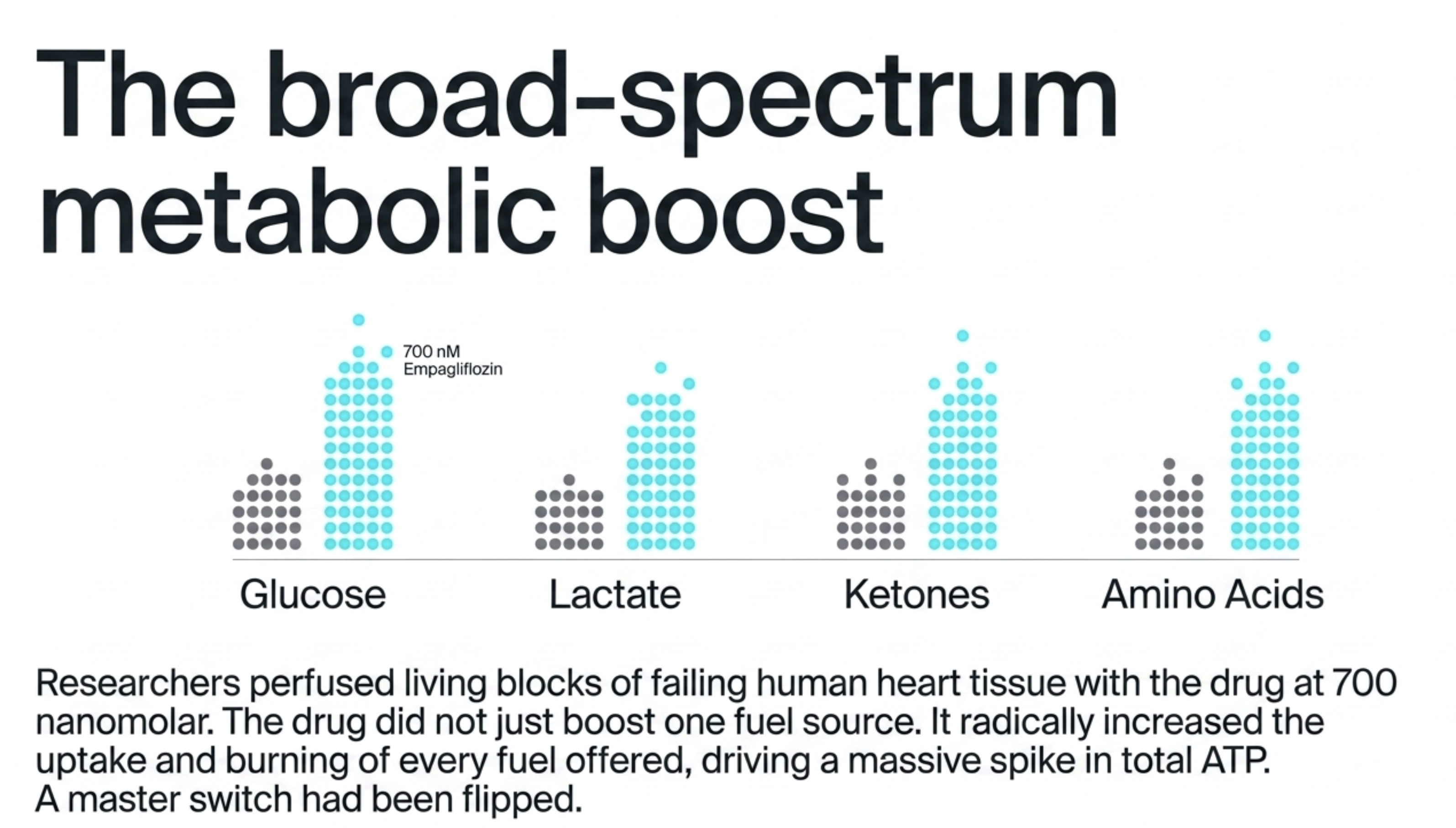
The result was immediate and broad. In the failing hearts, empagliflozin increased the uptake of every fuel offered. The tissue pulled more glucose, more lactate, more of each labeled nutrient out of the perfusate, and the isotope tracing confirmed that these fuels were not merely being absorbed but burned, their carbons flowing into the central metabolic furnace that generates energy. Fat oxidation appeared to rise as well. And the payoff showed up exactly where it should: treated hearts had higher ATP and lower levels of its spent-down form, meaning the tissue's energy charge had increased. In a single stroke, the drug had made an energy-starved heart better at generating energy.
This was the first solid clue, and it was a significant one on its own. It established, in living human heart tissue, that the drug's benefit is direct, acting on the heart itself, not a secondary consequence of changes in blood sugar, kidney function, or anything else happening elsewhere in the body. Something about empagliflozin was reaching into the heart's metabolism and broadly turning it up. But a broad increase in fuel burning is a symptom, not an explanation. It told the researchers that the drug was flipping some master switch in the heart's energy machinery. It did not yet tell them which one. To find that, they had to follow the metabolism down to the specific molecule that had changed.
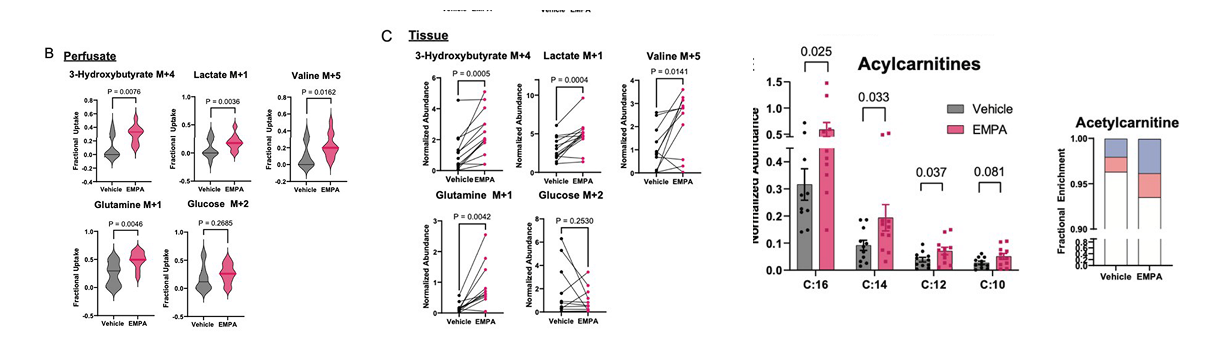
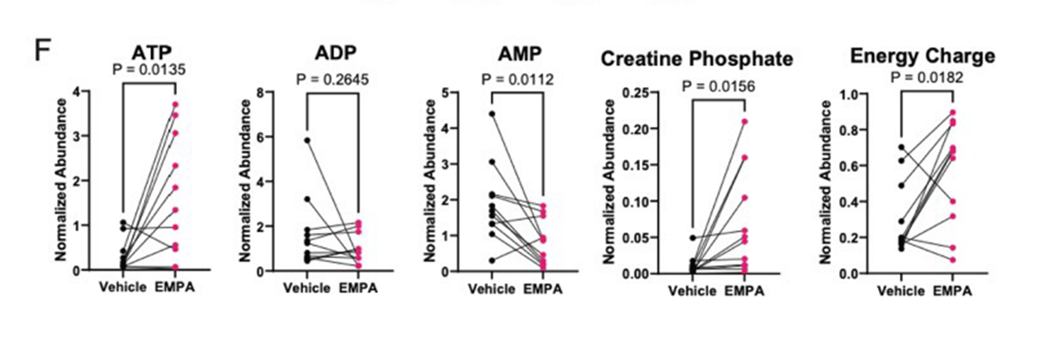
Figure 1: In failing human heart tissue, empagliflozin broadly increased fuel use and energy. Treated heart blocks took up more of every labeled fuel from the perfusate and showed higher ATP and a greater energy charge, evidence that the drug directly boosts the heart's metabolism rather than acting through blood sugar or the kidney.
Following the Trail to Coenzyme A
To find the switch, the researchers cast a wide net. They performed untargeted metabolomics on the treated and untreated heart tissue, an approach that measures thousands of small molecules at once without deciding in advance what to look for. The idea is to let the data point to whatever has changed, rather than testing a favored hunch. Among everything they measured, one molecule stood out for how sharply the drug had moved it: pantothenate. Empagliflozin had depleted it by more than half.
Pantothenate is better known by another name: vitamin B5. And its main job in the cell is to serve as the raw material for building one of the most important molecules in all of metabolism, coenzyme A. That a drug was rapidly consuming the heart's supply of vitamin B5 was a striking and specific clue, because it pointed directly at the machinery that turns B5 into coenzyme A.
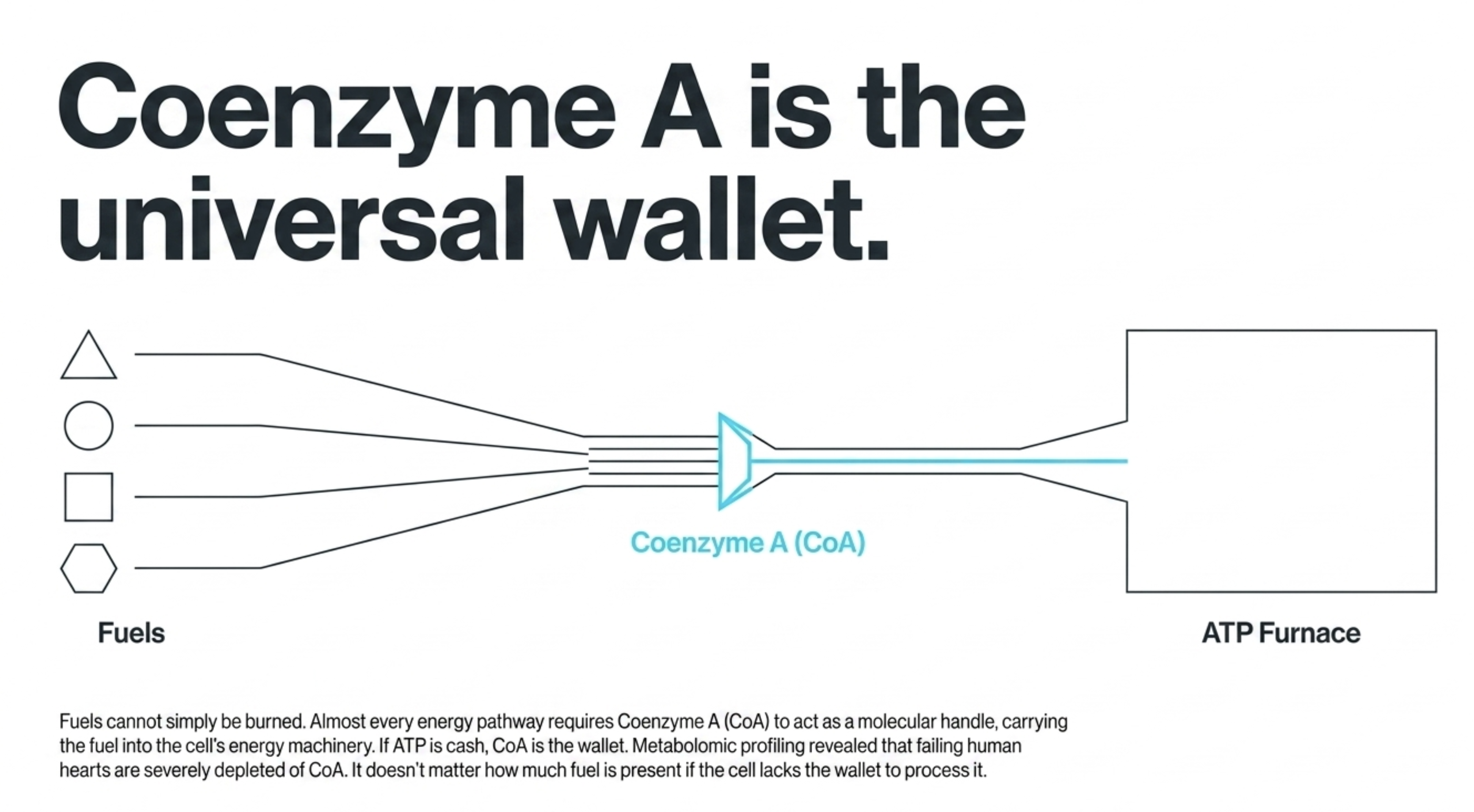
Coenzyme A, usually abbreviated CoA, is one of the true workhorses of the cell. It is worth understanding why it matters so much. CoA is the universal handle that the cell attaches to fuel molecules in order to process them. Nearly every pathway that burns fuel for energy, the breakdown of fats, the oxidation of sugars, the metabolism of certain amino acids, runs through CoA. Fuels do not enter the central energy-generating furnace, the reactions that ultimately produce ATP, unless they are first attached to CoA. If ATP is the cell's cash, CoA is something like the wallet and the hands that carry the fuel to be spent. Without enough CoA, it does not matter how much fuel is available; the cell cannot feed it into the machinery that extracts its energy.
This is what made the pantothenate clue so compelling. If the drug was driving the conversion of vitamin B5 into CoA, it would be increasing the cell's supply of the one cofactor that every fuel needs in order to be burned, which would explain, in a single stroke, the broad increase in fuel consumption the researchers had already seen. A heart with more CoA is a heart that can put more of every fuel to use.
The evidence lined up behind exactly this idea. The drug did not just deplete pantothenate; it shifted the balance toward pantothenate's activated, phosphorylated form, the first committed step of CoA synthesis, a sign that the assembly line was running faster. When the researchers added isotopically labeled pantothenate to the perfusion fluid, empagliflozin more than doubled the rate at which the heart took it up, and sharply increased the amount of that labeled B5 that ended up incorporated into freshly made CoA. The drug was measurably accelerating the production line that turns vitamin B5 into coenzyme A.
And there was a final piece that explained why this would matter so much specifically in heart failure. When the researchers compared failing human hearts to healthy ones, they found that the failing hearts were depleted of CoA; both free CoA and its various fuel-carrying forms were reduced. This is a profound observation on its own: the failing heart is not just short of energy, it is short of the very cofactor required to make energy from fuel. The drug, by driving CoA synthesis, was replenishing a supply that heart failure had run down. It was refilling the wallet.
...failing hearts were depleted of CoA; both free CoA and its various fuel-carrying forms were reduced. This is a profound observation on its own: the failing heart is not just short of energy, it is short of the very cofactor required to make energy from fuel.
To be sure this CoA-building was actually responsible for the metabolic boost, and not merely occurring alongside it, the researchers needed to block CoA synthesis and see whether the drug's benefit disappeared. Using a compound that inhibits the CoA assembly line, they found exactly that: when CoA synthesis was blocked, empagliflozin could no longer increase the burning of fuel. The activation of CoA synthesis was not a bystander. It was required for the drug to work.
So the trail had led to a clear answer to the "what": the drug rescues the failing heart's energy metabolism by rebuilding its depleted supply of coenzyme A. But that raised the sharper question, the one that would name the drug's true target. CoA synthesis is a multi-step assembly line. Something was making it run faster. Which specific machine on that line was the drug actually pulling?
The drug, by driving CoA synthesis, was replenishing a supply that heart failure had run down. It was refilling the wallet.
Finding the Real Target: PANK1
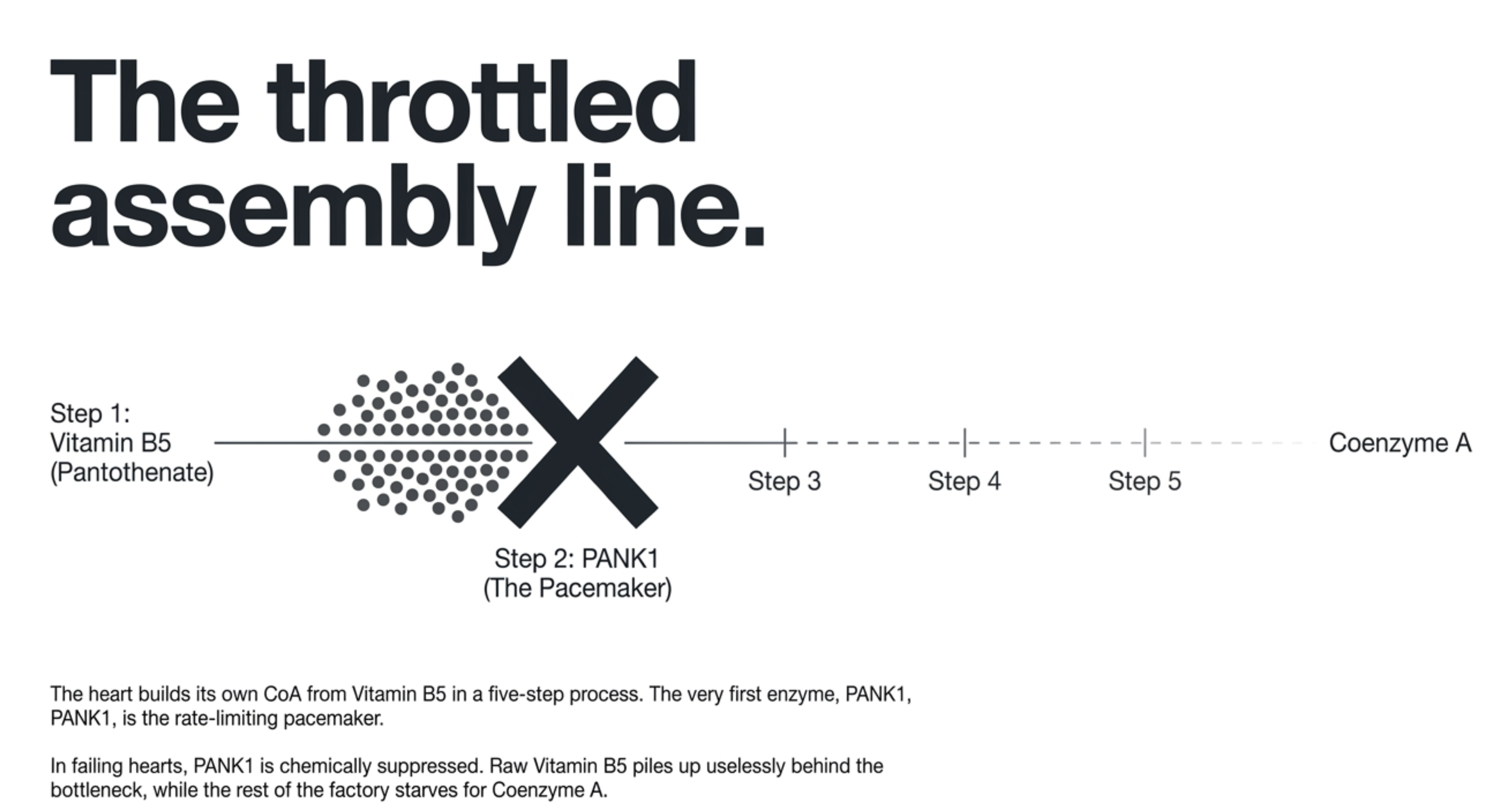
Building coenzyme A from vitamin B5 takes five enzymatic steps, like a five-station assembly line. But not all stations are equal. The very first one, the enzyme that adds a phosphate group to pantothenate, is the rate-limiting step, the slowest station that sets the pace for the entire line. That enzyme is called pantothenate kinase, or PANK, and in the human heart it exists mainly as one version, PANK1, which accounts for more than seventy percent of the heart's pantothenate kinase activity. If anything were speeding up CoA production, the rate-limiting first enzyme was the prime suspect.
The circumstantial case pointed straight at it. In failing human hearts, the researchers found, PANK1 is suppressed, its levels are lower than in healthy hearts, and pantothenate, the substrate it acts on, tends to pile up behind the bottleneck, exactly the pattern you would expect if the first enzyme on the line had become a choke point. A failing heart looks like a factory whose lead machine has been throttled down, with raw material backing up in front of it. The hypothesis was clean: perhaps the drug throws that throttled enzyme back open.
Proving it required showing that the drug physically engages PANK1, and the researchers came at this from several independent directions, which is what makes the conclusion convincing. First, they used a technique that measures whether a protein becomes more heat-stable in the presence of a drug, a classic signature of direct binding, since a molecule clamping onto a protein tends to hold it together against heat. Empagliflozin markedly stabilized PANK1, indicating the two physically associate. Second, they immobilized the drug on beads, mixed it with cellular contents, and found that PANK1 stuck to the drug-coated beads and not to control beads, direct evidence of binding. Third, running it the other way, they fished PANK1 out of cells and found the drug came along with it. Three different methods, one conclusion: empagliflozin binds PANK1.
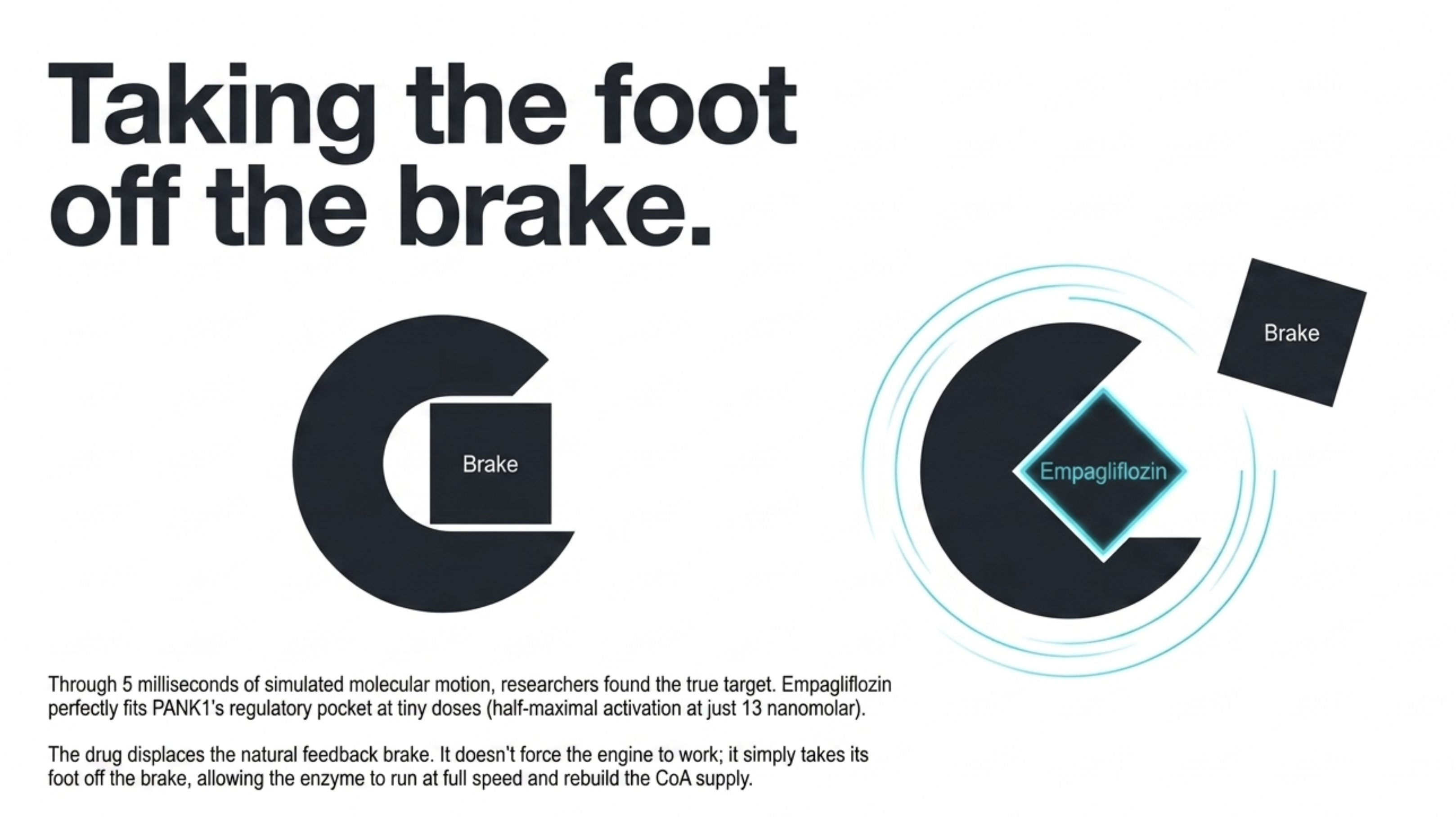
Then came the most important test, whether binding actually does anything. The researchers produced pure PANK1 enzyme and measured its activity directly, with nothing else present that could confound the result. Empagliflozin activated the enzyme, and it did so at strikingly low concentrations, with half-maximal activation at just 13 nanomolar. That number matters enormously, because it sits far below the concentrations the drug actually reaches in the bloodstream of patients taking it, which peak in the hundreds to over a thousand nanomolar. In other words, at the doses real patients take, there is more than enough drug present to be activating this enzyme in their tissues. The activation was not a laboratory artifact requiring unrealistic amounts of drug; it happens squarely within the range of normal treatment.
The researchers even worked out, in molecular detail, how the activation likely happens, and it is an elegant mechanism.
Using an enormous computational effort, roughly five milliseconds of simulated molecular motion assembled from a thousand separate simulations run on a distributed computing network, they modeled the enzyme's constantly shifting shape and found that empagliflozin slots into a specific pocket on PANK1. This pocket is normally occupied by CoA-related molecules that the pathway produces, which sit there as a brake: when CoA is abundant, these molecules dock into the pocket, reach into the enzyme's working site, and shut it down, a built-in feedback loop that stops the line when enough product has accumulated. Empagliflozin binds the same pocket, but crucially, it does not reach into the working site the way the braking molecules do. By occupying the pocket without triggering the shutdown, the drug displaces the natural brake and prevents it from acting. The enzyme, released from its own feedback inhibition, runs faster. The drug does not force the enzyme to work; it takes the foot off the brake. The study went a step further and confirmed the binding site directly, by mutating the specific amino acids the model implicated and showing this altered the drug's effect, nailing down where on the enzyme the drug acts.
So the "who" was now settled, and settled rigorously. The true cardiac target of these diabetes drugs is PANK1, the pace-setting enzyme of coenzyme A synthesis. The drug binds it, activates it by relieving its natural brake, and does so at concentrations patients actually achieve. What remained was to show that this molecular event, the activation of one enzyme, actually translates into a heart that works better. A faster assembly line is only meaningful if the heart it belongs to can pump.
By occupying the pocket without triggering the shutdown, the drug displaces the natural brake and prevents it from acting. The enzyme, released from its own feedback inhibition, runs faster.
Proving It Matters: Making the Heart Pump Better
Everything to this point establishes that the drug rebuilds the heart's coenzyme A supply by activating PANK1, and that this restores the tissue's ability to burn fuel and make energy. But energy is a means, not an end. What a failing heart needs is to pump, to contract with force and then relax to fill again. So the final question was the one that matters most to a patient: does activating this enzyme actually make heart muscle work better?
To find out, the researchers isolated individual heart muscle cells from human hearts and measured their mechanics directly, how forcefully each cell shortened when triggered to contract, and how quickly and completely it relaxed afterward. Both halves of that cycle matter. Contraction is the obvious one, the squeeze that ejects blood, but relaxation is just as important and is often overlooked. A heart must relax fully between beats to refill with blood, and relaxation is itself an energy-hungry process, because it requires actively pumping calcium back into storage, work that costs ATP. Many failing hearts struggle as much with relaxing as with contracting, and both are exactly what an energy-starved cell would do poorly.
When the researchers added empagliflozin to isolated human heart cells, the cells contracted more forcefully and relaxed more quickly and completely. The drug directly improved both halves of the pumping cycle, in single cells, with no nerves, no hormones, no bloodstream, nothing but the drug and the cell. This confirmed that the benefit is intrinsic to the heart muscle itself, not something that depends on the rest of the body being present.
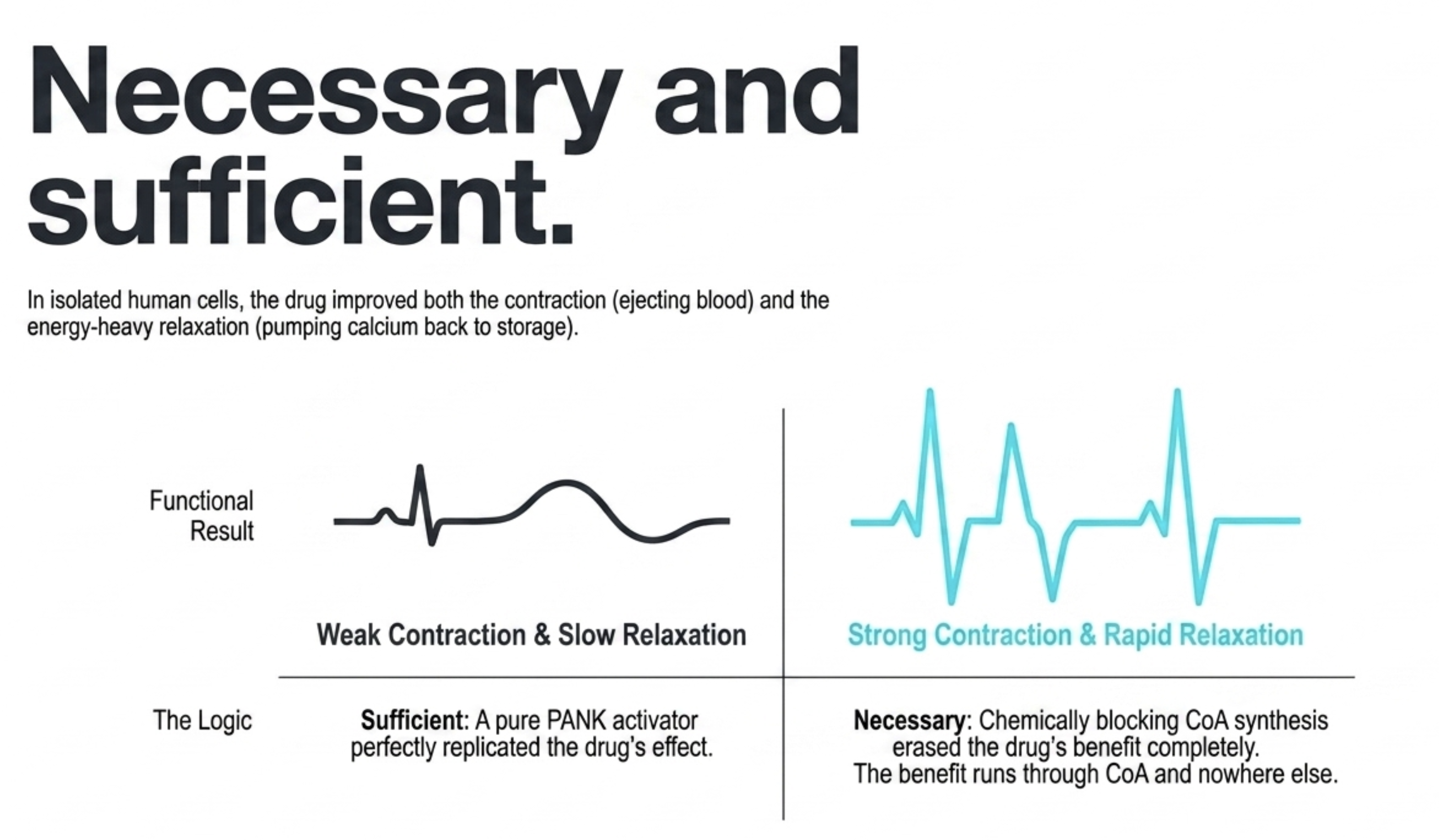
Then the researchers did the two experiments that turn a compelling story into a proof, testing whether PANK1 activation is both sufficient and necessary for this functional improvement. To test sufficiency, they set the drug aside and used a different compound, one whose only relevant job is to activate PANK directly. If PANK activation is really what improves the heartbeat, this compound should reproduce empagliflozin's effect on its own. It did, precisely, improving contraction and relaxation just as the drug had. Activating PANK1 is enough, by itself, to make heart cells work better.
To test necessity, they went the other way. They gave the heart cells empagliflozin as before, but this time also blocked CoA synthesis downstream. If the drug improves function through the CoA pathway, then blocking that pathway should abolish the benefit. It did, completely. With CoA synthesis blocked, empagliflozin lost its power to improve the heartbeat entirely. The drug's benefit runs through CoA synthesis and nowhere else that matters here.
Together, these two results close the logical loop with unusual tightness. Activate the pathway with a different tool, and you reproduce the drug's benefit; block the pathway, and you erase it. This is the kind of necessary-and-sufficient evidence that lets researchers say not merely that two things are associated, but that one causes the other. PANK1 activation is not a bystander to the drug's effect on the failing heart. It is the mechanism.
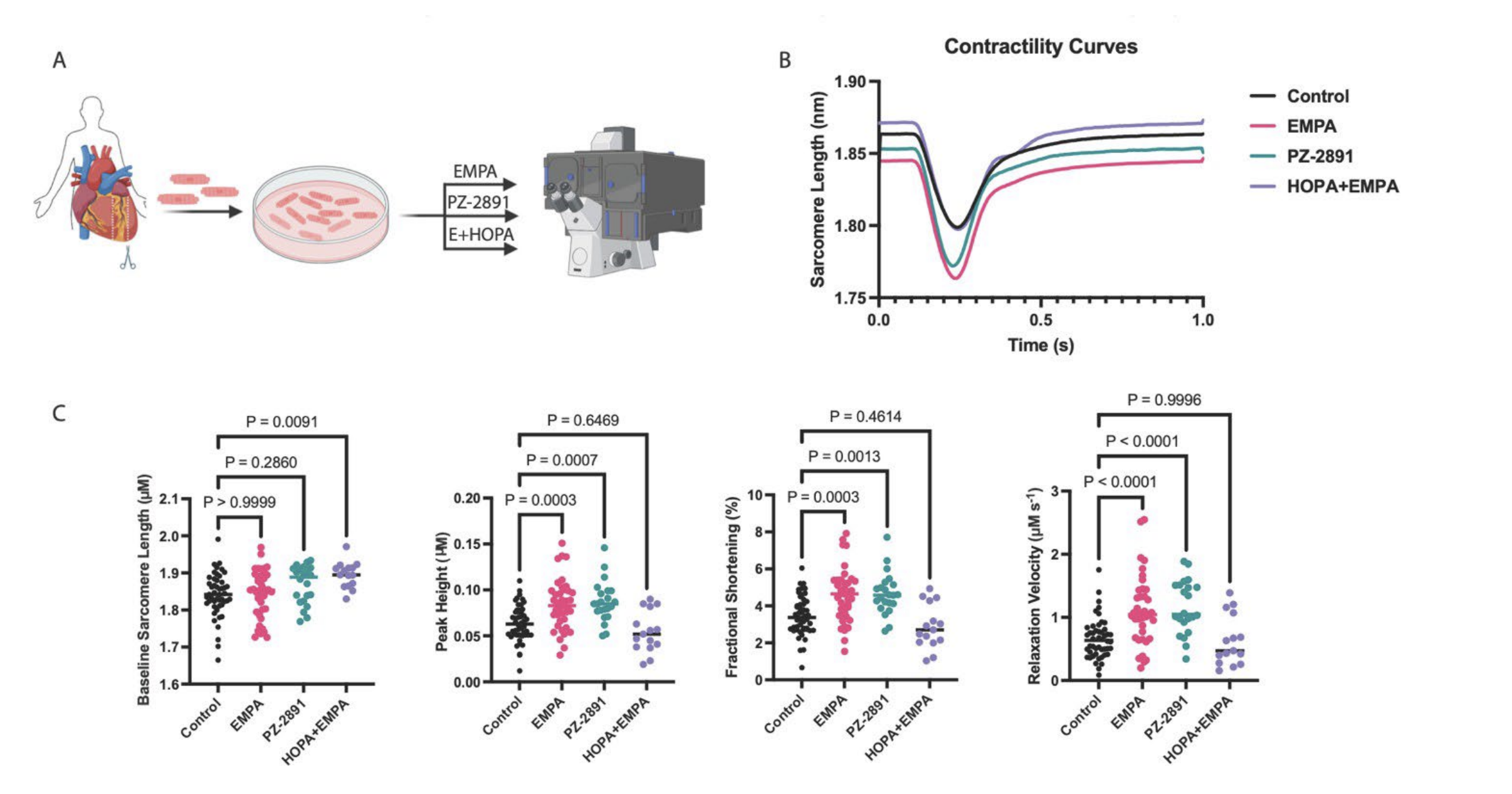
Figure 4: PANK1 activation is necessary and sufficient to improve the human heartbeat. In isolated human heart cells, empagliflozin improved both contraction and relaxation. A pure PANK activator reproduced the effect, and blocking coenzyme A synthesis abolished it, showing that PANK1 activation is the mechanism, not a bystander.
And so the mystery that opened this story has an answer. SGLT2 inhibitors rescue failing hearts not through their namesake target, which the heart does not even possess, but by binding and activating PANK1, refilling the heart's depleted supply of coenzyme A, and thereby restoring its ability to turn fuel into the energy it needs to pump. A diabetes drug helps the heart because, entirely by accident, it happens to switch on the pace-setting enzyme of one of metabolism's most essential supply chains.
Why This Matters Beyond One Drug
A discovery like this is satisfying as detective work, but its real value lies in what it opens up. Naming the true target of a major drug class changes several things at once, and the implications run from the immediately practical to the genuinely far-reaching.
The most direct consequence is that it explains features of these drugs that had never quite made sense. Consider the speed. SGLT2 inhibitors often begin helping heart-failure patients within days, far faster than the slow structural remodeling most heart therapies rely on. That rapid onset was a puzzle under the old glucose-focused thinking, but it makes immediate sense if the drug is acutely switching on an enzyme and refilling a depleted cofactor pool. You do not need weeks of remodeling to feel better; you need your heart cells to start making energy again, which can happen almost at once. The mechanism fits the clinical timeline in a way the old story never did.
It also explains why the drugs work regardless of diabetes. If the benefit came from lowering blood sugar, it should track with how diabetic a patient is. It doesn't, and that always sat awkwardly. But PANK1 and the coenzyme A supply chain have nothing to do with diabetes; they are universal machinery present in everyone's heart. A drug that helps the heart by activating PANK1 would help diabetic and non-diabetic hearts alike, which is exactly what the trials found.
The most actionable implication is for drug design. SGLT2 inhibitors, it now appears, are helping the heart through PANK1 more or less by accident, a fortunate off-target effect of a molecule built for something else entirely. That accident comes bundled with the drug's on-target actions in the kidney, which produce some potential side effects: genital and urinary infections from the glucose dumped into the urine, and, rarely, a dangerous metabolic state called euglycemic ketoacidosis. If PANK1 is the part that helps the heart, then a drug designed to activate PANK1 directly, cleanly, without touching the kidney's glucose handling at all, might deliver the cardiac benefit while shedding the side effects. The discovery effectively hands drug developers a validated new target, and a rationale for building a next generation of heart-failure medicines potentially better than the ones we arrived at by luck.
Then there is the deeper biological lesson, which reaches past this drug class entirely. The study makes a strong case that coenzyme A availability is a genuine bottleneck in heart failure, that the failing heart is limited not only by fuel but by its capacity to build the cofactor that fuel requires. This reframes part of what heart failure is, at the metabolic level, and it is corroborated by other lines of evidence the researchers point to: mice engineered to lack cardiac PANK1 develop heart disease under stress, and people born with mutations that cripple a later step of CoA synthesis develop a form of heart failure directly. CoA synthesis, in other words, is not a peripheral detail of cardiac health; it appears to be central to it. That insight is likely to outlast any single drug, because it points at a pathway, not just a pill.
Finally, and most speculatively, the reach of this mechanism may extend beyond the heart. PANK1 is not a cardiac specialty; the same enzyme runs the CoA assembly line in the liver, the kidneys, the gut, and the nervous system. SGLT2 inhibitors have shown benefits in kidney disease and fatty liver disease that, like their cardiac effects, are not fully explained by glucose control. It is reasonable to wonder, though this study did not test it, whether activation of PANK1 in those organs contributes to those benefits too. If the failing heart was starved for coenzyme A, other stressed tissues may be as well, and a drug that rebuilds CoA might help wherever that shortage exists. That is a hypothesis for future work, not a finding of this paper, but it is the kind of hypothesis that a good mechanism makes possible to ask.
Where This Fits in the Longevity Picture
If you follow longevity medicine, you already know that SGLT2 inhibitors have become one of the most closely watched drug classes in the field, and not because of heart failure. They are among a small handful of compounds shown to extend lifespan in mice, and researchers have spent years cataloging the many ways they seem to touch the biology of aging. So it is worth asking directly: does this new finding, a cardiac enzyme and a cofactor, matter to someone whose interest is longevity rather than heart failure? The honest answer is yes, but for a specific reason that requires placing it carefully alongside what was already known.
Start with the fact that makes the finding potentially bigger than the heart. PANK1 and coenzyme A are not cardiac specialties. The same enzyme runs the same coenzyme A assembly line in the liver, the kidneys, the gut, the brain, and essentially every metabolically active tissue in the body. Coenzyme A is universal; every cell needs it to burn fuel. So a drug that activates PANK1 and lifts coenzyme A production is, in principle, doing something that could matter anywhere cells are working hard or under metabolic strain, which is to say, anywhere that aging is taxing a tissue's energy economy. This study only tested the heart, so the extension to other organs is a hypothesis. It is a well-grounded hypothesis, and it is the reason someone interested in longevity science should pay attention: this may be a body-wide metabolic mechanism that happened to be discovered in the organ where its effects were most dramatic and most clinically urgent.
This is not the first mechanism proposed for how SGLT2 inhibitors work beyond glucose control, and it does not obviously agree with the others. Prior research, which we have covered in depth, points to these drugs activating AMPK, the cell's low-energy sensor, in part by mildly restraining mitochondrial energy production, which is the basis for calling them "calorie-restriction mimetics." That is fundamentally a story of beneficial energetic stress: the drug makes the cell think energy is scarce, which triggers protective adaptations like autophagy and senescent-cell clearance. Yet this new paper describes something that sounds like the opposite: the drug boosting coenzyme A and broadly increasing the heart's ability to make ATP. One story is about restraining energy to trigger stress-adaptation; the other is about enhancing energy production directly. A careful reader will notice the tension immediately.
The resolution is that these drugs are almost certainly multi-target, and that is the honest through-line of everything now known about them. A single molecule can do different things in different tissues, at different doses, and in different metabolic states. It can restrain energy production in one context while relieving a bottleneck in another. The AMPK-activation story and the PANK1-activation story are not necessarily in conflict; they may describe distinct effects operating in parallel, or dominating in different organs. What the whole body of research increasingly suggests is that SGLT2 inhibitors do not have one clean mechanism of action. They touch several of the pathways that longevity science cares about at once: nutrient-sensing through AMPK and mTOR, senescent-cell clearance through enhanced immune surveillance, the reduction of ectopic and epicardial fat, and a range of other hallmark-level effects on aging, and now, per this study, direct enhancement of cellular energy metabolism through coenzyme A. That multiplicity is part of what makes them so interesting, and also why they remain incompletely understood.
For the longevity reader, then, the honest way to hold this finding is as one new, well-established pillar beneath a broader and still-developing case. It does not prove these drugs extend human lifespan; no drug has been proven to, and the lifespan data remain animal-based and, notably, male-specific. What it does is add mechanistic depth to one particular dimension, cardiac and cellular energetics, that the prior longevity work had not addressed, and it does so with unusual rigor, in human tissue, published in Science. If your interest in this drug class is the heart specifically, the organ whose failure remains a leading cause of death, this paper is the most direct mechanistic account yet of why these drugs protect it. And if your interest is the broader longevity picture, this finding widens it, adding a distinct energy-metabolism mechanism to the nutrient-sensing, senolytic, and fat-reducing threads that our prior reviews have traced in detail.
What the Mechanism Can and Can't Tell You
This is a rigorous and unusually complete piece of work, published in one of science's most demanding venues and built from many independent lines of evidence that converge on the same answer. But its boundaries matter, and reading it well means keeping them in view.
The most important caution for a general reader concerns vitamin B5, and it is worth stating plainly because it is so easy to get wrong. The fact that this pathway starts with pantothenate, which is vitamin B5, does not mean that taking B5 supplements will help your heart. The study points the other way. The bottleneck in the failing heart is not a shortage of the raw material; it is the enzyme, PANK1, which is suppressed in heart failure and cannot keep pace. In fact, failing hearts had pantothenate piling up behind that throttled enzyme, more raw material, not less. Adding still more B5 does not open the bottleneck; only speeding up the enzyme does, which is what the drug, not the vitamin, accomplishes. Nothing in this study suggests that supplementing vitamin B5 replicates the effect of activating PANK1, and there is good reason from the biology to expect it would not.
The study is also, by design, about mechanism rather than clinical outcomes. It works with perfused human heart tissue, isolated heart cells, cultured cells, and purified enzyme, and it explains why the drugs help. It does not itself enroll patients or measure survival; the dramatic clinical benefits it accounts for come from the large trials conducted separately. So the chain of reasoning is: the trials proved these drugs save lives in heart failure, and this study explains how. That is a powerful pairing, but it is worth being precise that the life-saving evidence and the mechanistic evidence come from different studies.
The findings are largely acute. The experiments capture what the drug does over minutes to hours, activating the enzyme, boosting CoA, improving the beat of isolated cells. The clinical benefits accrue over months. The reasonable assumption is that the acute mechanism, repeated continuously, produces the long-term benefit, and the rapid onset of the drugs' clinical effect supports that. But this study observes the immediate molecular events, not the long arc, and the connection between them, while highly plausible, is inferred.
Some of the reach is inferential in the ways good science is careful to flag. The proposed extension to other organs, kidney, liver, and beyond, is a reasonable hypothesis grounded in the fact that PANK1 operates in those tissues too, but this study did not test it. The detailed molecular picture of how the drug activates the enzyme rests partly on computer simulation, though the peer-reviewed work strengthened it considerably by confirming the binding site through targeted mutations. And the broader claim that coenzyme A availability is central to heart failure, while well supported here and corroborated by genetic evidence the authors cite, is a substantial reframing that will continue to be tested.
None of this diminishes the core result, which is well established: SGLT2 inhibitors activate PANK1, promote coenzyme A synthesis, and thereby improve the metabolism and contractile function of human heart tissue, at drug concentrations patients actually reach. The necessary-and-sufficient experiments make the causal claim about as firmly as laboratory evidence can. What the study establishes about mechanism is solid. The extrapolations beyond it, to other organs, to long-term outcomes, and certainly to anything involving vitamin supplements, are the parts to hold more loosely.
What This Means
For most people reading about a heart-failure mechanism, the natural question is what it has to do with them, and the honest answer runs along two tracks: what this changes for medicine, and what it suggests for anyone thinking about the long-term health of their own heart.
For medicine, the message is clarifying. One of the most important drug classes of the last decade, a class already recommended for millions of heart-failure patients, now has a mechanistic explanation worthy of its clinical track record. That matters for confidence: a therapy whose benefits are understood is a therapy doctors can deploy more precisely, extend more rationally to new patients, and improve upon deliberately rather than by luck. And it reframes heart failure itself, casting the failing heart not only as a weakened pump but as a cell starved of the cofactor it needs to turn fuel into energy. That is the kind of insight that reshapes a field's thinking, and it will likely guide heart-failure research well beyond this one drug.
For the individual, the implications need to be drawn carefully, because this is where it would be easy to overreach. This study is about failing hearts, and its subjects were human heart tissue in a laboratory, not healthy people seeking to optimize their metabolism. It does not show that SGLT2 inhibitors make a healthy heart younger, and it says nothing directly about longevity. What it does do is deepen the understanding of a drug class that has become one of the most closely watched in longevity medicine, for reasons that extend beyond the heart, to metabolic flexibility, fat oxidation, and cardiometabolic health more broadly. This paper adds something specific and well-grounded to that picture: at the level of the heart, these drugs work by rebuilding the coenzyme A supply that powers cellular energy production. It is a genuine mechanistic anchor beneath one part of a broader and still-developing case.
That broader case is precisely why SGLT2 inhibitors have moved from the diabetes clinic into longevity practice, and it is the basis of Healthspan's SGLT2 protocol, a clinician-guided program built around this drug class for people focused on metabolic and cardiometabolic aging, with lab testing and dosing oversight included. What this study contributes to that protocol is not a new promise but a clearer why: it illuminates, at the molecular level, one of the concrete mechanisms, cardiac energy metabolism, through which this class of drugs acts. For someone considering these medications as part of a longevity strategy, that mechanistic clarity is exactly what ought to inform the decision, made with a clinician, weighing the real benefits against the real side effects the same biology entails.
The honest bottom line is that this is, first and foremost, a beautiful answer to a medical mystery, and a validation of a therapy already proven to save lives in heart failure. Its relevance to healthy longevity is real but more preliminary, an important mechanistic thread in a larger story still being written. Held at that altitude, it is genuinely encouraging: the drugs work, we now understand a central reason why, and that understanding is the foundation for using them wisely and building better ones.
Conclusion: The Target No One Was Looking At
The story of the SGLT2 inhibitors is, in the end, a story about how much medicine can accomplish without understanding what it is doing. For years, these drugs saved the lives of heart-failure patients through a mechanism no one could name, hitting a target no one had thought to look at, while everyone's attention stayed fixed on the kidney and on blood sugar. The drugs worked anyway. Biology did not wait for us to understand it.
What this study provides is the understanding, at last, and it turns out to be more elegant than the original design. A molecule built to make the kidneys spill glucose also, by chance, slips into a pocket on an enzyme in the heart and releases that enzyme from its own brake. The enzyme speeds up, the heart rebuilds its supply of coenzyme A, and a cell that was starving for the means to burn its fuel can suddenly make energy again. The failing heart, an engine out of fuel, is handed back the one thing it most needed, not more fuel, but the capacity to use it. That this happens as an accident of a diabetes drug is the kind of luck that medicine occasionally stumbles into and only later comes to comprehend.
The deeper contribution is the shift in understanding that outlasts the drug. Heart failure looks different now: less purely a mechanical problem of a weakening pump, more a metabolic one of a cell that cannot keep its energy machinery supplied. Coenzyme A, a molecule most people have never heard of, moves to the center of the picture. And a validated new target, PANK1, sits waiting for the next generation of drugs, ones that might be designed on purpose to do what these did by chance, and do it more cleanly.
There is something worth sitting with in that arc. The most important effect of one of this era's most important drug classes was invisible for years, running quietly beneath the explanation everyone accepted, until someone thought to trace a failing human heart's metabolism down to the single molecule that had changed. The benefits were real the whole time. What changed is that we can finally see why, and seeing why is what turns a lucky accident into a foundation to build on.
Related studies