Why rucking works may not be primarily about calories burned. A weighted vest study points to a skeletal weight-sensing system that preserves metabolic rate during weight loss.
Prefer to listen? Hit play for a conversational, audio‑style summary of this article’s key points.
Weight regain after dieting is not primarily a willpower problem. It is a predictable biological response to a signal the field has largely ignored. When body weight falls through caloric restriction, the body suppresses resting metabolic rate to restore the lost weight. A new International Journal of Obesity study suggests this metabolic suppression is driven partly by reduced mechanical loading on the skeleton, a system called the gravitostat, and that preserving that loading signal during weight loss dramatically changes long-term outcomes.
The gravitostat is a proposed weight regulation system that operates through the skeleton rather than through hormones. Specialized bone cells called osteocytes sense the mechanical load imposed by body weight and send signals to the brain that regulate appetite and metabolic rate in proportion to that load. When body weight falls, the reduced load signals the brain to lower metabolic rate and increase hunger to restore the lost weight. This mechanical system operates in parallel with the hormonal signals like leptin and ghrelin that have received nearly all of the attention in obesity medicine.
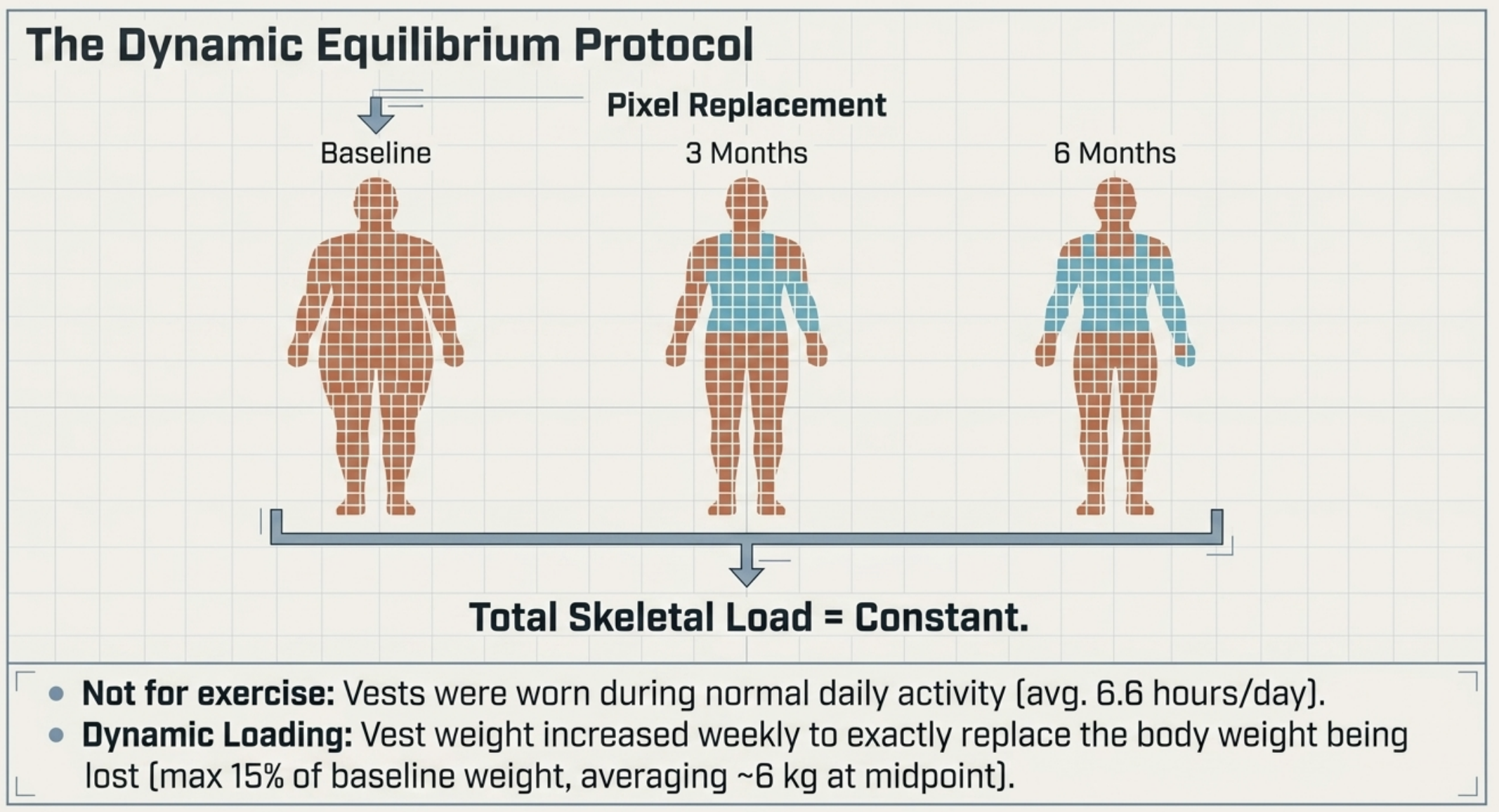
The study tested a weighted vest not as exercise but as a metabolic signaling tool. Eighteen older adults with obesity and osteoarthritis followed a six-month caloric restriction protocol. Half wore a weighted vest during normal daily activity, averaging 6.6 hours per day with about 6 kilograms of load, with the vest weight increased weekly to replace the weight being lost. The vest was not for exercise. It was for preserving the gravitational signal the skeleton receives as fat mass declines.
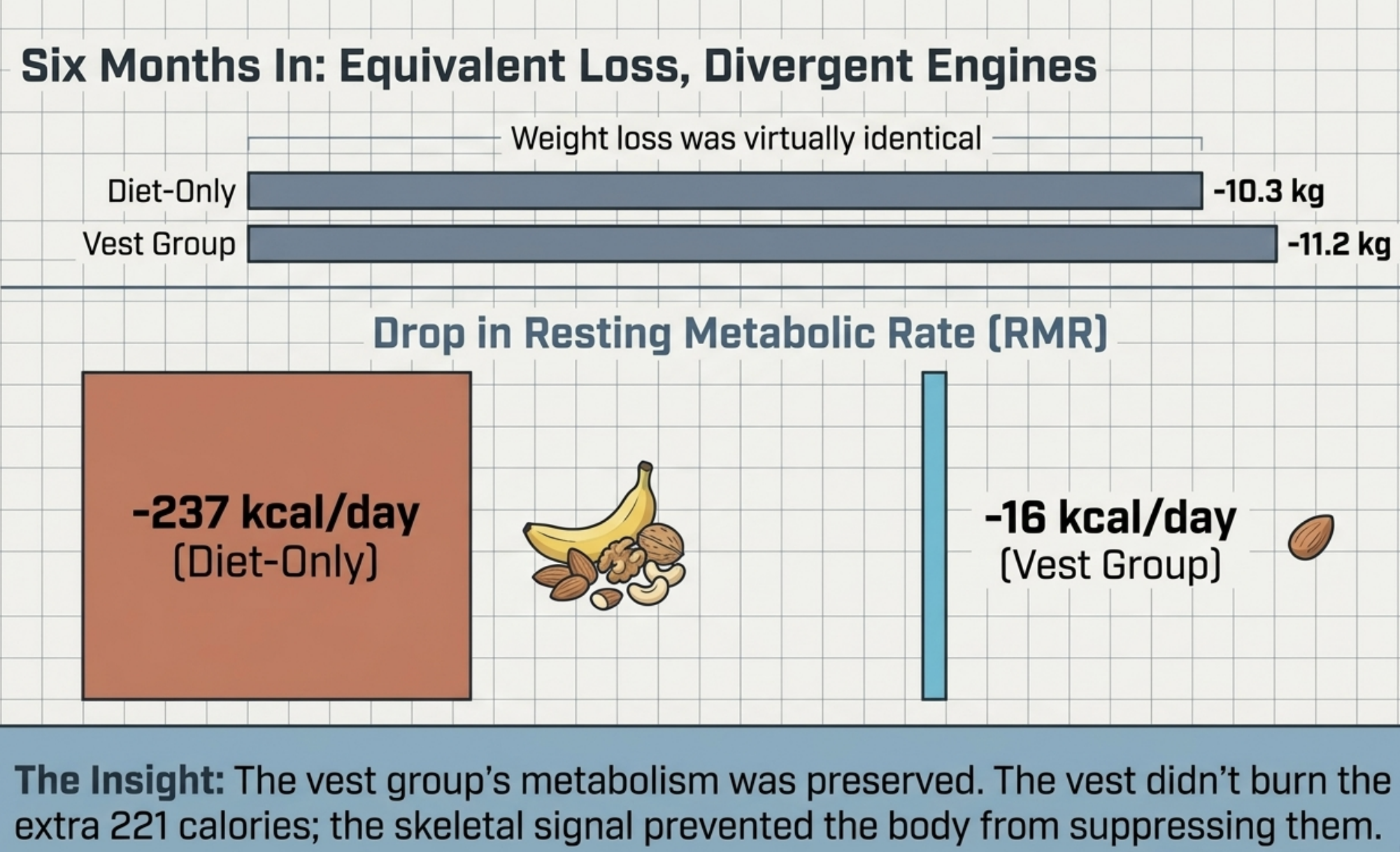
Both groups lost similar weight, but their metabolic adaptation differed by 221 kilocalories per day. The vest group lost 11.2 kilograms and the diet-only group lost 10.3 kilograms, a non-significant difference. But resting metabolic rate fell by only 16 kilocalories per day in the vest group compared to 237 kilocalories per day in the diet-only group. The vest group's metabolism was essentially preserved while the diet-only group's was substantially suppressed, despite nearly identical weight loss through the same diet.
Two years later, the two groups had dramatically different outcomes. After 18 months of unsupervised follow-up with no contact or protocol, the vest group remained 4.8 kilograms below baseline while the diet-only group was 0.9 kilograms above baseline, having regained everything. The change in metabolic rate during the intervention was inversely correlated with weight regain: the less the metabolism was suppressed during weight loss, the less weight was regained afterward.
The vest was not working by burning calories. It was working by preserving metabolic rate. Six kilograms of added load during daily activity produces modest additional caloric expenditure, nowhere near enough to explain the 221 kilocalorie difference in resting metabolic rate. The vest preserved the metabolism that weight loss would otherwise have suppressed, through a mechanism operating at the level of the skeleton's weight-sensing system rather than through energy expenditure during activity.
This may explain why rucking produces weight management benefits disproportionate to the calories it burns. When a rucker carries a weighted pack, they load their skeleton beyond body weight, potentially sending the gravitostat a signal that the organism is heavier than it is. That signal may preserve resting metabolic rate in ways that persist beyond the activity itself. The connection is inferential rather than directly tested, since the study used continuous daily vest wearing rather than periodic rucking sessions, but the mechanistic principle is the same.
Introduction: The Rucking Phenomenon and the Mechanism Nobody Is Talking About
Rucking has become one of the defining fitness trends of the past five years. What began as a military training modality, soldiers carrying weighted packs across terrain as a fundamental conditioning tool, has migrated into the mainstream fitness and longevity communities with a speed that few training methods achieve. The appeal is not hard to understand. Walking with a weighted pack is accessible to almost anyone regardless of fitness level, requires no gym membership or specialized equipment beyond a pack and some weight, combines cardiovascular and muscular loading in a single activity, and carries the cultural credibility of a practice forged in environments where fitness is not optional. The rucking community on social media is large, engaged, and growing. Weighted vests have become standard equipment in longevity-oriented fitness programs. And the benefits being attributed to rucking are real: increased caloric expenditure, improved cardiovascular fitness, greater muscular loading than walking alone, and anecdotally better weight management outcomes than the caloric math of the activity would seem to fully explain.
That last observation is where things get interesting. Ruckers consistently report weight management benefits that seem disproportionate to the calories burned during the activity itself. A sixty-minute ruck with a twenty-pound pack burns meaningfully more calories than a sixty-minute walk, but not enough to explain the degree to which regular rucking appears to support long-term weight stability in people who practice it consistently. The fitness community has attributed this to the cumulative caloric burn of regular sessions, to the muscle mass preservation effects of loaded walking, and to the general metabolic improvements that consistent cardiovascular training produces. All of these explanations are plausible. None of them is complete.
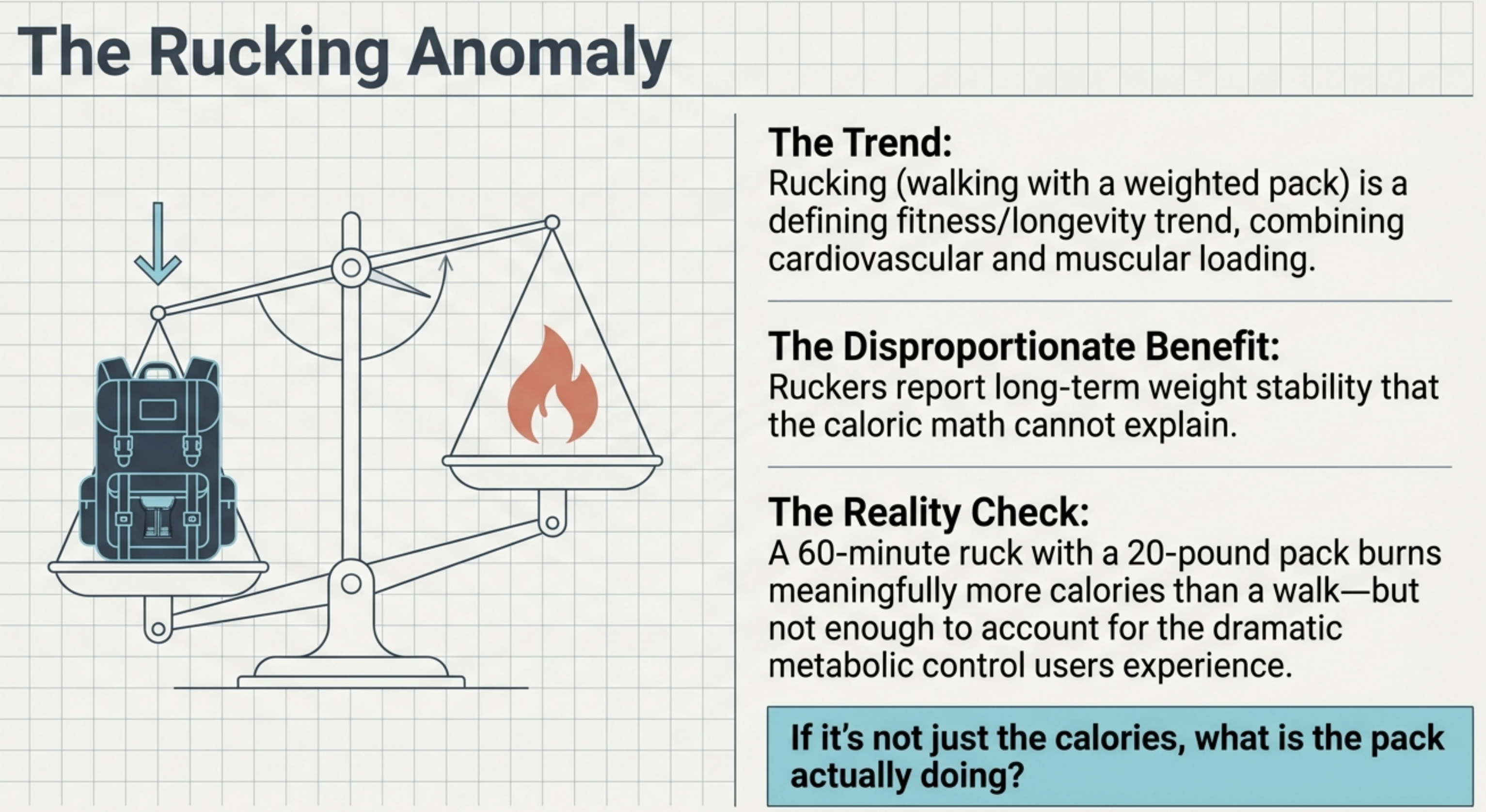
A new study published in the International Journal of Obesity suggests there is a third mechanism operating in ruckers that nobody in the fitness community is talking about, one that operates not through the muscles or the cardiovascular system but through the skeleton itself. The study tested a weighted vest intervention in a controlled clinical setting, not as exercise equipment but as a tool for preserving a specific mechanical signal that regulates metabolism and appetite in ways that have almost nothing to do with caloric expenditure during the activity. What it found over two years of follow-up should change how rucking is understood, how weight loss is approached, and how clinicians and longevity practitioners think about the relationship between mechanical loading and long-term metabolic health.
The mechanism is called the gravitostat. And understanding it requires starting with a question that the fitness community has not been asking: what happens to the skeleton when you add weight to it, and why might the answer matter for how the body regulates its own weight?
What Ruckers Are Actually Doing to Their Skeletons
When a rucker clips on a weighted vest or shoulders a loaded pack and heads out for a walk, the conscious experience of the activity is straightforward. The legs work harder. The heart rate climbs. The shoulders and back feel the load. The calorie burn ticks upward. These are the effects that the fitness community measures, discusses, and optimizes around, and they are real and worth optimizing.
But beneath the surface of that experience, something else is happening that has received almost no attention in the rucking conversation. Every step taken under load is compressing the bones of the lower extremities with greater force than body weight alone would produce. The femur, the tibia, the fibula, the bones of the ankle and foot, all are experiencing mechanical deformation proportional to the total load being carried. In the architecture of those bones, embedded within a network of tiny fluid-filled canals that run through the mineralized matrix like a microscopic circulatory system, sit cells called osteocytes.
Osteocytes are the most abundant cell type in mature bone, comprising roughly 90 to 95 percent of all bone cells, and they have been understood for decades as the skeleton's primary mechanosensors, the cells responsible for detecting mechanical strain in bone tissue and translating those strains into signals that regulate bone remodeling in response to loading. When a bone is loaded repeatedly and consistently, osteocytes detect the deformation and signal the bone-forming cells on the surface to build more bone. When a bone is unloaded, as happens during prolonged bed rest or spaceflight, osteocytes detect the absence of mechanical strain and signal the bone to resorb. This mechanosensing function of osteocytes is well established and is the reason weight-bearing exercise protects bone density while prolonged unloading destroys it.
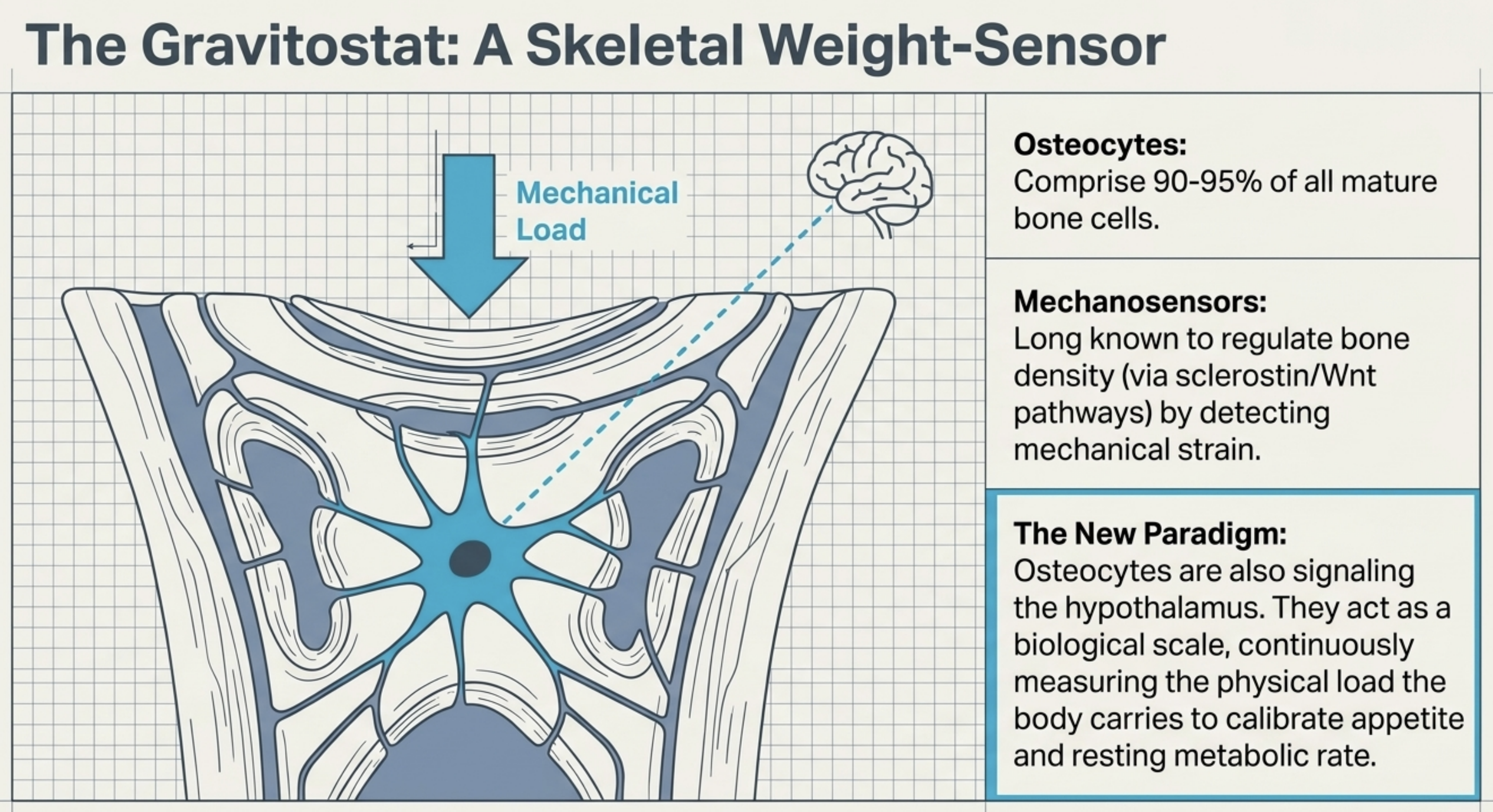
What is considerably less well established, and what the gravitostat hypothesis proposes, is that osteocytes are not simply managing bone remodeling. They are participating in the regulation of whole-body energy balance, sending signals to the brain that calibrate appetite and metabolic rate in proportion to the mechanical load the skeleton is experiencing. In this framing, the osteocytes in a rucker's weight-bearing bones are not simply registering the additional load and adding a note to the bone remodeling file. They are sending a signal to the body's weight regulation system that the organism is heavier than it actually is, and that signal may be producing metabolic effects that persist well beyond the duration of the ruck itself.
Think of it this way. The gravitostat hypothesis proposes that the skeleton functions as a biological scale, continuously measuring the load it carries and communicating that measurement to the systems that regulate how much energy the body stores as fat and how readily it spends energy at rest. When a rucker adds twenty pounds to their pack, they are not simply making their cardiovascular and muscular systems work harder for the duration of the activity. They may be telling their skeleton that the organism weighs twenty pounds more than it does, and the skeleton may be relaying that information to the brain in a way that influences metabolic rate and appetite in the hours and days that follow. If that is what rucking is doing, it would explain the weight management benefits that seem disproportionate to the caloric expenditure of the activity. The calories burned during the ruck are only part of the story. The gravitostat signal may be influencing the calories burned while sitting at a desk the next morning.
This is where the new study becomes directly relevant to the rucking conversation. Rather than testing ruckers, the researchers tested a controlled version of the same principle: a weighted vest worn during normal daily activity, not for exercise but for the mechanical signal it sends to the skeleton, in a population where the long-term weight management consequences of that signal could be measured carefully over two years of follow-up. What they found provides the most direct human evidence yet that the gravitostat mechanism is real, measurable, and clinically consequential.
The Gravitostat: The Body's Hidden Weight Regulator
The conventional model of weight regulation has focused almost exclusively on hormonal and neurological signals. Leptin, produced by fat cells in proportion to fat mass, travels through the circulation to the hypothalamus where it signals satiety and suppresses appetite. Ghrelin, produced by the stomach, rises before meals and drives hunger. Insulin regulates glucose storage and exerts complex effects on appetite and reward circuitry. The gut hormones GLP-1 and PYY signal fullness after eating. The entire pharmacological revolution in obesity medicine, from the early appetite suppressants through to the GLP-1 receptor agonists that have transformed the field in the past several years, has been built on the premise that manipulating these chemical signals is the primary lever available for weight regulation.
These systems are real, important, and increasingly well characterized. But the gravitostat hypothesis proposes that a parallel regulatory system has been operating alongside them that the field has almost entirely overlooked, one that uses mechanical rather than chemical signals and that may be as important as the hormonal systems for long-term weight regulation in ways the obesity medicine field has not yet adequately appreciated.
The Evidence From Animal Studies
The foundational evidence for the gravitostat comes from a series of experiments conducted by John-Olov Jansson and colleagues at the University of Gothenburg, the same research group behind the weighted vest study this article examines. Their animal work demonstrated something striking: when the gravitational load on rodents was manipulated experimentally, their body fat mass changed in proportion to the load applied, independent of caloric intake.
In one set of experiments, researchers implanted small capsules in the abdominal cavity of rodents to increase their effective body weight, mimicking the effect of carrying additional load without requiring the animals to do anything differently behaviorally. The animals with the implanted capsules lost fat mass compared to controls, despite eating the same amount of food. Their bodies responded to the increased gravitational load by reducing fat storage, as if the additional weight signal from the skeleton was telling the brain that the organism was already carrying more than enough energy reserves and should draw down its fat stores rather than maintain them. When the capsules were removed and the additional load was taken away, the animals regained the lost fat mass. The body's fat stores tracked the mechanical load signal with a fidelity that implicated a specific regulatory system rather than a coincidental metabolic effect.
In complementary experiments, reducing the effective gravitational load on animals, through hindlimb unloading that removed weight bearing from the rear legs, produced the opposite effect: increased fat deposition despite equivalent caloric intake. The animals were not eating more. They were storing more, because the reduced mechanical signal from their unloaded skeletons was telling their metabolic systems that body weight had fallen and fat reserves should be rebuilt.
The Molecular Pathway
The signaling molecule most directly implicated in connecting osteocyte mechanosensing to systemic energy regulation is sclerostin, a protein produced by osteocytes that inhibits bone formation through the Wnt signaling pathway. Mechanical loading suppresses sclerostin production. Mechanical unloading increases it. And recent research has shown that sclerostin and the Wnt pathway it regulates have downstream effects on adipose tissue metabolism and appetite circuitry that extend well beyond their established role in bone remodeling.
The specific molecular details of how osteocyte-derived signals reach the hypothalamic circuits that govern appetite and metabolic rate remain incompletely characterized, and this is one of the most important gaps in the gravitostat literature. The functional relationship, loading the skeleton influences energy balance in ways that are consistent with a mechanical regulatory system, is supported by the animal data and increasingly by human evidence. The precise molecular pathway through which that influence operates is an active area of investigation rather than a settled question.
Why This Changes the Weight Regulation Story
The gravitostat hypothesis does not replace the hormonal model of weight regulation. It adds a mechanical dimension to it that the hormonal model has no mechanism to capture. Leptin and ghrelin and GLP-1 are measuring the chemical state of the body, its fat stores, its recent caloric intake, its blood glucose trajectory. The gravitostat, if the hypothesis is correct, is measuring something different and equally important: the physical weight the body is carrying right now, sensed through the mechanical deformation of the weight-bearing skeleton.
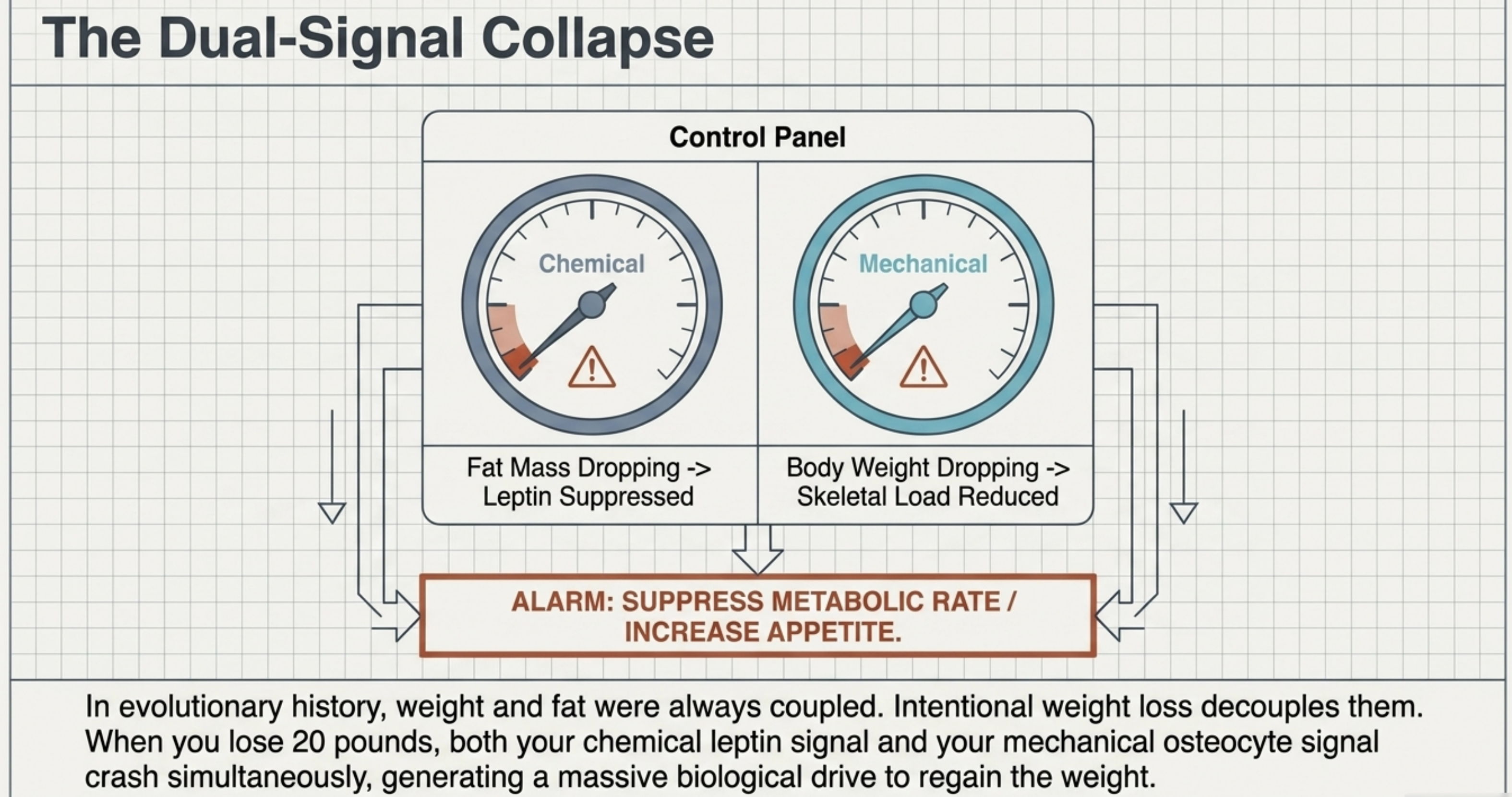
In a world where body weight and fat mass are tightly coupled, as they were throughout most of human evolutionary history, these two signal systems would be telling the brain the same thing. A person who weighs more because they have more fat also has more fat-derived leptin in their circulation and more mechanical load on their skeleton. Both signals converge on the same conclusion: the organism has adequate energy reserves and should not prioritize additional fat storage. The problem emerges when weight and fat mass decouple, as they do during intentional weight loss. A person who loses twenty pounds through caloric restriction has less fat-derived leptin and less mechanical load on their skeleton simultaneously. Both systems are now signaling that fat stores have fallen and should be restored. The metabolic suppression and appetite increase that drive weight regain are the predictable joint output of these two systems operating in concert, and addressing only the hormonal side of that equation while ignoring the mechanical side may be why interventions that successfully manipulate leptin signaling and appetite have not fully solved the weight regain problem.
Rucking, in this framing, is doing something more specific than burning calories and building fitness. It is partially decoupling weight and fat mass in the opposite direction from weight loss: adding load without adding fat, and in doing so potentially sending the gravitostat a signal that the organism is heavier than it actually is. The metabolic consequence of that signal, if the gravitostat hypothesis is correct, is a metabolic environment that is more hospitable to weight stability than the unloaded alternative would produce.
The Problem the Study Was Designed to Solve: Why Diets Always Fail in the Same Way
The gravitostat hypothesis would remain an interesting theoretical framework without clinical evidence that manipulating skeletal load during weight loss actually changes long-term outcomes. The weighted vest study was designed to generate exactly that evidence, and understanding what motivated the study requires understanding the specific clinical problem it was trying to solve: not just why people regain weight after dieting, but why they regain it in such a predictable and mechanistically specific way.
The Most Reliable Finding in Weight Loss Medicine
The most consistent finding in the weight loss literature is not that any particular intervention works. It is that the weight lost almost always comes back. Long-term follow-up studies of dietary interventions, behavioral programs, and even pharmacological weight loss consistently find that the majority of lost weight is regained within two to five years. A substantial proportion of dieters end up heavier than when they started after accounting for the full trajectory of loss and regain. This pattern is so reliable across different populations, different interventions, and different follow-up periods that it has begun to feel like a biological law rather than a clinical observation.
The conventional explanation has blamed behavior. People cannot sustain dietary restriction indefinitely. Food environments make returning to prior eating patterns too easy. The psychological burden of chronic dietary restraint eventually overwhelms even highly motivated individuals. These factors are real and contribute genuinely to weight regain. But they do not fully explain a phenomenon that occurs with such biological regularity across populations with widely varying behavioral profiles, motivations, and food environments. The consistency of weight regain across such diverse contexts points toward a biological driver that operates below the level of conscious behavior rather than through it.
The Metabolic Adaptation That Makes Regain Inevitable
The biological driver is metabolic adaptation: the suppression of resting metabolic rate that occurs in response to weight loss, independent of the dietary approach used to achieve that loss. When body weight falls, the body interprets the reduction as a threat to survival and responds by reducing the energy it burns at rest to maintain basic physiological functions. This response is not subtle or marginal. It can be substantial, and it appears rapidly, within weeks of initiating caloric restriction, in proportion to the degree of weight loss achieved.
The clinical consequence is straightforward and merciless. A person who has suppressed their resting metabolic rate by 200 or more kilocalories per day in response to weight loss now requires 200 fewer calories per day than they did at baseline to maintain their new lower weight. If they return to their previous caloric intake, which is what the suppressed appetite signaling that accompanies metabolic adaptation makes increasingly difficult to resist, they gain weight at a rate determined by the gap between their intake and their suppressed expenditure. The mathematics of regain are not complicated. The biology driving them has been.
Where the Gravitostat Fits In
The gravitostat hypothesis offers a specific and mechanistically actionable explanation for why metabolic adaptation occurs that the field has not previously had. When body weight falls through caloric restriction, two things happen simultaneously. The chemical signals of adiposity, primarily leptin, fall in proportion to the reduction in fat mass, signaling to the hypothalamus that energy reserves have declined and metabolic rate should be reduced to conserve them. And the mechanical load on the weight-bearing skeleton falls in proportion to the weight lost, signaling through the osteocyte sensing system that the organism is lighter and that the metabolic set point should be adjusted downward accordingly.
Both signal systems are converging on the same metabolic conclusion: reduce energy expenditure, increase hunger, restore the lost weight. The hormonal side of this equation has been the focus of obesity pharmacology for decades. The mechanical side has been almost entirely ignored. The weighted vest study was designed to test a simple but consequential hypothesis: if the mechanical signal from the skeleton is contributing to metabolic adaptation during weight loss, then preserving that signal by maintaining external load during caloric restriction should reduce the degree of metabolic adaptation and improve long-term weight maintenance. And if the gravitostat mechanism is as important as the animal evidence suggests, the effect on long-term outcomes should be large enough to be clinically meaningful even in a small pilot study.
Why This Population
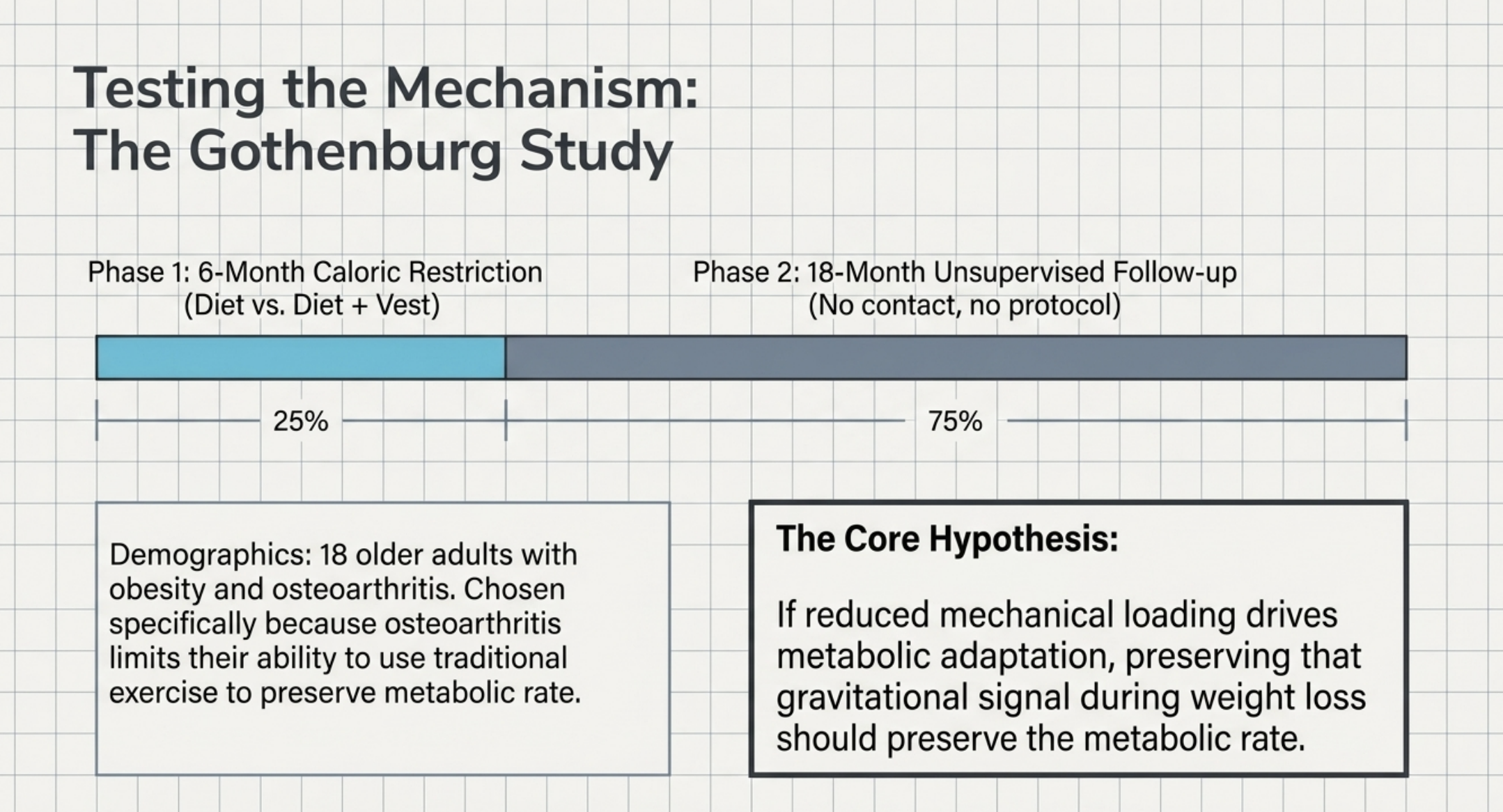
The researchers recruited older adults with obesity and osteoarthritis, a choice that was not incidental. This population faces a specific and compounding challenge for weight loss maintenance. Joint pain limits the physical activity that clinicians normally use to preserve metabolic rate during caloric restriction. The primary behavioral tool for counteracting metabolic adaptation, increasing energy expenditure through structured exercise, is least available to the population that most needs it. Older adults with osteoarthritis who lose weight through caloric restriction are therefore particularly exposed to the full biological force of metabolic adaptation without the exercise-based buffer that partially counteracts it in more physically capable populations. If the weighted vest could preserve metabolic rate in this population, where the alternative mechanism for doing so was largely unavailable, it would represent a clinically significant finding for one of the most challenging weight management populations in clinical practice and would motivate investigation in broader populations where the intervention's effects might be even larger.
The Study: A Weighted Vest as a Metabolic Signaling Tool
The experimental design of the Gothenburg study reflects a conceptual clarity that distinguishes it from most weight loss research. The intervention was not designed to burn more calories. It was not designed to build muscle. It was not designed to improve cardiovascular fitness. It was designed to send a specific mechanical signal to the skeleton during a period of caloric restriction, and to measure the metabolic and long-term weight consequences of that signal over two years of follow-up. Understanding that distinction is essential for interpreting what the findings mean.
Who Was Studied
Eighteen older adults with obesity and osteoarthritis were recruited for the trial, with a mean age and BMI consistent with the metabolically vulnerable older adult population the researchers were targeting. All participants followed the same caloric restriction protocol during the six-month active intervention phase, designed to produce meaningful weight loss through dietary change rather than exercise. Nine participants were randomized to caloric restriction alone. Nine were randomized to caloric restriction with the weighted vest protocol. After the six-month intervention ended, both groups were followed for an additional 18 months with no contact, no dietary support, and no protocol of any kind, tracking weight and body composition to 24 months to examine what happened when the biological differences between groups were left to express themselves without behavioral support masking them.
The absence of ongoing support during the follow-up period is one of the most important design features of the study. Most weight loss trials that examine long-term outcomes maintain some degree of contact with participants during follow-up, which tends to attenuate the between-group differences that emerge when participants are genuinely left to their own biology. The 18-month unsupervised follow-up in this study creates the conditions under which the metabolic adaptation differences between groups could produce their natural consequences without the confounding influence of ongoing behavioral intervention.
The Vest Protocol
The weighted vest group wore their vests during their most active hours of the day, averaging 6.6 hours per day across the six-month intervention, with approximately 6 kilograms of load in the vest at the midpoint of the study. The vest weight was increased weekly according to a protocol designed to replace the body weight being lost, targeting up to 15 percent of each participant's baseline body weight as a maximum load. This dynamic loading approach is one of the most conceptually important features of the protocol. Rather than simply adding a fixed external load, the vest weight tracked the weight loss trajectory, continuously replacing the gravitational signal that declining fat mass was removing. The goal was not to make participants heavier. It was to make their skeletons receive the same mechanical signal they would have received if the weight being lost as fat had not been lost at all.
This distinction matters for understanding what the intervention was testing. A fixed vest weight would reduce as a percentage of total load as body weight declined. The dynamic protocol maintained the vest's contribution to total skeletal loading in proportion to the weight being lost, keeping the gravitostat signal as stable as possible throughout the weight loss phase. Whether this precise tracking of weight loss with vest weight adjustment was necessary for the metabolic effect observed, or whether a simpler fixed-load protocol would have produced similar results, is one of the questions that future larger trials will need to address.
What Was Measured
Resting metabolic rate was assessed by indirect calorimetry at baseline, at the end of the six-month active intervention, and at 24 months, providing a before, during, and after picture of how the metabolic rate trajectory differed between groups. Body weight and body composition were measured at regular intervals throughout the study using dual-energy X-ray absorptiometry, allowing fat mass and lean mass to be tracked separately from total weight. These measurements together create the data structure needed to answer the central questions: did the groups show different degrees of metabolic adaptation during weight loss, and did those differences in metabolic adaptation predict different weight trajectories during the unsupervised follow-up?
The behavioral simplicity of the intervention deserves emphasis before the results are presented. Participants in the vest group were not performing structured exercise. They were not following a more restrictive diet. They were not receiving additional behavioral support. They were wearing a weighted vest during normal daily activities, walking to the shops, doing household tasks, moving through their day with an additional load, and doing nothing else differently from the diet-only group. The only variable between the groups was the mechanical signal their skeletons were receiving during six months of caloric restriction. Everything else, the diet, the behavioral support, the follow-up structure, was identical.
What the Data Showed: Similar Weight Loss, Dramatically Different Metabolic Adaptation
The results of the six-month intervention phase present one of the most striking divergences between surface-level and mechanistic outcomes in recent metabolic research. On the measure that most weight loss trials lead with, the amount of weight lost, the two groups were essentially equivalent. On the measure that determines what happens after the diet ends, the metabolic adaptation produced by the weight loss, they were dramatically different.
The Weight Loss Data
Both groups lost meaningful amounts of weight during the six-month caloric restriction phase. The weighted vest group lost 11.2 kilograms and the diet-only group lost 10.3 kilograms, a difference of less than one kilogram that was not statistically significant. Both groups lost approximately one quarter of their total weight loss from lean mass rather than fat mass, a proportion consistent with the lean mass loss that typically accompanies caloric restriction in older adults and that neither group was protected against. By the conventional metrics of a weight loss trial, the intervention had produced equivalent outcomes. Both groups had successfully lost a clinically meaningful amount of weight. Both groups had experienced the lean mass loss that caloric restriction in older adults characteristically produces. The intervention appeared to be a wash.
Then the metabolic rate data arrived.
The 221 Kilocalorie Difference
Resting metabolic rate in the diet-only group fell by 237 kilocalories per day during the six-month intervention. To appreciate what this number means, consider that 237 kilocalories is roughly the energy content of a small but meaningful daily snack, a banana and a handful of nuts, or two slices of bread. When the body suppresses its resting energy expenditure by that amount in response to weight loss, the dieter who returns to their previous caloric intake after the intervention ends is now consuming 237 more kilocalories per day than their suppressed metabolism requires for weight maintenance. At that rate of caloric surplus, weight regain is not a behavioral failure. It is an arithmetic certainty.
Resting metabolic rate in the weighted vest group fell by 16 kilocalories per day over the same six-month period. Sixteen kilocalories is nutritionally trivial, the energy equivalent of a single bite of food. The vest group's metabolism had been essentially preserved while they lost 11.2 kilograms of body weight.
The difference between these two numbers is 221 kilocalories per day. Two groups losing similar amounts of weight through identical dietary interventions showed metabolic adaptations that differed by 221 kilocalories per day. This is not a small effect attributable to measurement variability or biological noise. It is a large and mechanistically coherent signal that the mechanical loading protocol had fundamentally altered the metabolic response to caloric restriction in the vest group, preserving a metabolic rate that the same degree of weight loss had substantially suppressed in the diet-only group.
The 221 kilocalorie difference is worth sitting with for a moment because it reframes what the weighted vest was doing. The vest group did not burn meaningfully more calories during the intervention through the activity of wearing the vest. Six kilograms of added load during normal daily activity produces modest additional caloric expenditure that is nowhere near sufficient to explain the 221 kilocalorie difference in resting metabolic rate between groups. The vest was not working by burning more calories. It was working by preserving the metabolic rate that weight loss would otherwise have suppressed, through a mechanism that operated at the level of the skeleton's weight sensing system rather than at the level of energy expenditure during activity.
The Correlation That Confirms the Mechanism
One additional finding from the intervention phase deserves particular attention because it connects the metabolic rate data to the weight regain data in a way that is mechanistically precise rather than simply associative. The change in resting metabolic rate during the six-month intervention was inversely correlated with subsequent weight regain during the unsupervised follow-up period. The smaller the metabolic rate suppression during the weight loss phase, the less weight was regained during the 18 months that followed. This correlation is the mechanistic linchpin of the study. It establishes that the metabolic adaptation measured during the intervention was not simply an interesting physiological observation running in parallel to the weight regain story. It was predictive of the weight regain story, in the direction and with the magnitude that the gravitostat hypothesis would expect.
The bodies that suppressed their metabolism least during weight loss were the bodies that regained the least weight afterward. The bodies that suppressed their metabolism most were the bodies that regained the most. The weighted vest produced less metabolic suppression. The gravitostat hypothesis explains why. The follow-up data confirmed the prediction. Each element of this chain fits the others with a coherence that makes the mechanistic argument more than speculative.
What Happened After: The Follow-Up Data That Changes Everything
The six-month intervention data is striking. The 24-month follow-up data is the finding that makes this study clinically important.
When the active intervention ended, both groups entered 18 months of unsupervised follow-up with no dietary guidance, no contact with the research team, and no protocol of any kind. This is where weight loss studies most commonly disappoint. The behavioral support that produced the loss is withdrawn, the biological forces driving regain reassert themselves, and the gap between intervention-phase outcomes and real-world long-term outcomes becomes apparent. The Gothenburg study is unusual in the duration of its unsupervised follow-up and in what the two groups' trajectories looked like when that follow-up ended.
Two Very Different Trajectories
The weighted vest group regained approximately half of the weight they had lost during the intervention. This is not a perfect outcome. Regaining half of a twelve-kilogram loss means six kilograms came back over 18 months without any support. But it also means six kilograms stayed off, and at 24 months the vest group remained 4.8 kilograms lighter than their baseline weight. They had lost weight, maintained roughly half of that loss without any ongoing intervention, and were still meaningfully lighter two years after the study began than they had been at the start.
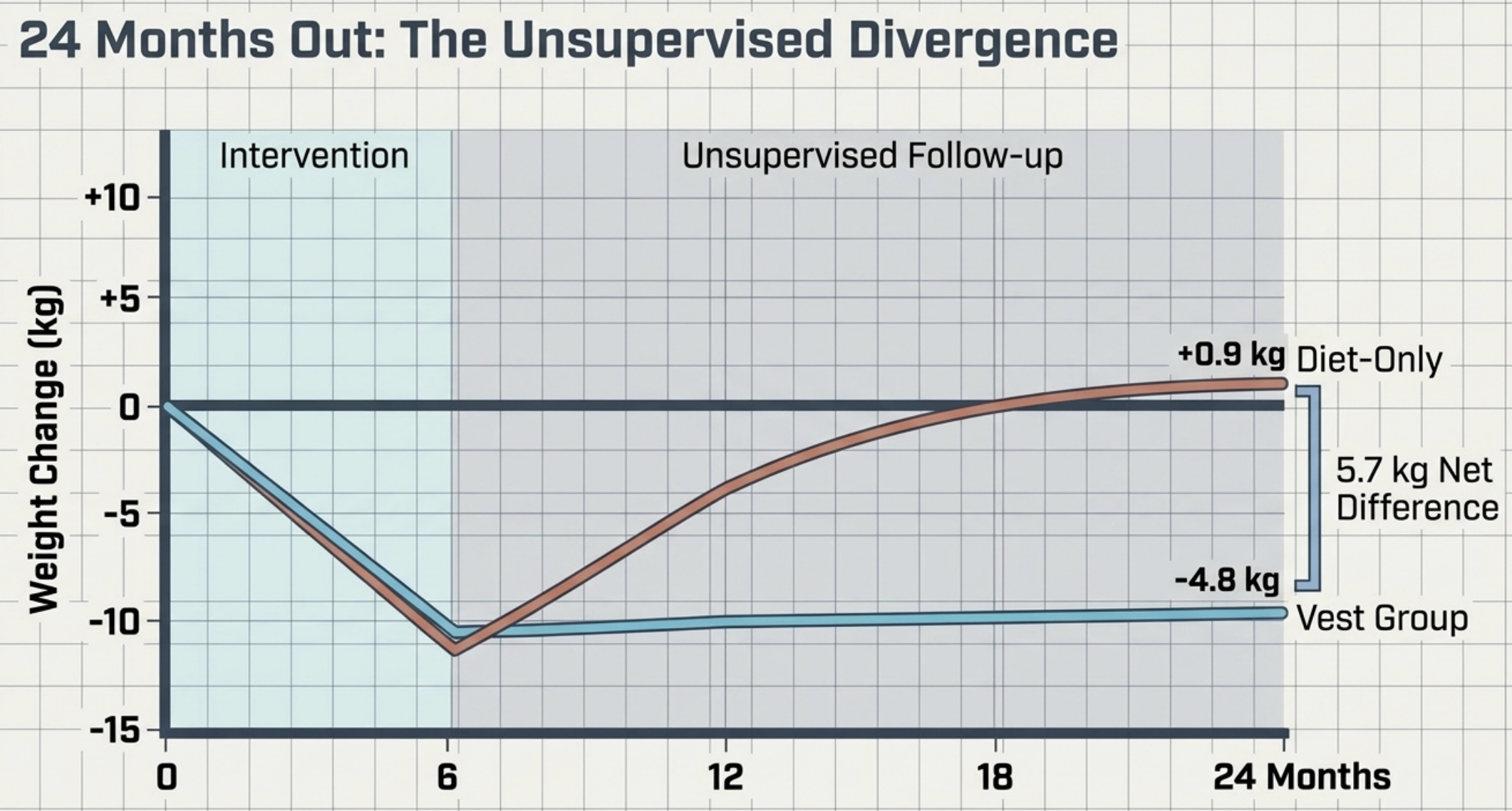
The diet-only group followed a trajectory that will be familiar to anyone who has studied the long-term outcomes of dietary weight loss interventions. The weight came back. All of it. At 24 months the diet-only group was 0.9 kilograms heavier than their baseline weight, having fully reversed six months of caloric restriction and added a modest additional gain. The weight loss curve that looked equivalent to the vest group at six months had become a return-to-baseline curve by 24 months, with the biological forces driving regain having operated with the predictable thoroughness that the suppressed metabolic rate data had foreshadowed.
The Numbers in Context
The contrast between 4.8 kilograms below baseline and 0.9 kilograms above baseline at 24 months represents a between-group difference of 5.7 kilograms at the two-year mark, achieved without any ongoing intervention, dietary support, or behavioral program of any kind after the first six months. The two groups diverged after the intervention ended and continued to diverge through the 18-month follow-up period as the metabolic consequences of their different adaptation trajectories expressed themselves in the absence of any compensating behavioral effort.
It is important to note that the between-group difference in weight regain at 24 months did not reach conventional statistical significance, which is the appropriate benchmark for interpreting the magnitude of a finding from a pilot study of 18 participants. This limitation is real and means the finding should be treated as hypothesis-confirming rather than definitive. A larger adequately powered trial is needed before the between-group difference can be interpreted with the statistical confidence that clinical recommendation requires. But the direction of the effect is unambiguous, the magnitude is clinically meaningful, and the mechanistic coherence between the metabolic adaptation data and the weight regain data makes the finding more interpretable than a statistically significant result without a mechanistic explanation would be.
What the Follow-Up Data Tells Us About the Gravitostat
The unsupervised follow-up is where the gravitostat hypothesis receives its most direct empirical test. The hypothesis predicts that preserving skeletal loading during weight loss should preserve metabolic rate, and that preserved metabolic rate should translate into better long-term weight maintenance when behavioral support is withdrawn and the body's biological set point regulation is left to operate without counteracting behavioral effort.
That is precisely what happened. The vest group preserved metabolic rate during the intervention and maintained meaningful weight loss during the follow-up. The diet-only group suppressed metabolic rate during the intervention and regained all of their weight during the follow-up. The temporal sequence, mechanical loading during loss predicting metabolic preservation during loss predicting weight maintenance after loss, is exactly the sequence the gravitostat hypothesis would generate. And the inverse correlation between metabolic rate change during the intervention and weight regain during the follow-up provides the statistical bridge that connects the mechanism to the outcome with a precision that the follow-up weight data alone would not have established.
Weight regain after caloric restriction is not random. It is not primarily behavioral. It is a predictable biological response to a specific signal, and the weighted vest study has now provided the most direct human evidence yet that addressing that signal during the weight loss phase changes what happens in the years that follow.
Why This Reframes Weight Regain and What It Means for Rucking
The findings from the Gothenburg study deserve to be read not just as evidence for a specific intervention but as evidence for a specific reframe of one of the most consequential and least solved problems in metabolic medicine. The reframe has two parts. The first concerns what weight regain actually is. The second concerns what rucking is actually doing.
Weight Regain Is Not a Behavioral Failure
The framing of weight regain as a character flaw or a motivational failure has caused genuine harm in clinical medicine. It has led patients to internalize the biological inevitability of regain as a personal inadequacy, led clinicians to attribute treatment failure to patient non-adherence rather than biological mechanism, and led researchers to focus intervention design on behavioral strategies that cannot address the underlying metabolic driver.
The Gothenburg data makes the mechanistic alternative to this framing concrete and quantitative. When the diet-only group suppressed their resting metabolic rate by 237 kilocalories per day in response to six months of caloric restriction, they did not do so because they made poor choices or lacked commitment. Their skeletons detected reduced load, their osteocyte sensing systems sent the appropriate regulatory signal to their brains, and their brains reduced resting energy expenditure in the way evolution designed them to when body weight falls. The weight regain that followed was the thermodynamic consequence of a suppressed metabolism encountering a normal caloric environment without the behavioral effort required to permanently restrict intake below the new suppressed expenditure level.
The vest group did not maintain their weight loss because they were more disciplined. They maintained it because their metabolic rates had been preserved at a level where normal eating produced weight stability rather than weight gain. The intervention changed not their behavior but the metabolic consequence of their behavior, by sending the skeleton a signal that body weight had not changed even as fat mass declined.
This is the reframe that the gravitostat hypothesis makes possible and that the Gothenburg study makes empirical. Weight regain is not a behavioral prediction. It is a metabolic prediction, driven by a mechanical signal, addressable by a mechanical intervention. Understanding it that way does not eliminate the role of behavior in long-term weight management. It does suggest that behavioral effort applied without mechanical loading compensation is fighting a biological headwind that the gravitostat is generating continuously in the background.
What This Means for Rucking
Returning to where this article began: the rucking community has been activating a biological mechanism they did not know existed. The weighted vest study is not a rucking study, and the protocol it tested, six or more hours of daily vest wearing with dynamically adjusted load, is not identical to periodic rucking sessions several times per week. But the mechanistic principle is the same, and the connection between what the Gothenburg researchers measured and what ruckers are doing intuitively deserves to be made explicit.
When a rucker adds weight to their pack and walks, they are loading their weight-bearing skeleton with force that exceeds body weight alone. That loading is sending a signal to the osteocytes embedded in their lower extremity bones that the organism is heavier than it actually is. If the gravitostat hypothesis is correct, that signal is being relayed to the brain's weight regulation systems and producing metabolic effects that extend beyond the duration of the activity. The metabolic rate is being maintained at a level consistent with a heavier organism. The appetite signals are being calibrated to a higher set point. The biological drive to reduce fat stores is being attenuated because the skeleton is reporting that body weight is higher than it would report without the pack.
This does not mean that a twice-weekly rucking session produces the same gravitostat effect as six hours of daily vest wearing. The dose-response relationship between mechanical loading duration, frequency, and magnitude and the degree of gravitostat activation has not been characterized in humans, and the Gothenburg study cannot answer that question. What it does suggest is that the weight management benefits ruckers report, the subjective sense of better metabolic control and easier weight maintenance that the community attributes to caloric burn and cardiovascular fitness, may be partly driven by a mechanical signaling mechanism that has nothing to do with the calories burned during the activity. The rucker who maintains their weight better than their caloric math would predict may be doing so because their gravitostat is receiving a sustained signal that their body is heavier than it is, and that signal is keeping their metabolic rate at a level where weight stability is achievable without the degree of caloric restriction that would otherwise be required.
The practical implication for the rucking community is not that they should abandon their training or adopt a different approach. It is that they may be doing something considerably more metabolically specific than they realize, and that understanding the gravitostat mechanism changes the rationale for rucking from a caloric expenditure argument to a metabolic signaling argument. More load, more frequently, for longer durations may produce larger gravitostat effects than the current rucking culture optimizes for. Whether that hypothesis is correct requires investigation, but the Gothenburg study has now provided the mechanistic foundation that makes the investigation worth pursuing.
The Practical Implications: What This Means for Weight Loss Protocols
The Gothenburg study is a small pilot trial and its findings require confirmation in larger adequately powered research before they can support definitive clinical recommendations. That epistemic humility is important and will be maintained throughout this section. But the mechanistic coherence of the gravitostat hypothesis and the magnitude of the between-group difference in metabolic adaptation are sufficient to motivate a serious discussion of what the findings imply for how weight loss protocols should be designed, even before the confirmatory evidence exists.
The Incomplete Intervention Problem
The central practical implication of the gravitostat hypothesis is that caloric restriction without mechanical loading compensation may be biologically incomplete in a specific and addressable way. Standard weight loss protocols are designed around two variables: caloric deficit and macronutrient composition. Some protocols add a third variable, exercise, both for its direct caloric contribution and for its established role in preserving lean mass and partially attenuating metabolic adaptation during weight loss. What none of these protocols have systematically addressed is the skeletal loading signal that the gravitostat hypothesis identifies as a primary driver of the metabolic adaptation that undermines long-term maintenance.
If that signal is as important as the Gothenburg data suggests, then every weight loss protocol that reduces body weight without replacing the gravitational load being lost is triggering a metabolic response that the protocol has no mechanism to counteract. The caloric deficit creates weight loss. The reduced skeletal loading creates metabolic suppression. The protocol addresses the first without addressing the second, and the second is what determines whether the weight loss is maintained after the protocol ends.
Adding mechanical loading compensation to the weight loss phase, through a weighted vest worn during normal daily activity, addresses the second variable directly without requiring additional caloric expenditure during the activity. The vest is not burning calories. It is preserving the metabolic rate that caloric restriction would otherwise suppress. The distinction between these two mechanisms is the difference between a weight loss tool and a metabolic rate preservation tool, and the Gothenburg data suggests the second is considerably more important for long-term outcomes than the first.
For Populations With Limited Exercise Capacity
The implications are most immediately significant for populations where exercise-based metabolic rate preservation is least available. The Gothenburg study recruited older adults with osteoarthritis specifically because this population faces a compounding challenge: the joint pain that makes them particularly likely to benefit from weight loss also limits the physical activity that normally partially counteracts metabolic adaptation during caloric restriction. For this population the weighted vest offers something that exercise cannot reliably provide: a mechanical loading signal that does not require joint-stressing physical effort, deliverable during the normal activities of daily life without a structured training program.
The same logic applies to other populations where exercise capacity is limited by musculoskeletal conditions, cardiovascular disease, respiratory limitations, or the general deconditioning that severe obesity produces. These are frequently the populations with the most to gain from weight loss and the least access to the exercise-based tools that partially support it. A weighted vest worn during daily activity does not replace exercise as a component of comprehensive metabolic health, but it may provide a specific and important metabolic benefit that exercise would otherwise be delivering, accessible to populations that exercise cannot reach.
The Rucking Protocol as Preventive Strategy
For the healthy longevity-oriented population that Healthspan serves, the gravitostat implications of the Gothenburg study point in a different direction. The most valuable application of the gravitostat mechanism for this population may not be as a rescue intervention during active weight loss but as a preventive strategy for maintaining the metabolic rate and body composition that caloric restriction and aging tend to erode over time.
Regular rucking, understood through the gravitostat lens, is continuously sending a signal to the skeleton that the organism is heavier than it would be without the pack. If that signal is maintaining resting metabolic rate at a level slightly above what unloaded walking would produce, the cumulative effect over months and years of consistent practice may be a metabolic environment that is systematically more hospitable to weight stability than the alternative. The rucker who has been carrying twenty pounds on regular walks for two years may have a resting metabolic rate that is measurably higher than their unloaded counterpart of equivalent fitness, not because of the calories burned during the activity but because the gravitostat has been calibrated to a heavier organism throughout that period. Whether this prediction is correct cannot be established from the Gothenburg study, which tested acute vest wearing during active weight loss rather than long-term maintenance protocols in healthy individuals. But the hypothesis is coherent, the mechanism is plausible, and it provides a longevity rationale for rucking that extends beyond cardiovascular fitness and caloric expenditure into the metabolic signaling architecture that regulates body weight across the lifespan.
Practical Considerations for Weighted Vest Use
For individuals interested in applying the gravitostat principle practically, several considerations emerge from the Gothenburg protocol and the broader gravitostat literature. Load matters: the Gothenburg study targeted up to 15 percent of baseline body weight, with participants averaging approximately 6 kilograms of vest load, a dose that is achievable for most healthy adults and manageable for extended daily wearing. Duration matters: participants averaged 6.6 hours of daily vest wearing, suggesting that the gravitostat signal requires sustained loading across a meaningful portion of the active day rather than brief high-intensity sessions. And dynamic adjustment may matter: the protocol increased vest weight weekly to track weight loss, maintaining the loading signal in proportion to the fat mass being lost rather than allowing it to decline as body weight fell.
For ruckers, these parameters suggest that longer and more frequent sessions with adequate load may produce stronger gravitostat effects than the typical approach of occasional moderate-load walks optimized for cardiovascular training. The optimal loading dose for gravitostat activation in healthy adults has not been established, and the Gothenburg study cannot answer that question. But the mechanistic principle, sustained skeletal loading signals a heavier organism and maintains metabolic rate accordingly, suggests that consistency of loading across the waking day may matter as much as the intensity of any individual session.
Conclusion: A Mechanical Problem Deserves a Mechanical Solution
The rucking community has been ahead of the clinical literature. Not in understanding why rucking works, but in doing something that appears to activate one of the most interesting and least appreciated mechanisms in metabolic biology. Ruckers have been carrying weight because they believed it made their walks harder and burned more calories. What the Gothenburg study suggests is that the added weight may be doing something considerably more specific and more consequential: sending a signal to the skeleton that regulates metabolic rate and appetite in ways that persist long after the pack comes off.
Weight regain after caloric restriction is one of the most frustrating and most consequential unsolved problems in medicine. It affects the majority of people who lose weight. It produces health outcomes that can rival or exceed those of the original obesity. And it has resisted the behavioral, pharmacological, and surgical approaches that have been directed at it, remaining stubbornly unsolved at the population level despite decades of effort. The reason it has resisted those approaches may be that they have been aimed at the wrong target. If weight regain is driven substantially by the metabolic suppression that follows reduced skeletal loading, then interventions that address caloric intake, appetite hormones, and behavior without addressing the mechanical loading signal have been leaving the primary driver of regain untouched.
The gravitostat hypothesis reframes the problem in a way that is both humbling and hopeful. Humbling because it suggests that the field has been overlooking a fundamental regulatory system, a mechanical weight sensor operating through the skeleton, that may be as important as the hormonal systems that have received nearly all of the attention. Hopeful because the intervention that follows from the hypothesis is remarkably simple. Not a new drug. Not a surgical procedure. Not a demanding behavioral program that most people cannot sustain. A weighted vest, worn during normal daily activity, preserving the gravitational signal that declining fat mass would otherwise remove.
The Gothenburg study does not prove that this works. It is a small pilot trial with a between-group difference that did not reach statistical significance, and the honest reading of it is that it has generated a compelling hypothesis rather than established a definitive result. But the metabolic rate finding is robust, the mechanism is coherent, the effect size is clinically meaningful, and the correlation between metabolic preservation and weight maintenance ties the pieces together in a way that is difficult to dismiss. Two groups lost the same amount of weight through the same diet. One group's metabolism was suppressed by 237 kilocalories per day. The other group's metabolism barely moved. The only difference between them was the mechanical signal their skeletons received. Two years later, one group had kept meaningful weight off and the other had regained everything.
Weight regain is not a character flaw. It is a predictable biological response to a specific and addressable signal. And if that signal can be preserved during weight loss with something as simple as a weighted vest worn during daily activity, or perhaps as a weighted pack carried on regular walks, then the rucking community may have stumbled onto something that the weight loss field has been searching for without finding. The science is not settled. But the direction it points is clear enough, and simple enough to act on, that it deserves the rigorous investigation this remarkable pilot study has now set in motion.
Related studies